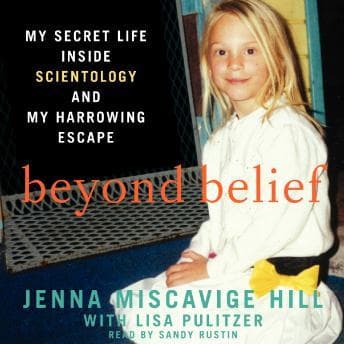

"I was seven years old when I was separated from my parents."
That line hit me somewhere around hour two, and I had to pull over in the hospital parking lot before my shift. Just sat there for a minute. Because here's the thing - I've seen a lot in fifteen years of trauma nursing. Kids in bad situations, families torn apart by circumstances beyond their control. But there's something about hearing Jenna Miscavige Hill describe her childhood like it was normal that made my stomach drop.
When the Details Feel Too Real
I listen to a lot of memoirs during my drive home from night shift. Story of My Life had that same raw honesty that makes the drive feel less lonely. They help me decompress, process the chaos of a 12-hour shift in a Level 1 trauma center. But this one? This one kept me up when I should've been sleeping. Carlos found me at noon in the kitchen, still in my scrubs, just... processing.
What got me wasn't the sensational stuff - though there's plenty of that. It's the mundane horror. The way Jenna describes being a child in the Sea Org, doing manual labor, being separated from her parents who were also members but stationed elsewhere. The way she talks about "ethics conditions" and "disconnection" like they're just... vocabulary words. Like every kid learns them.
As someone who's actually worked with abuse cases, I can tell you - this is exactly how it sounds when survivors talk about their experiences. That flat, matter-of-fact tone that comes from normalizing the abnormal. Sandy Rustin's narration captures this perfectly. She doesn't overdramatize. She lets the facts speak for themselves, and honestly? That's more devastating than any theatrical reading would be.
The Voice That Carries the Weight
Sandy Rustin does something really smart here. She reads with emotional clarity but without melodrama. When Jenna describes her confusion as a teenager, trying to reconcile what she's been taught with what she's experiencing, Rustin's delivery is measured. Patient. It mirrors that slow awakening Jenna went through.
Now, I gotta be honest - some listeners have complained about a background squeak in the audio. I noticed it maybe twice in almost twelve hours? It wasn't a dealbreaker for me, but if you're sensitive to audio quality issues, you might want to sample first. (My car speakers aren't exactly studio quality, so maybe I just didn't catch it.)
What I did catch was how Rustin handles the transition from Jenna-as-compliant-member to Jenna-as-questioning-adult. There's a shift somewhere around the middle of the book - the narration gets a little sharper, a little more urgent. Whether that was intentional or not, it worked.
About That "Harrowing Escape"
Okay, so. The subtitle promises a "harrowing escape," and I've seen some reviews complaining that it's overstated. Look, I get it. There's no dramatic chase scene. No midnight run across borders. But - and I say this as someone who's seen actual medical emergencies - sometimes the most harrowing thing is the slow, grinding realization that everything you've been taught is wrong. That your family might choose an organization over you. That leaving means losing everyone.
The escape isn't a single moment. It's a process. And honestly, that's more realistic than any thriller-style climax would be.
The writing itself is pretty straightforward. Some might call it flat. I'd call it honest. Jenna isn't trying to be a literary stylist - she's trying to document what happened. For someone like me who reads a lot of patient charts and incident reports, there's something almost clinical about her prose that I found refreshing. No dramatic flourishes. Just: this happened, then this happened, then I realized this. That straightforward approach reminded me of Promised Land - another memoir where the power is in the plainness.
Who This Is For (And Who Should Skip)
This is not a fast-paced thriller. If you're looking for constant action, you'll be frustrated. The book is heavy on details about Scientology practices, internal hierarchy, and doctrine. For me, that was fascinating - I kept pausing to Google things, which is how you know a memoir is doing its job.
Perfect for that post-shift decompression if you're the type who processes heavy stuff by learning about other heavy stuff. (My coping mechanism is weird, I know.) Also great for long commutes - at almost twelve hours, it'll get you through a week of drives. But if you're sensitive to content about child separation, emotional abuse, or family estrangement, proceed with caution. This isn't trauma porn - Jenna is remarkably restrained - but the subject matter is inherently difficult.
My mom would probably find this fascinating. She's always asking me about "those celebrity religions" after seeing something on the news. (She still thinks I should've been a doctor, but she's finally accepted that nurses know things too.) This book would give her context without the tabloid sensationalism.
Charting My Final Assessment
I yelled at my dashboard exactly zero times during this one, which is rare for me. No medical inaccuracies to correct, no procedural nonsense to complain about. Just a woman telling her story with the kind of clarity that comes from years of processing what happened to her.
Is it perfect? No. The structure gets a little messy in places, and some sections drag with organizational details that only die-hard Scientology researchers will care about. But as a document of survival? As a window into a world most of us will never see? It's worth your time.
Carlos asked why I was so quiet after this one. I blamed being tired from shift. But really, I was just thinking about all the kids still in there, growing up the way Jenna did, thinking it's normal.
Night shift approved. But maybe don't listen right before bed.






![Steve Jobs [unabridged audiobook] audiobook cover](/_next/image?url=https%3A%2F%2Fcovers.audiobooks.com%2Fimages%2Fcovers%2Ffull%2F9788499923406.jpg&w=1920&q=75)