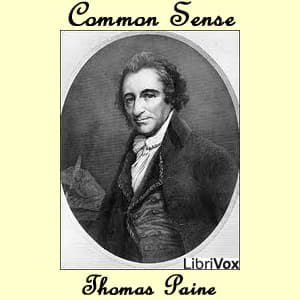

Finished this one during a late-night drive back from a client site in Houston. Three hours of I-10, Ranger snoring in the back seat, and Thomas Paine laying out the case for revolution like he was briefing Congress. Something about the darkness and the empty highway made it hit different.
Let me cut to the chase: this is the document that lit the fuse. Two hours and twenty-six minutes of pure rhetorical firepower from a guy who understood that sometimes you have to burn the ships.
The Original Psyop
Paine wasn't writing a philosophy treatise. He was writing a weapon. And listening to it—really listening, not just reading excerpts in some high school textbook—you understand why 100,000 copies flew off the presses in three months. In a colony of two million people. Do the math on that penetration rate.
What struck me hardest was how Paine dismantles the very concept of hereditary monarchy. Not just King George—the whole rotten system. He walks you through the absurdity with this cold, surgical logic that reminds me of the best intelligence briefs I ever read. That same ruthless efficiency shows up in 48 Laws of Power—different era, same understanding that power respects clarity. No wasted words. Every sentence advances the argument. The man understood economy of force.
There's this section where he essentially says—look, we're already at war, the blood's already been spilled, so what exactly are we waiting for? That's the voice of someone who's done watching committees debate while soldiers die. I've sat in those meetings. I've watched good plans die by PowerPoint. Paine would've flipped the table.
Bob Neufeld Delivers the Goods
LibriVox recordings can be hit or miss. I've suffered through some volunteers who sound like they're reading a grocery list. Neufeld isn't that. The man brings genuine conviction to Paine's words without overselling it. No theatrical nonsense, just clear, authoritative delivery that lets the text do its work.
His pacing is solid—he knows when to let a particularly devastating line breathe. When Paine calls out the idea that a continent should be governed by an island, Neufeld doesn't rush past it. He lets that absurdity hang in the air exactly as long as it should.
One thing I appreciated: he doesn't try to do a period accent or affect some 18th-century speaking style. He reads it like it's relevant. Because it is.
Where It Gets Dense
I'm not going to pretend every minute is gripping. Paine gets into the weeds on biblical arguments against monarchy—tracing kingship through scripture to prove God never intended it. If you're not interested in that theological angle, those sections drag. I caught myself checking the mile markers a few times.
And the language is 250 years old. Some sentences require you to parse them twice. At 1.25x speed—my usual—I occasionally had to rewind. The vocabulary isn't difficult, but the sentence structures are different from modern prose. This isn't a book for half-attention listening while answering emails.
But here's the thing: that density is part of the experience. Paine wasn't writing for people scrolling on their phones. He was writing for people willing to think.
Why It Still Matters
I've spent 25 years in uniform defending the country this pamphlet helped create. I've read the Constitution, the Declaration, the Federalist Papers. But Common Sense hits different because it's not a founding document—it's the sales pitch. It's the argument that convinced ordinary colonists to pick up muskets.
Paine understood something every effective leader knows: you can't just tell people what to do. You have to show them why. I saw that same principle at work in A Thousand Miles up the Nile—Edwards didn't lecture about Egyptian history, she showed you why it mattered by taking you there. You have to make the case so clearly that any other course of action seems absurd. That's what this pamphlet does.
And at two and a half hours, it's shorter than most briefings I've sat through. Way more useful, too.
Who Should Deploy This (And Who Shouldn't)
Anyone who wants to understand American political DNA needs this in their ears. History buffs, obviously. Students who want to actually understand the Revolution instead of just memorizing dates. Anyone interested in how persuasive writing actually works—this is a clinic in rhetorical precision.
Skip it if you want entertainment. This isn't a thriller. It's a primary source document, and it demands your attention.
Mission Complete
Worth your time? Here's the debrief: it's free through LibriVox, it's under three hours, and it's one of the most influential documents in American history delivered by a narrator who clearly respects the material. Ranger approved this one, and so do I.
Some books you read because they're fun. Some you read because they made the world you live in. This is the second kind.




![Steve Jobs [unabridged audiobook] audiobook cover](/_next/image?url=https%3A%2F%2Fcovers.audiobooks.com%2Fimages%2Fcovers%2Ffull%2F9788499923406.jpg&w=1920&q=75)