
"I saw that, of the two natures that contended in the field of my consciousness, even if I could rightly be said to be either, it was only because I was radically both."
That line hits different when you've spent twenty-five years watching decent men break under pressure. I was driving down I-35, heading to a site survey for a tech firm that thinks they need a fortress, and I decided to revisit this classic. Three hours and twelve minutes. That's barely a round trip in Austin traffic.
Most people think they know this story because they saw a cartoon or a bad movie adaptation. But the actual text? It's a psychological ops manual disguised as a penny dreadful.
The Voice in the Fog
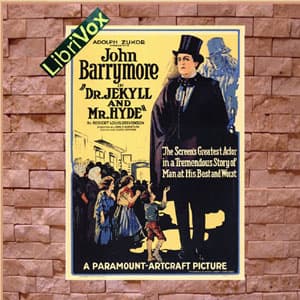
I'll be honest—I'm usually skeptical of volunteer recordings. (LibriVox is great, but I've heard audio that sounds like it was recorded inside a submerged submarine.) But I did a little recon before downloading, and the listener consensus on Bob Neufeld was overwhelmingly positive. People kept mentioning his "Hyde" voice.
They weren't wrong.
Neufeld has this deep baritone that sounds like gravel crunching under boots. He doesn't overact. When he switches to Hyde, he doesn't do a cartoonish cackle. He drops the pitch, adds a little rasp—it's subtle, menacing. His reading of Phaedo carries that same measured weight—philosophy delivered like a briefing. Sounds like the guy you don't want to meet in a dark alley in Sadr City.
I listened at my usual 1.25x speed, and Neufeld's diction held up perfectly. The guy clearly understands the rhythm of Victorian sentences, which can be a mouthful. If you're used to high-production studio recordings with sound effects and music, this is stripped down. Just the voice. And frankly, that makes it creepier.
Intel Gathering, Not Just Horror
Here's the thing about Stevenson's writing—it's not really a horror story until the end. It's a procedural. Gabriel Utterson is a lawyer, but he acts like an investigator building a case file on a high-risk target. That same investigator's instinct drives Study In Scarlet (Version 4)—though Holmes would've wrapped this case in a week. He's tracking movements, interviewing witnesses, checking wills.
I appreciated the lack of fluff. Modern thrillers take 400 pages to get to the point. Stevenson does it in under 100. Every scene moves the intel forward. The description of the London fog, the empty streets—it sets a mood that feels oppressive.
(My wife Linda would probably say it's too dark, but she didn't spend 2004 in Fallujah. Darkness is just a setting.)
Who's This For?
If you want a quick hit of classic literature that doesn't feel like homework, this is the one. Skip it if you need action every five minutes or can't handle Victorian prose—Stevenson's sentences have some weight to them. But if you've ever wondered what makes good men do terrible things, Utterson's investigation will keep you locked in.
Mission Complete
Is it worth your time? Absolutely. It's short, punchy, and Neufeld knocks it out of the park. A reminder that the line between a gentleman and a monster is thinner than we like to admit.
Ranger sat up in the backseat during the final confession chapter. I think even the dog knew things were going sideways.