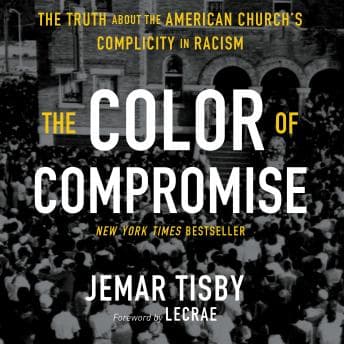

I was cleaning my Sig P320 at 0200—couldn't sleep after a long day of client meetings about corporate security protocols—when Tisby started laying out the historical record of the American church's relationship with slavery. And I just... stopped. Sat there with gun oil on my hands, listening to a historian methodically document how institutions I grew up trusting had made calculated decisions to look the other way. Or worse.
Let me cut to the chase: this book made me uncomfortable in ways I wasn't expecting. And I mean that as high praise.
When the Intel Report Contradicts the Mission Brief
I spent 25 years in the Army believing certain things about American institutions. Not blindly—I've seen enough bureaucratic cowardice to fill a library. But churches? I figured they were mostly on the right side of history, even if individual congregations stumbled. Tisby's historical survey dismantled that assumption with the precision of a good after-action report.
The section on Billy Graham hit particularly hard. Here's a man I'd always filed under "American hero"—and Tisby doesn't trash him, doesn't call him a monster. Sarah's Key explores similar moral calculations—ordinary people making choices that seem reasonable in the moment but have devastating consequences. Instead, he presents Graham as the quintessential white moderate, someone who could have used his massive platform to push harder for civil rights but chose the safer path. The "Letter from Birmingham Jail" suddenly made more sense to me than it ever had before. Graham wasn't evil. He was calculating. And that calculation had costs.
The Sixteenth Street Baptist Church bombing—four little girls dead—and the institutional responses (or lack thereof) from white evangelical leadership? I felt that same gut-punch reading Three Day Road, watching institutions abandon the people they were supposed to protect. That's the kind of intelligence failure that gets people killed. Except it wasn't a failure. It was a choice.
The Author Reads His Own Homework
Tisby narrating his own work is the right call here. He's a historian, not a voice actor, and you can hear that—there's no theatrical flourish, no dramatic pauses for effect. What you get instead is a professor walking you through primary sources, connecting dots, building a case. His delivery is measured, almost conversational, like he's sitting across from you explaining something he's spent years researching.
At 1.25x speed (my standard), the pacing works well. Tisby's natural cadence is deliberate without being slow, and the faster playback keeps the historical survey moving without losing clarity. This isn't a thriller—it's a briefing. And briefings need to be clear above all else.
Who Should Take This Mission (And Who Should Stand Down)
If you're a churchgoing American—any denomination—this is required reading. Period. Not because Tisby wants to shame you (he explicitly says he doesn't), but because you can't fix what you won't acknowledge. I've seen this play out in military contexts: units that refuse to conduct honest after-action reviews keep making the same mistakes. Same principle applies here.
If you're not religious but want to understand why racial reconciliation in America keeps stalling, this provides crucial context. The church was and is a major institutional player. Understanding its historical choices explains a lot about where we are now.
Who should skip it? If you're looking for a comfortable listen that confirms what you already believe, this isn't it. Tisby challenges both white and Black Christians to examine their institutions and their choices. He's not interested in letting anyone off the hook.
What's Missing From the Debrief
My one critique: the solutions section feels thinner than the historical analysis. Tisby outlines concrete steps—which I appreciate, because I hate books that diagnose problems without offering action items—but after eight hours of devastating historical documentation, the prescription feels almost too brief. Maybe that's intentional. Maybe the point is that the work of repair is ongoing and can't be reduced to a checklist.
This also requires focused listening. I tried it during a client drive to Houston and had to restart sections. The historical connections are dense, and if you zone out, you'll miss how the Colonial era compromises led directly to Jim Crow led directly to the white evangelical response to Civil Rights led directly to today. It's a through-line, and it demands attention.
Cooper's Final Assessment
Ranger slept through most of this one—history doesn't have enough gunfire for his taste. But I've been thinking about it for days. About the churches I attended growing up in small-town Texas. About what was said and what wasn't said from those pulpits. About the institutional choices that shaped the world I inherited.
Tisby did his homework. He knows his sources, presents them fairly, and builds a case that's hard to dismiss even if it's hard to hear. This is what good historical work looks like: uncomfortable, documented, and ultimately hopeful that understanding the truth might lead somewhere better.
Worth your time? If you care about the American church—either as a member or as someone trying to understand its influence—this is essential intelligence. Mission accomplished, Tisby. Even if the mission itself is just beginning.



![Steve Jobs [unabridged audiobook] audiobook cover](/_next/image?url=https%3A%2F%2Fcovers.audiobooks.com%2Fimages%2Fcovers%2Ffull%2F9788499923406.jpg&w=1920&q=75)