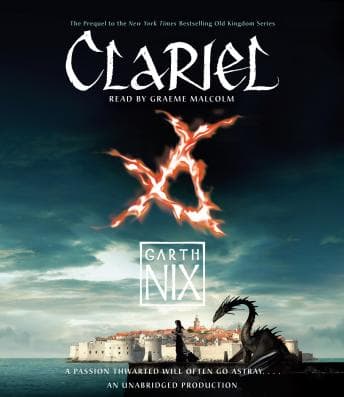

"I am the Abhorsen-in-Waiting, and I am here to bind you."
Okay, that's not Clariel's line—that's her cousin Belatiel's energy when he shows up around hour three, and honestly? It hit different at 2 AM when I was supposed to be reviewing my thesis notes on procedural dungeon generation. (Dr. Patel, if you're reading this, I was totally working. The audiobook was just... ambient noise. Very academic ambient noise.)
But here's the thing about Clariel that caught me off guard: this isn't a hero's journey. This is a tragedy with its hood up, walking toward you in slow motion while you're too invested in the world-building to notice.
The Magic System is Chef's Kiss (But Also Heartbreaking)
Garth Nix does something genuinely clever here that my D&D group would appreciate—he takes the established Charter Magic system from Sabriel and Lirael and shows us what happens when someone has the bloodline but not the calling. Clariel doesn't want to be an Abhorsen. She doesn't want to be nobility. She wants to live in the Great Forest with her berserker grandfather, hunting and existing in blessed solitude.
And the book respects that desire while systematically destroying any chance of achieving it.
Her interactions with her parents are genuinely heart-wrenching. Her mother Jaciel is so consumed by goldsmithing that she's essentially absent, her father Harven is weak-willed and complicit, and watching Clariel navigate their dysfunction while Free Magic creatures are literally loose in the city? That's Sanderson-level character work wrapped in a darker package. The psychological horror of watching someone's agency get stripped away piece by piece? That's the same dread I felt in Head Full of Ghosts, just with Charter marks instead of exorcisms.
The Free Magic encounters are startling. There's a scene where Clariel first touches that corrupting power, and Graeme Malcolm drops his voice into this lower register that made me stop mid-keystroke. You can feel the seduction of it—the easy power versus the difficult discipline of Charter marks.
Graeme Malcolm: Not Tim Curry, But Hear Me Out
Look, I get it. Tim Curry narrated the original trilogy, and his Mogget is legendary. Comparing Malcolm to Curry is like comparing any fantasy narrator to Steven Pacey—you're setting yourself up for disappointment.
But Malcolm brings something different that actually works for this prequel. His sonorous voice matches Clariel's contemplative nature. When he reads her dialogue in that low, blunt tone, she sounds like someone who genuinely doesn't care about court politics or marriage prospects. She sounds honest. Tired. Real.
His Mogget is excellent—that sardonic, ancient-being-trapped-in-a-cat energy comes through clearly. And the Welsh accents he uses for certain characters create this lovely Old Kingdom texture that feels authentically medieval without being distracting.
Is he the obvious choice for a teenage girl protagonist? No. Does it work anyway? Yeah, actually. By hour four, I stopped thinking about the voice mismatch and got absorbed in the tragedy unfolding.
This is a Prequel That Knows It's a Tragedy
Here's what some reviews miss: Clariel isn't supposed to be a triumphant hero. If you know your Old Kingdom lore (and if you don't, mild spoilers ahead), you know where this is going. The subtitle is "The Lost Abhorsen" for a reason.
Watching Clariel make choices—understandable choices, choices I might make if my parents were using me as a political pawn and I had rage-fueled Free Magic humming in my blood—knowing where they lead? That's not a flaw in the storytelling. That's the point.
Nix is showing us how someone with good intentions, legitimate grievances, and genuine power can still fall. The berserk fury she inherited from her grandfather's line? It's not a superpower. It's a curse she can't control. And every time she reaches for Free Magic instead of the Charter, you feel the tragedy tightening.
Who Should Queue This Up (And Who Should Skip)
Queue it up if: you appreciate world-building that rewards attention, you like seeing the cracks in a magic system that seemed straightforward, or you want a prequel that actually adds depth to the original trilogy rather than just cashing in on nostalgia. My D&D group would love the political intrigue and the magic system mechanics—the way Free Magic corrupts is basically an alignment shift played out in slow motion over three hundred pages.
Skip it if: you want a triumphant fantasy heroine who saves the day and gets the happy ending. Clariel is frustrating by design. She makes bad choices. She's prickly and isolated and sometimes genuinely unpleasant.
Not great for background listening—you need to pay attention to the political machinations and the subtle character work. This is a "dedicated listening" situation. I did it across three late nights when I should've been writing about procedural generation algorithms, and I regret nothing.
Roll for Wisdom Save (You'll Fail)
Clariel is the second-weakest Old Kingdom book according to some fans, and I get why—it's deliberately uncomfortable. But "weakest" in this series still means excellent fantasy with Sanderson-level world-building and a narrator who grows on you like Mogget grows on everyone (begrudgingly, inevitably).
Just... maybe have the original trilogy fresh in your mind. The payoff hits harder when you know exactly what Clariel becomes.