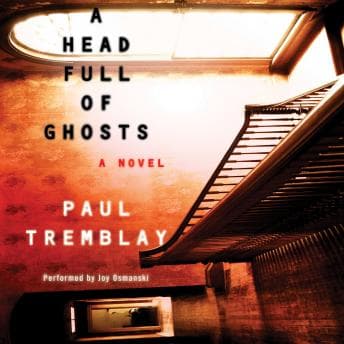

Everyone kept telling me this was The Exorcist meets reality TV. And look, I get why that comparison exists - possession, cameras, family falling apart. But that framing undersells what Tremblay actually accomplishes here. This isn't a possession story with a gimmick. It's a meditation on memory, media exploitation, and whether we can ever trust what we think we saw.
I finished this one grading papers at 11 PM (shocking, I know), and I just sat there for a minute. Not because of some cheap horror twist - though there are moments that genuinely unsettle - but because Tremblay does something I haven't seen done this well since Shirley Jackson. He makes you complicit. You're watching. You're consuming. And that's exactly the point.
The Unreliable Narrator Problem (And Why It Works)
Merry Barrett is eight years old when her sister Marjorie starts showing signs of what might be schizophrenia. Or demonic possession. Or performance. Fifteen years later, adult Merry is telling her story to a bestselling author, and here's where Tremblay gets interesting - he never lets you forget that memory is reconstruction, not recording.
As someone who teaches literature to teenagers who swear they "totally read" the book, I'm fascinated by unreliable narrators. Most authors use them as a twist mechanism. Tremblay uses Merry's unreliability as the entire thematic engine. What did she actually see? What did the reality show edit? What has fifteen years of trauma reshaped?
There's also a blog - a horror blog written by someone analyzing "The Possession" years later - woven throughout the narrative. It's a brilliant structural choice. You get the media artifact, the personal memory, and the critical interpretation all colliding. My students would probably hate the fragmented structure. I found it genuinely innovative.
Joy Osmanski's Tightrope Walk
Here's the thing about narrating a book with a child protagonist and an adult narrator who's the same person - you need range. Osmanski has it. Her eight-year-old Merry captures that specific terror of a child who knows something is deeply wrong but lacks the framework to understand it. The concerned pauses. The moments where Merry's voice goes flat because she's dissociating from what she's describing.
Now, I'll be honest - some listeners have noted her voice feels young for certain adult characters. I didn't find it distracting, but I can see it. When Merry's father speaks, there's a slight disconnect. But honestly? The book is so firmly rooted in Merry's perspective that I read it as intentional. We're hearing her parents through her memory. Of course they sound filtered through her voice.
The blog sections are where Osmanski really shines. She shifts into this detached, analytical tone that perfectly captures internet horror culture. Slightly performative. Slightly smug. Uncomfortably familiar to anyone who's ever read too many Reddit threads at 2 AM. (Don't tell my wife I still do this.)
What Tremblay Is Really Saying
This is where I put on my English teacher hat - apologies in advance.
The Barretts agree to the reality show because they're desperate. Medical bills. Unemployment. The church offers help that comes with cameras. And Tremblay never lets you forget that we - the audience, the readers, the listeners - are the reason this economy exists. We consume tragedy. We rubberneck at families falling apart. The horror isn't the demon. The horror is us. Silkworm explores that same uncomfortable complicity, though through a completely different lens.
It's not subtle, but it's not heavy-handed either. Tremblay trusts you to make the connections. He respects his readers enough not to spell it out in neon letters. This is why we still read (and listen to) literary horror - because the best of it uses genre to interrogate something real.
The ending will frustrate people who want answers. I won't spoil it, but Tremblay refuses to confirm whether Marjorie was possessed or mentally ill. Some listeners find this maddening. I found it honest. Because that's the point - we'll never know. Memory doesn't work that way. Trauma doesn't work that way. And the media certainly doesn't care about truth.
Would I Assign This to My Students?
Absolutely not. Principal Martinez would have my head. But would I recommend it to the handful of seniors who actually read for pleasure? Without hesitation.
If you loved Jackson's The Haunting of Hill House or anything by Carmen Maria Machado, this is your book. I'd also throw Outsider: A Novel into that mix—it plays with similar questions about what we can trust. If you need neat endings and clear answers, you'll be throwing your phone across the room. Fair warning.
The audiobook production is clean - no weird audio artifacts or inconsistent levels. At just under nine hours, it's perfect for a long weekend of grading or a few weeks of lakefront walks. I listened at 1.0x because Tremblay's prose deserves it. The rhythm matters. The pauses matter. Speed it up if you must, but you'll lose something.
This won the Bram Stoker Award for good reason. It's horror that stays with you - not because of jump scares, but because it makes you think about how we construct reality from fragments. And how easily those fragments can be manipulated.
My podcast listeners (all 47 of them) are going to hear about this one.