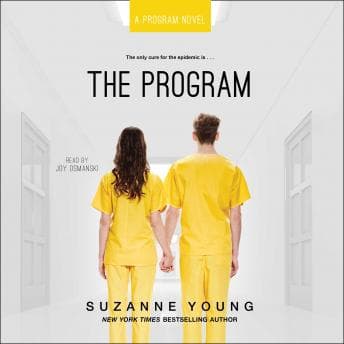

I was stuck in traffic on the 405 when The Program finally broke me. Not emotionally—I'll get to that—but strategically. I'd been treating this audiobook like background noise for my commute, and somewhere around hour three I realized that was a miscalculation. This book demands attention the way a quarterly earnings call demands attention: miss the subtext and you've missed the whole picture.
Here's the bottom line upfront: The Program delivers solid ROI for your eleven hours if you're in the market for YA dystopia that takes its premise seriously. Suzanne Young has built a world where teen suicide has become so prevalent that society's solution is essentially corporate restructuring of the human mind—strip out the emotional assets that create liability, return a compliant product to the marketplace. It's a brutal metaphor for how we actually treat mental health: as a problem to be optimized away rather than understood.
The efficiency of Young's worldbuilding impressed me. She doesn't waste chapters on exposition dumps. You learn the rules by watching Sloane navigate them—constant surveillance, emotional suppression as survival strategy, the quiet terror of watching classmates get pulled from school and returned as strangers. It's lean storytelling. No bloat. Divergent took a similar approach to faction systems, but Young's version feels more grounded in recognizable institutional dysfunction. The Program operates like any bureaucracy: it follows procedures, files reports, and genuinely believes it's helping.
Osmanski's Strategic Restraint
Joy Osmanski's narration is an interesting case study in controlled delivery. Her performance is clean, professional, measured—which mirrors Sloane's own survival mechanism perfectly. When your protagonist has learned that any emotional display could get her erased, having a narrator who maintains that same careful neutrality makes sense. The pacing is consistent. The character differentiation is competent. She sounds like an actual teenager, not an adult performing teenage-ness.
But here's where the investment calculation gets complicated. Some listeners report that Osmanski's controlled delivery dampens the emotional payoff. The text apparently hits harder on the page. I can see both sides. There's an argument that the restraint is thematically appropriate—Sloane can't afford to feel too much, so why should the narration? There's also an argument that audiobooks need to compensate for the lack of visual text, and Osmanski occasionally undersells moments that should devastate.
The male character voices present a minor liability. James, the love interest, sometimes comes across with a slightly nasal quality that undercuts the romance. It's not a dealbreaker, but if the relationship is your primary reason for investing, factor that into your decision. Some listeners wished for dual narration to handle the perspective shifts. That's a reasonable request for a story this relationship-dependent.
Where Audio Earns Its Keep
The audiobook format adds genuine value in handling the structural complexity. Young uses flashbacks and fragmented memories as Sloane tries to reconstruct what's been taken from her. On the page, that can get disorienting. Osmanski navigates the temporal shifts cleanly, making it easy to track what's happening when. For commute listening—which is how I consumed most of this—that clarity is worth the price of admission.
Production quality is solid. No audio artifacts, no level issues, no technical distractions. The bonus author interview at the end provides useful context about Young's approach to writing mental health themes. It's a value-add that makes the package feel complete.
Let me be direct about the content: this book deals explicitly with depression, suicide, and self-harm. Young doesn't sensationalize, but she doesn't soften either. The Program's world treats emotional depth as a disease to be cured, and watching characters navigate that system can hit close to home depending on your own experience. Know your tolerance before you commit.
Love as Liability
The romance between Sloane and James functions as the emotional core, and it works because Young has established that love itself is a liability in this world. Caring too much gets you flagged. Needing someone gets you noticed. Delirium played with similar territory—love as rebellion against a system designed to eliminate it—but The Program grounds the stakes in more recognizable mental health frameworks. The relationship isn't just romantic; it's strategic. They're each other's cover story.
At nearly eleven hours, the pacing is deliberate. The first third builds slowly, establishing rules and atmosphere before the plot accelerates. Some listeners will find this front-loading tedious. I'd argue it's necessary groundwork—by the time The Program comes for Sloane and James, you've been living in their anxiety long enough to feel the walls closing in. The payoff requires the setup.
Who Gets Value Here (And Who Doesn't)
Osmanski won't be the right narrator for everyone. If you want performance that matches emotional intensity beat for beat, you'll occasionally find yourself wanting more. But if you value precision over melodrama, if you appreciate a narrator who trusts the material rather than overselling it, this works. The restraint is a feature, not a bug—assuming you're the right audience for it. Skip this if you need high-energy narration or if the mental health content hits too close; invest if you want YA dystopia with institutional critique and you've got commute hours to fill.
The real question is whether you're better served by the audiobook or the print version. For pure emotional impact, the text apparently wins. For commute compatibility and structural clarity, the audiobook has advantages. It's a trade-off, and your optimal choice depends on how you plan to consume it.
The Sunk Cost That Paid Off
I finished The Program on a Tuesday, still stuck in traffic, and immediately queued up the sequel. That's the most honest endorsement I can give: the sunk cost of eleven hours felt justified, and I was willing to invest more.