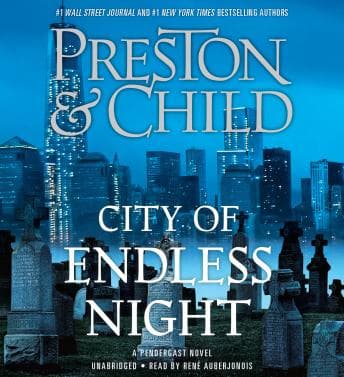

Look, I've been with Pendergast since the beginning. The Museum of Natural History case, the Cabinet of Curiosities - all of it. So when Preston and Child drop a new one, I'm there. City of Endless Night landed in my queue during a three-day consulting gig in Houston, which meant plenty of I-10 windshield time. And honestly? This one delivered exactly what I needed.
The setup is classic Pendergast territory: decapitated billionaire's daughter, NYPD detective Vincent D'Agosta in over his head, and our favorite FBI agent materializing at crime scenes like some Gothic specter in a black suit. The killer is targeting the ultra-wealthy of Manhattan, and the heads are never recovered. That's the kind of detail that hooks you - not just murder, but trophy collection. I've seen enough in my career to know that specific MO signals something deeper, something ritualistic. Preston and Child clearly did their homework on criminal psychology here.
When the Investigation Actually Feels Real
Here's where these authors earn my respect: the procedural elements don't make me want to throw my phone out the window. D'Agosta runs his investigation like an actual cop would - jurisdictional headaches, media pressure, political interference from wealthy families. Too many thriller writers skip this stuff or get it embarrassingly wrong. Not here. Affair: A Jack Reacher Novel nails that same procedural authenticity—Reacher works the investigation like someone who actually knows how military investigations run. The tension between NYPD and FBI feels authentic, and Pendergast's unconventional methods create genuine friction rather than manufactured drama.
The killer's motivation, when it finally clicks into place, is both disturbing and - I hate to say it - almost understandable from a twisted logic standpoint. That moral complexity is harder to pull off than Green Rust managed with its villain—Wallace's antagonist felt more cartoonish than credible. Won't spoil it, but let's just say it involves some dark commentary on wealth inequality that feels uncomfortably relevant. The final confrontation had me white-knuckling the steering wheel somewhere outside Katy, Texas.
René Auberjonois Behind the Mic
Now, the narrator situation. René Auberjonois - and yes, that's Odo from Deep Space Nine for you Trek fans - brings a certain gravitas to the Pendergast series. His voice has this quiet authority that works beautifully for Pendergast's aristocratic Southern drawl and intellectual detachment. D'Agosta's gruff New York cop comes through clearly distinct. The man can do characters.
But I'll be straight with you: there are moments where the pacing feels... deliberate. Some listeners have called it slow or aged-sounding, and I get that criticism. During a particularly intense chase sequence, I found myself wishing for a bit more urgency in the delivery. I bumped it to 1.25x (my standard anyway) and that solved most of the issue. A couple spots where you could tell lines had been re-recorded too - the audio quality shifted just slightly. Minor stuff, but noticeable if you're paying attention.
Auberjonois has won AudioFile Earphones Awards for these narrations, and there's a reason. His interpretation of Pendergast has become THE voice of the character for a lot of us. Changing narrators mid-series is always risky, and while some folks apparently preferred earlier performers, I think he nails the essential Pendergast vibe: controlled, brilliant, slightly unsettling.
Gothic Darkness That Earns Its Title
The "endless night" reference isn't just marketing fluff - there's a genuine darkness running through this one that elevates it above standard serial killer fare. The authors work in Gothic elements (an abandoned sanatorium, family secrets, inherited madness) that remind you why this series has lasted so long. It's not just about catching the bad guy. It's about what the investigation reveals about the investigators themselves.
Pendergast's personal arc here - dealing with past trauma while hunting a killer who represents something deeply personal - adds weight to what could've been a straightforward procedural. D'Agosta continues to be the perfect Watson to Pendergast's Holmes, grounding the more theatrical elements with blue-collar pragmatism.
Ranger slept through most of it, which tells me the pacing might not work for everyone. But when he perked up during the climax? That's when I knew the payoff was worth the build.
Final Debrief
If you're already invested in the Pendergast series, this is a must-listen. New to the party? You could start here, but you'd miss some character history that enriches the experience. Skip this one if deliberate pacing drives you crazy even at 1.25x, or if you need wall-to-wall action. But if you want a mystery that actually makes you think about the why behind the killing? Get in.
Worth your time? Eleven hours that flew by on Texas highways, a killer whose motivation actually made me uncomfortable, and an ending that sets up future installments without feeling like a cheap cliffhanger. Mission accomplished.