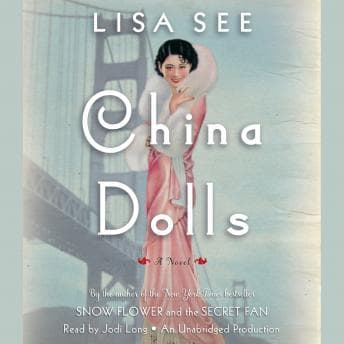

Lisa See writes about Chinese American women the way Faulkner writes about the South—with an intimacy that suggests she's excavating family secrets rather than researching history. China Dolls is no exception, and after fifteen hours walking the lakefront with Grace, Helen, and Ruby, I found myself genuinely angry at fictional people. That's the mark of something working.
See's previous work—Shanghai Girls especially—set a high bar for this kind of historical excavation. China Dolls doesn't quite reach those heights, but it's playing in the same arena. Where Shanghai Girls felt like a punch to the chest, this one is more of a slow bruise. You don't realize how much it's gotten to you until you're lying awake at 2 AM thinking about betrayal and forgiveness and what we owe the people who hurt us.
The Forbidden City That Wasn't
San Francisco, 1938. A Chinese nightclub called the Forbidden City where Asian American performers could actually headline instead of playing stereotypes. See does something clever here—she uses the glitter and sequins as camouflage for a much darker story about identity, assimilation, and the particular cruelty of women who've been taught to see each other as competition rather than allies.
Grace is running from a father who broke more than her bones. Helen is hiding behind tradition like armor. Ruby is performing a version of herself so convincing she's forgotten who she actually is. These aren't archetypes—they're specific, flawed women making specific, flawed choices. When their secrets start unraveling, it's not melodrama. It's the inevitable consequence of building friendship on unstable ground.
The Pearl Harbor section hits different now than it would have twenty years ago. The paranoia, the suspicion, the way neighbors become informants—See isn't subtle about the parallels, and she shouldn't be. My students always want to believe history is something that happened to other people. This book is a reminder that it's still happening.
Jodi Long's Complicated Gift
Here's where I have to be honest about something uncomfortable: Jodi Long's narration is polarizing, and I understand both sides.
Long brings something to this performance that a narrator without her background couldn't—she actually knew people who performed at clubs like the Forbidden City. You can hear that lived connection in the way she handles the performance scenes, the way she voices the older generation's disappointment in their American-born children. There's a specificity there that research alone can't provide.
But.
Helen and Grace sound too similar in the early chapters. I'm walking along the lake, dodging cyclists, and I keep losing track of whose head I'm in. By hour four, Long finds her rhythm and the voices differentiate more clearly. But those first few hours require focus. This is not a grading-papers-at-11-PM audiobook. (I tried. I had to rewind three times during a single essay on The Great Gatsby.)
Some listeners find Long's voice grating—that's in the reviews, and I won't pretend it isn't a factor. Her emotional delivery is enthusiastic, sometimes verging on theatrical. If you prefer understated narration, this might not work for you. I found myself adjusting to it, and by the final confrontation scene, I was grateful for her willingness to go big emotionally. The prose deserves to be savored, and Long clearly believes that too.
What The Author Is Really Saying
This reminds me of what Hemingway said about writing—that the dignity of movement of an iceberg is due to only one-eighth of it being above water. See's iceberg here is about how women destroy each other when they're fighting for scraps from a table that was never meant to include them.
The betrayal at the heart of this book—and I won't spoil it—is devastating precisely because it makes sense. You understand why it happens even as you're furious about it. That's harder to write than simple villainy. My students would hate this book. They want clear heroes and villains. I love it because life doesn't work that way.
Who This Is (And Isn't) For
If you loved Snow Flower and the Secret Fan, this is its spiritual successor—same emotional DNA, different decade. If you're new to See's work, I'd actually recommend starting with Shanghai Girls and coming to this one second. Skip this if you need clear-cut heroes, or if theatrical narration makes you reach for the stop button.
The Final Grade
China Dolls isn't Lisa See's best work, but it's still better than most historical fiction being published today. The closest comparison I can think of for sheer historical immersion is World Without End—Ken Follett also drops you into a world where ordinary people are crushed by forces larger than themselves, and you come out the other side feeling like you lived it. The audio presentation requires patience and focus—don't start this one during a road trip where you'll be distracted by navigation. Give it your attention, especially in the first quarter, and it rewards you.
Content note for those who need it: there's abuse depicted here, both physical and emotional. See doesn't sensationalize it, but she doesn't look away either.
The narrator understands that pause is punctuation—Long uses silence effectively in the heavier moments. When she slows down, lean in. That's where the real story lives.