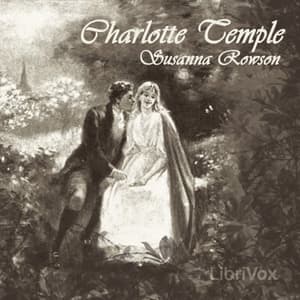

This book is a 230-year-old telenovela and I am not even a little bit sorry for how much I felt.
I picked up Charlotte Temple on a whim - free on LibriVox, under five hours, and described as America's first bestselling novel? Sold. I was deep into a rebrand project for a local bakery, layering textures in Illustrator at 2 AM with Frida curled on my keyboard and Diego somewhere knocking things off the bathroom counter. And this tiny book from 1791 just... wrecked me.
Susanna Rowson Wrote the Original "Don't Text Him Back"
Let me be real: Charlotte Temple is not subtle. Rowson literally stops the story to lecture you, the reader, about virtue and the dangers of trusting smooth-talking soldiers. She addresses "my dear young readers" like your tía who grabs your arm at a quinceañera and says mija, listen to me. And you know what? Some people hate that. I get it. One listener I saw online said they couldn't even finish a third of the book because the moralizing was too much.
But here's the thing - I grew up with my abuela narrating telenovelas in real time. "¡Esa mujer no le conviene!" she'd yell at the TV. Rowson IS that energy. She's sitting next to you, shaking your shoulder, begging you to see what Charlotte can't: that Montraville is trash, that her teacher Mademoiselle La Rue is manipulating her, that leaving her parents' house will ruin her. And Charlotte - sweet, naive, fifteen-year-old Charlotte - goes anyway. Because she's in love. Because she trusts the wrong people.
My heart. MY HEART.
The scene where Charlotte writes a letter to her parents but La Rue intercepts it? I had to pause my work. I just sat there with my stylus hovering over nothing. Because you know exactly where this is going. You know she's going to end up alone and pregnant in New York with no money and no friends, and the tragedy isn't the surprise - it's watching her walk toward it step by step while Rowson begs her not to.
Abuela would have loved this one. She would have been SCREAMING at Charlotte to stay home.
The LibriVox Situation - Let's Talk About It
Okay. So. The narration. I listen at 1.0x because I believe in savoring, and this LibriVox recording tested that commitment. Multiple volunteer readers means you get wildly different energy levels, pacing, and - yeah - some mispronunciations that pulled me out of the story. It's not Julia Whelan. It's not even close to Julia Whelan. It sounds like what it is: kind strangers reading into their home microphones because they love literature and want to share it.
And honestly? For a book this short and this old, that kind of works. There's something almost fitting about hearing Charlotte's story told in imperfect, earnest voices. Like someone found the book at a yard sale and started reading it to you on a porch. It's not polished. The emotional subtlety I usually need from a narrator isn't really there. But the text itself carries so much raw feeling that I could fill in the gaps.
That said - if uneven audio quality is a dealbreaker for you, this isn't your audiobook. Full stop.
Who This Is Actually For
If you're a romance reader who's ever wanted to understand where the "ruined woman" trope actually started, Charlotte Temple is the blueprint. This is the book that made early American readers sob into their handkerchiefs so hard they left flowers at Charlotte's (fictional!) grave in New York. That's unhinged fandom behavior and I respect it deeply.
This is a rainy Sunday book. A short, devastating gut-punch that reminds you the emotional mechanics of heartbreak haven't changed in two centuries. A man gets bored. A woman pays the price. The people who should have protected her didn't. The people who could have saved her looked away. That same gutting dynamic - where the systems around a woman fail her just as completely as the man who wronged her - runs through Inevitable, though it lands in a very different kind of story.
I ugly-cried at the final chapters - Charlotte delirious in the snow, Charlotte's father arriving too late. Two crying sessions total (my spreadsheet has been updated). Not my record, but the tears were earned.
Skip this if you need professional production values or if a moralistic narrator voice makes you want to throw your phone. But if you've got four quiet hours and you want to feel something ancient and real? Charlotte Temple is free, it's fast, and it will sit in your chest like a bruise.
This book felt like finding your great-great-grandmother's diary and realizing she had the same broken heart you do.