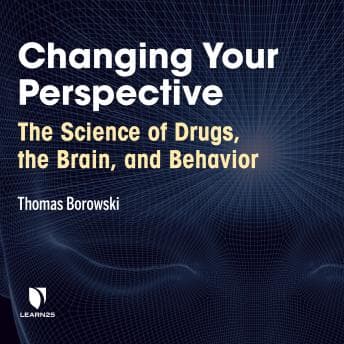

How much do you actually know about what happens in your brain when you take ibuprofen, drink two beers, or pop a Xanax? Not what you've heard. Not what the packaging says. What actually happens at the receptor level, in the synaptic cleft, in the behavioral cascade that follows?
I asked myself this sitting in my home office at 10 PM, ostensibly reviewing a client deck but actually spiraling into a rabbit hole about why caffeine works the way it does. Six hours later - well, spread across a week of commutes and one very long Saturday run - I had an answer. A real one.
What a Pharmacology PhD Sounds Like When He's Not Trying to Impress You
Borowski is a working lab scientist at Pitzer College, and it shows in the best possible way. He's not a science communicator who read a lot of papers. He's someone who has spent his career studying how drugs interact with the nervous system, and this course is basically him explaining his life's work to intelligent adults who just want to understand what's actually going on.
The 15-lecture structure is tight. Six hours for this much ground - stimulants, depressants, opioids, psychedelics, antidepressants, cannabis, alcohol, barbiturates, Ritalin, all of it - means zero padding. I listened at 1.5x instead of my usual 2.0x. That tells you something. The information density is high enough that I actually slowed down, which hasn't happened since I listened to Kahneman.
What Borowski does well is the translation layer. He'll explain receptor binding mechanisms and then immediately ground it in something you've experienced - why alcohol makes you feel warm before it makes you feel cold, why opioids produce euphoria and then tolerance so fast, why SSRIs take weeks to work when the serotonin change is immediate. The gap between the molecular and the behavioral is where most pop-science books fall apart. He bridges it without dumbing it down.
Specifically: his explanation of how benzodiazepines work on GABA receptors - and why that same mechanism makes them so dangerous to stop cold turkey - is the clearest 10-minute explanation of addiction pharmacology I've encountered. I've sat in hospital waiting rooms with family members dealing with dependency issues and wished I'd had this framing years earlier. The emotional weight of watching someone you love navigate a system that never quite explains itself reminded me of reading Will I Ever Be Free of You? — a very different subject, but the same feeling of wishing you'd had clearer language for what was happening years before you actually got it.
The Dry Cleaning Business Didn't Come With a Pharmacology Consultant
Here's my honest reaction: this is what I wish my parents had access to when they were self-medicating 14-hour days with coffee and Tylenol PM and whatever the Korean equivalent of "push through it" is. Understanding that caffeine works by blocking adenosine receptors - not by adding energy, but by blocking your brain's ability to register fatigue - would've been practically useful information. Now it has a TED talk. This course is better than the TED talk.
The business application, since I can't help myself: I've watched three different startup founders make terrible decisions about Adderall and modafinil as performance tools without understanding the neurological trade-offs. Borowski's sections on stimulants and cognitive enhancement are worth the entire runtime for anyone managing people who are quietly self-medicating for productivity. Which is most knowledge workers. Which is most of your team.
Narration is author-narrated, which is either a feature or a bug depending on the book. Here it's a feature. Borowski sounds like a professor who actually likes teaching - not performing enthusiasm, just genuinely interested in whether you understand the material. No dramatic pauses, no overselling. Clean delivery of complex information. The free PDF study guide is a nice touch for anyone who wants to take notes without rewinding constantly.
Worth Your Six Hours
Bottom line: this is 45 minutes of insight padded into... wait, no. This is actually six hours of solid information delivered efficiently. I finished it. I went back and re-listened to the psychedelics section. I texted my brother-in-law who's a physician three separate observations from it.
The key takeaway is worth the listen. The other... no, actually all of it's worth the listen. Skip to lecture 5 on opioids if you want to test the waters. But you'll go back and start from the beginning.
If you have teenagers, patients, employees, or a brain - this course earns its runtime.






![Steve Jobs [unabridged audiobook] audiobook cover](/_next/image?url=https%3A%2F%2Fcovers.audiobooks.com%2Fimages%2Fcovers%2Ffull%2F9788499923406.jpg&w=1920&q=75)