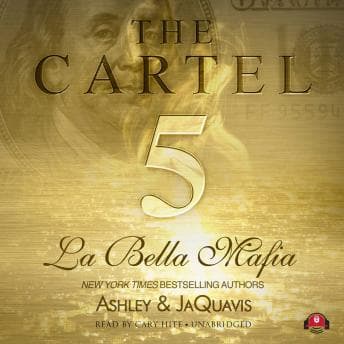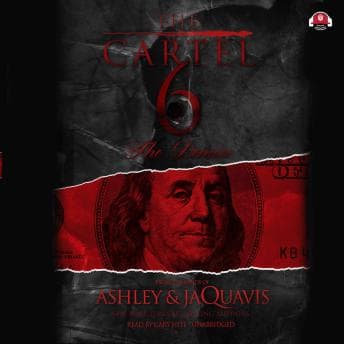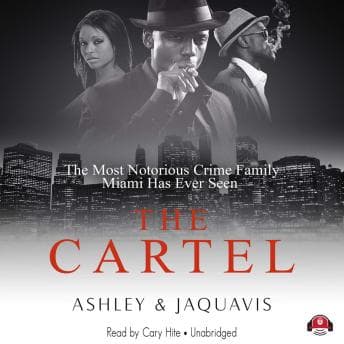

Look, I'll be honest with you. This is not the kind of book I typically reach for. My wheelhouse is Faulkner and Fitzgerald, not Miami drug empires and contract killers. But here's the thing - I've been teaching high school English for twenty years, and my students keep asking me about "street lit" with this look in their eyes that says you wouldn't get it, Mr. Williams. So I got it. I listened.
And now I have thoughts.
When Shakespeare Meets South Beach
Here's what surprised me: Ashley & JaQuavis are doing something structurally interesting that my AP Lit kids would recognize if they weren't so busy pretending they didn't read the assigned chapters. The Diamond family saga has echoes of Greek tragedy - a patriarch's death, warring heirs, secrets that poison everything they touch. Carter Diamond's illegitimate son arriving to claim his birthright? That's basically Hamlet if Hamlet had cocaine distribution networks and better fashion sense.
The Miamor storyline adds this Romeo and Juliet layer that I genuinely didn't see coming. A contract killer falling for the son of the man she's supposed to destroy? The dramatic irony here is thick. My students would hate me for saying this, but there's craft in how these authors build tension. I saw similar structural craft in Divergent, another book that uses faction warfare to explore loyalty and betrayal. They understand that tragedy requires you to care about people before you watch them suffer.
The prose isn't Toni Morrison. It's not trying to be. But it moves. It has momentum. Ashley & JaQuavis know their audience and they deliver exactly what that audience wants - which is more than I can say for some literary fiction that disappears up its own thematic concerns.
Cary Hite Carries the Weight
Now, about the narration. Cary Hite has a voice that works for this material. He's got the pacing down - knows when to let a scene breathe and when to push through the action. The character differentiation is solid, though I'll admit I sometimes lost track of which Diamond brother was speaking during the more chaotic scenes.
Some listeners have mentioned his accent can be distracting at first. I get that. It took me maybe an hour to fully settle into his rhythm. But once I did? I was locked in. He brings genuine menace to the dangerous moments and - this is crucial - he doesn't oversell the emotional beats. There's restraint there that I appreciated.
Is it the most nuanced audiobook performance I've heard? No. But Hite understands something important: he's serving the story, not showing off. That's harder than it sounds. (Trust me, I've sat through enough student dramatic readings to know the difference.)
The Slow Burn That Pays Off
Fair warning: this book takes its time getting started. The first couple hours are heavy on setup - establishing the family dynamics, introducing the various players, laying the groundwork for the conflicts to come. If you're looking for immediate action, you might get restless.
But here's what I'll say. The authors are building something. Every piece of information they give you early on becomes relevant later. By the time the story really kicks into gear - and it does, around the midpoint - you're invested in ways you didn't expect to be. The ending genuinely caught me off guard, and I've been teaching plot structure for two decades.
I listened to this mostly during late-night grading sessions (sorry, Principal Martinez, I definitely wasn't listening during that curriculum meeting either), and it kept me awake better than coffee. That's not nothing.
Who Should Listen - And Who Should Walk Away
Let me be real. If you're looking for literary fiction with beautiful prose and quiet character studies, this isn't your book. If violence and explicit content bother you, absolutely skip this. The world of Cartel is brutal and the authors don't flinch from that brutality.
But if you want propulsive storytelling with high stakes and morally complicated characters? If you've ever wondered what your students are actually reading when they're definitely not reading The Great Gatsby? This delivers.
Class Dismissed
I'm not going to assign this to my AP class. (Though honestly, the dramatic irony lesson practically writes itself.) But I understand now why this series has the following it does. Ashley & JaQuavis know how to tell a story that grabs you and doesn't let go.
Will I listen to the sequel? Yeah, probably. My wife Denise already caught me looking up the series order on our lakefront walk last weekend. She just laughed and said "I thought you only listened to classics."
Maybe the definition of classic is broader than I thought.