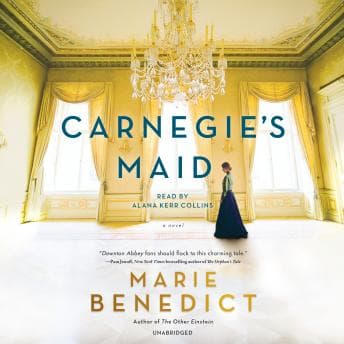

Marie Benedict has made a career of finding women history forgot and dragging them back into the light. With Carnegie's Maid, she's done something trickier - she's invented one.
I finished this at 11:47 PM, grading papers abandoned on my desk, Denise already asleep. The house was quiet except for Alana Kerr Collins's Irish lilt describing 1860s Pittsburgh - a city choking on its own ambition, steel smoke hanging over everything like a moral question mark. And I kept thinking about my students, how they'd roll their eyes at another "rich guy learns empathy" narrative. But Benedict isn't really telling that story. She's asking: what if the empathy came from somewhere? What if it came from someone?
The Mistaken Identity We Actually Need
Clara Kelley is a fraud. Right from the opening chapters, she's pretending to be someone she's not - an experienced lady's maid instead of a desperate Irish farmer's daughter with empty pockets and a family starving back home. This setup could've been played for comedy or melodrama. Benedict plays it for something rarer: genuine moral complexity.
The scenes where Clara fumbles through duties she doesn't understand - how to dress a lady, which fork goes where, the invisible architecture of Victorian service - these land because Collins delivers them with just enough panic beneath the composure. You hear Clara thinking three moves ahead while her hands betray her inexperience. It's performance as survival.
But here's what kept me listening past midnight: Clara isn't just surviving. She's observing. She watches Andrew Carnegie conduct business, absorbs his strategies, and - this is where Benedict gets clever - starts offering insights that shape his thinking. The woman who can't properly lace a corset understands market forces better than half the men in Carnegie's office.
Collins Earns Every Accent
Alana Kerr Collins is an Audie winner, and you hear why. Her Irish accent for Clara carries the weight of poverty and determination without ever becoming a caricature. When she shifts to Margaret Carnegie - Andrew's mother, a Scottish matriarch who rules her household like a small kingdom - the voice hardens. There's steel in that woman, the kind that forged her son and might destroy Clara if she discovers the deception.
The American voices work too, though they're less distinctive. Carnegie himself comes across as earnest, ambitious, a man who hasn't yet decided whether he'll be a robber baron or something else entirely. Collins makes you believe Clara might tip that balance.
(My students would argue Carnegie's philanthropy was just guilt-laundering for labor exploitation. They're not entirely wrong. But that's what makes this fiction interesting - it's asking "what if" about a man whose legacy is genuinely complicated.)
Where the Pacing Tests Your Patience
I'll be honest: the middle drags. There are stretches where Clara's daily routines feel less like period immersion and more like... well, actual domestic labor. I found myself checking how many hours remained more than once. Some listeners apparently skipped chapters entirely.
I didn't. Partly because I'm stubborn about listening at 1.0x - the author chose those words, the narrator chose that pacing - but also because the slower sections do something important. They make you feel the endurance required of women in Clara's position. The monotony was the point. The waiting was the work.
Still. Nine hours is a commitment, and Benedict could've trimmed an hour without losing anything essential. The romance between Clara and Andrew develops slowly enough that you'll wonder if it's developing at all, and when it finally arrives, some listeners will find it rushed by comparison. I thought it worked. Your mileage may vary.
What Hemingway Would've Cut
This reminds me of what Hemingway said about the iceberg theory - the dignity of movement comes from what's beneath the surface. Benedict's prose isn't Hemingway-spare (few historical novelists are), but her best moments work the same way. Clara's moral dilemmas - especially involving letters and secrets I won't spoil - carry weight because you understand everything she's risking without being told.
The descriptions of Pittsburgh feel researched rather than imagined. Smoke-choked streets, the clash between old money and new industry, the specific textures of a city becoming something unprecedented. Collins reads these passages with the gravity they deserve. You're not just hearing about history; you're standing in it.
Worth Pausing the Faculty Meeting For
Here's who should listen: anyone who loved The Other Einstein or Benedict's other novels about women behind famous men. At the Water's Edge works similar territory—women navigating impossible situations in carefully researched historical settings. Fans of historical fiction that prioritizes character over plot. Readers who want their Gilded Age stories complicated rather than romanticized.
Who should skip: if you need constant action, this isn't it. If the phrase "slow burn" makes you anxious, look elsewhere. And if you're expecting a biography of Carnegie, you'll be disappointed - this is Clara's story, and Carnegie is almost a supporting character in his own household.
The ending satisfied me more than I expected. Clara's choices feel earned, and Benedict resists the easy resolution. The prose deserves to be savored, even when the pacing tests you. Collins's narration elevates material that could've felt like a Lifetime movie into something genuinely literary.
My students would probably hate the pacing. I loved it. That's the review, really. If you're the kind of listener who believes great narration is performance art, who thinks historical fiction should make you feel the weight of corsets and coal smoke and class boundaries - this one's worth your time. Just maybe not during a faculty meeting. Principal Martinez, if you're reading this: I was definitely paying attention to the budget presentation.