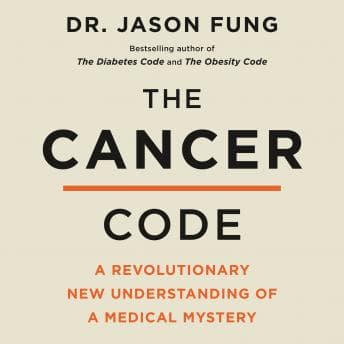

I was chopping onions for a dal that would take three hours to cook properly when Dr. Fung casually dismantled everything I thought I knew about cancer. The onions were making my eyes water anyway, so when he started explaining how we've been thinking about this disease backwards for decades, I just... kept crying. For different reasons.
Here's the thing about medical paradigm shifts: they're either genuinely revolutionary or they're dressed-up snake oil. My training makes me skeptical of anyone claiming to have cracked a code that's eluded researchers for a century. But Fung does something clever here—he doesn't claim to have found the cure. He claims we've been asking the wrong questions.
The Seed vs. Soil Framework (And Why It Actually Tracks)
Fung's central argument is elegantly psychological, which is probably why it hooked me. We've been obsessing over the "seed"—the genetic mutations that cause cancer cells to form—while ignoring the "soil" in which those seeds either flourish or wither. The research actually shows that most of us carry precancerous cells that never develop into anything dangerous. So why do some people's bodies become hospitable environments for cancer growth while others don't?
This is a fascinating case study in how scientific paradigms can become self-reinforcing traps. Fung walks through decades of cancer research with the patience of someone who's explained this to skeptical colleagues many times. The focus on genetics made sense given the tools available, but it led to billions of dollars poured into treatments that... well, he has the survival statistics, and they're not great.
What makes this argument compelling is the insulin connection. Fung's previous work on diabetes and obesity wasn't just adjacent research—it was building toward this. Metabolic dysfunction as the common thread linking obesity, type 2 diabetes, and cancer risk. The protagonist of this story isn't a villain invading from outside. It's our own cells deciding to stop cooperating.
Brian Nishii Delivers the Bad News Gently
Let's talk about the elephant in the room: this is, as one listener perfectly described it, "the best depressing, well-narrated book" you might ever hear. Brian Nishii has this warm, human quality to his voice that somehow makes discussions of cellular mutation and mortality feel... manageable? He's not clinical or detached, but he's also not trying to make you feel better about difficult information.
The pacing works well for the scientific content. Fung is building an argument across nearly eleven hours, and Nishii seems to understand when to let a particularly striking piece of evidence land before moving on. His delivery of complex medical terminology is clear enough that I mostly followed along while my dal simmered.
Mostly.
Here's my honest caveat: there were moments—particularly when Fung gets deep into metabolic pathways—where I found myself rewinding. Some listeners have noted that the medical terminology doesn't translate perfectly to audio format alone, and I'd agree. I found myself wishing for a companion PDF with diagrams. Not a dealbreaker, but if you're someone who learns visually, you might want to keep your phone handy for quick Google searches.
What Fung Gets Right About Human Nature
Psychologically, this book does something important: it shifts cancer from an external enemy to an internal dysfunction. That reframe matters. When we think of cancer as an invader, we feel helpless against it—waiting to see if the bad luck lottery lands on us. When we understand it as our own cells responding to environmental conditions we partially control, suddenly we have agency.
The intermittent fasting and dietary recommendations aren't new if you've followed Fung's work, but the cancer-specific context gives them new weight. Reducing insulin-stimulating foods isn't just about weight management anymore. It's about creating a hostile environment for cells that want to go rogue.
My therapist would have thoughts about this framing, actually. The same kind of internal-versus-external tension runs through Codependent No More, where the battle is recognizing which struggles are actually ours to fight. There's something almost Buddhist about it—the enemy is not external, the battlefield is internal, and the war is won through restraint rather than aggression.
Who This Works For (And Who Might Struggle)
This is for the focused listener. Background listening while doing something else? You'll miss too much. It's dense without being impenetrable, but it requires your attention.
If you've read Fung's previous books on diabetes and obesity, this is the logical next chapter. If you haven't, you might want to start there—he references that work frequently. People who want actionable health advice will find it here, particularly in the later hours. People who want a comprehensive understanding of why current cancer treatments often fail will get that too.
Skip this if you're looking for easy answers or guaranteed prevention strategies. Fung is too intellectually honest to provide them. And if complex medical terminology makes your eyes glaze over even in print, the audio-only experience might frustrate you.
The Prescription I'm Actually Following
I finished this book genuinely changed in how I think about metabolic health. Not in a dramatic, throw-out-all-my-rice kind of way, but in a quieter, more informed way. Fung presents evidence without hysteria, acknowledges the limits of current research without false modesty, and offers practical suggestions without promising miracles.
The dal turned out perfectly, by the way. Though I did think twice about adding that second spoonful of sugar to balance the tomatoes.