
How much of your life have you spent managing someone else's chaos while calling it love?
I asked myself that question about 45 minutes into this audiobook, sitting in my home office at 6 AM before client calls started. The answer wasn't comfortable. And look, I came to this book sideways - a founder I'm advising mentioned it during a conversation about why he couldn't fire his toxic co-founder. "It's like I'm addicted to fixing him," he said. That phrase stuck. So here we are.
The ROI on Self-Awareness
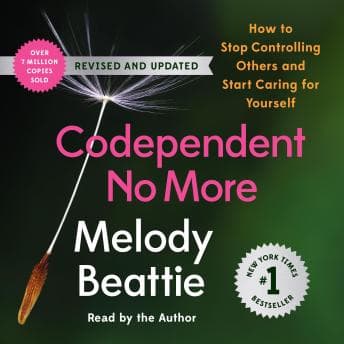
Bottom line: This book has survived 35+ years and sold 7 million copies for a reason. Melody Beattie isn't selling you a productivity hack or a morning routine. She's asking you to look at the patterns you've been running since childhood - the ones where you confuse being needed with being loved. That same focus on breaking unconscious patterns shows up in Awaken the Giant Within, though Robbins comes at it from a more tactical angle. The ones where you control everything around you because you can't control what's actually broken.
For a business guy like me, this hit different than expected. I've watched so many founders destroy their companies trying to "save" underperforming team members. Seen executives burn out because they couldn't stop owning everyone else's problems. My parents did this too, in their own way - working themselves to exhaustion for customers who didn't appreciate them, for a community that sometimes took advantage. They called it duty. Beattie would call it codependency.
The new chapter on trauma and anxiety? That's where the updated edition earns its keep. She connects the dots between early experiences and current patterns in a way that feels less like therapy-speak and more like someone finally explaining why you do what you do.
Melody Reading Melody
Here's the thing about author-narrated self-help: it can go very wrong. Some authors have no business behind a microphone. But Beattie reading her own work just... works. There's a warmth there, an authenticity you can't fake. When she shares her own recovery story, you hear the years of distance she's put between herself and the pain. It's not raw anymore - it's earned wisdom.
At 8 hours and 43 minutes, this isn't a quick listen. I did it at 1.5x (couldn't quite push to my usual 2.0x - the material needed space to land). Some sections felt repetitive, honestly. She makes her points, then makes them again from a different angle. For audiobook consumption, that's actually useful - you're not going to catch everything on a morning commute with traffic distractions. But if you're listening in focused blocks, you might find yourself thinking "okay, I got it" before she's done.
The exercises and reflection prompts are where the format gets tricky. This is a book designed to be worked through, not just consumed. I found myself pausing, rewinding, sometimes pulling up the Notes app to actually process what she was asking. If you're looking for passive listening material, this ain't it.
Who Should Listen (And Who Should Skip)
I've recommended this to three people in the past month. One is the founder I mentioned. One is a COO who keeps taking on her CEO's emotional labor. The third is... well, that's personal.
Best for: Anyone who grew up in a chaotic household. Anyone who's ever stayed too long in a relationship (business or personal) trying to fix someone. Anyone whose self-worth is tied to being indispensable. Anyone who says "I'm fine" when they're not.
Skip if: You're looking for quick tactical fixes. This is deep work, not a life hack. Also maybe skip if you're not ready to be honest with yourself - the book will just make you defensive.
Content warning that matters: Beattie doesn't shy away from discussing emotional abuse, addiction, and trauma. If you're in an active crisis, this might be better paired with actual therapy rather than consumed solo.
The Uncomfortable Math
Here's what I keep coming back to: the time I've spent managing other people's problems could have built two more businesses. The energy I've poured into relationships where I was the fixer, the rescuer, the one who held it all together - that's energy I didn't invest in myself. How to Live on Twenty-Four Hours a Day asks a similar question about where our energy actually goes, though Bennett was writing about it a century earlier.
My parents never read this book. They probably never will. But I think about them differently now. Their 14-hour days weren't just work ethic - there was something else there too. Something about proving worth through sacrifice.
Beattie's core message is simple but brutal: You cannot change anyone but yourself. Stop trying. Start caring for yourself with the same intensity you've been caring for everyone else.
Jenny would say I'm being unusually reflective. Jenny is right. But sometimes a book lands at the right moment, and this one did.
Worth the 8 hours? Yeah. Worth the discomfort? That's the real question.