
"We were just these innocent girls in the night trying to make something beautiful."
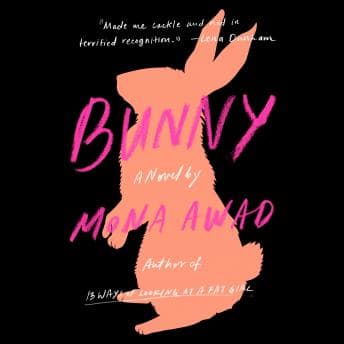
Okay, so I need to talk about this book. I picked up Bunny because Margaret Atwood compared it to Witches of Eastwick meets Mean Girls, and honestly? That's the kind of chaos I live for. What I got was something way weirder than I expected—and I mean that as the highest compliment.
Here's the setup: Samantha is a scholarship student in a tiny, elite MFA program at Warren University. She's an outsider. Dark imagination. Prefers her own company. And then there's the Bunnies—this clique of rich, impossibly twee girls who all call each other "Bunny" and move like they share a hive mind. You know the type. (If you've ever been the weird kid at the back of any room, you know the type.) When Samantha gets pulled into their orbit, things go from uncomfortable to straight-up eldritch horror real fast.
I listened to this instead of working on my thesis. No regrets.
The Magic System Is... Wait, Is There a Magic System?
Look, I'm a Sanderson guy. I like my fantasy with rules, with progression, with clearly defined costs. Bunny is not that. At all. This is the kind of story where the magic is messy and emotional and doesn't explain itself. The Bunnies have these "Workshops" where they literally conjure creatures into existence, and Awad never sits you down with a textbook on how it works.
And here's the thing—it shouldn't work for me. But it does. Because the internal logic isn't about mechanics; it's about feeling. The horror isn't "how is this possible," it's "oh god, this is happening." More like a dark fairy tale than epic fantasy. Think Brothers Grimm if they'd gone to grad school and developed an eating disorder.
The world-building here is all atmosphere. Awad creates this suffocating academic bubble where everything is too precious, too curated, too pastel. And then she tears it apart with blood and fur and monsters. It's not Sanderson-level world-building, but it's its own kind of immersive. Baroque, almost. Like someone decorated a nightmare in macarons.
Sophie Amoss Walked So the Bunnies Could Haunt Your Dreams
Sophie Amoss absolutely nails this narration. Her Samantha is pitch-perfect—defensive, longing, horrified, darkly funny. She captures that specific grad school exhaustion where you're too tired to be sane but too stubborn to quit. And her Bunnies? Oh man. The way she voices them—that saccharine, synchronized sweetness—is so accurate it made my skin crawl.
(One listener said the Bunny voices made them want to punch the narrator. Which, honestly? Means she did her job. Those characters are supposed to be insufferable.)
Amoss handles the tonal shifts like a pro. This book whiplashes between dark comedy and genuine horror, and she keeps you grounded through all of it. When Samantha's wonder turns to dread, you feel it. When the satire lands, it lands. The 11-plus hours flew by, which is saying something for a book this weird.
Who Should Queue This Up (And Who Should Run)
Real talk. This is not a book for everyone.
If you like your narratives straightforward, skip it. If surreal horror makes you impatient, skip it. If you need to understand exactly what's happening at all times, you will be frustrated. The story is deliberately disorienting—less "follow the plot" and more "surrender to the vibe."
But if you're into dark academia? If you've ever been the outsider looking at a clique with equal parts disgust and fascination? If you want something that feels like a fever dream in the best way? This is your book.
My D&D group would have mixed feelings. Half of them would love the body horror and the weird monster creation scenes. The other half would be annoyed that there's no clear explanation for how the magic works. (I'm in the first camp, obviously.)
Rolling to Save vs. Thesis Procrastination
Bunny is a strange, savage little book. It's about loneliness and belonging and the terrible things we do to fit in. It's about creativity as power and creativity as destruction. It's about grad school as a cult, which—having been in grad school—tracks. That same sense of institutional claustrophobia and social hierarchy turning violent shows up in Lord of the Flies, though obviously with less pastel horror and more literal island chaos.
The audiobook elevates it. Amoss brings a humanity to Samantha that makes you root for her even when she's making terrible choices. And the production is clean—no weird audio issues, nothing to pull you out of the story.
Would I listen again? Maybe. It's the kind of book that probably rewards a second pass, once you know where it's going. But honestly, I'm still processing the first listen. My thesis is definitely not getting done this week.
If you're looking for something that takes risks, that refuses to play it safe, that might genuinely unsettle you—Bunny delivers. Just don't expect it to make sense. Embrace the chaos. The Bunnies are waiting.