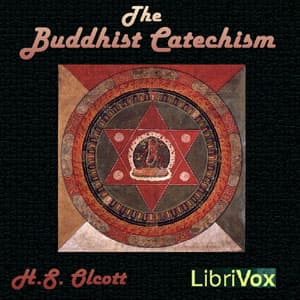

Looking for a narrative arc, a plot twist, or deep character development? Turn back now. Seriously. This is a FAQ page from 1881 read aloud. But—and hear me out—it's actually kind of brilliant for that exact reason.
The Ultimate Cheat Sheet
Henry Steel Olcott was a Civil War colonel, a lawyer, and then—in a plot twist that sounds like a modern biopic—he moved to Sri Lanka to help revive Buddhism. (As one does.) He wrote this book to teach the basics to beginners who were losing touch with their traditions. The format is relentless: Question. Answer. Question. Answer.
It reminds me of the flashcards I force my AP Lit students to use. "What is the First Noble Truth?" Boom, answer. "What is Karma?" Boom, answer. No fluff. No flowery prose to get lost in. Just the raw data of a belief system.
I listened to this while grading a stack of particularly disastrous essays on The Great Gatsby, and honestly? The structure was weirdly soothing. It cuts through the noise. Olcott isn't trying to be poetic; he's trying to be precise. If you've ever wanted to understand the nuts and bolts of Theravada Buddhism without wading through a 600-page dense philosophical treatise, this is basically the SparkNotes version from the 19th century.
The LibriVox Roulette
I usually approach volunteer recordings with the same caution I approach the cafeteria meatloaf on a Tuesday. You never know what you're gonna get. Sometimes it's a professional voice actor donating their time; other times it sounds like someone recording in a bathroom with a fan running.
I've rolled the dice on LibriVox enough times to know the gamble—History of the Decline and Fall of the Roman Empire Vol. V had the same volunteer setup, and honestly, it was rougher around the edges than this one.
This production features a tag-team: Beth Thomas, Ben Lindsey-Clark, and deongines. And you know what? It works. Because the book is split into categories (Life of Buddha, Doctrine, etc.), the change in speakers acts like a palate cleanser. Just when my brain started to drift during a long list of precepts, a new voice tagged in and woke me up.
They play it straight. No acting. No dramatic pauses for effect. They read it like a textbook, which is exactly what this is. If they'd tried to "perform" this text, it would've been unbearable. Instead, it's just clear, clean information delivery. (Fair warning: it can get a bit monotone. I bumped the speed to 1.25x about ten minutes in—that was the sweet spot.)
Skip It or Queue It?
This isn't for the casual listener who wants "spiritual vibes" while doing yoga. This is for the history nerd or the student—the person who wants to know exactly what was being taught in the Buddhist revival movement of the late 1800s.
It's dry. I won't lie to you. My mom would last about four minutes before switching back to her murder mysteries. But there's something incredibly satisfying about a book that respects your time enough to just give you the answers without the preamble. It's a historical document that still functions as a primer. If you want something in the same spiritual-education lane but with way more narrative flow, Falling Upward actually builds an argument instead of just listing facts.
Mr. Williams's Final Grade
Worth the two hours, even if just to say you've "read" a classic of religious history.