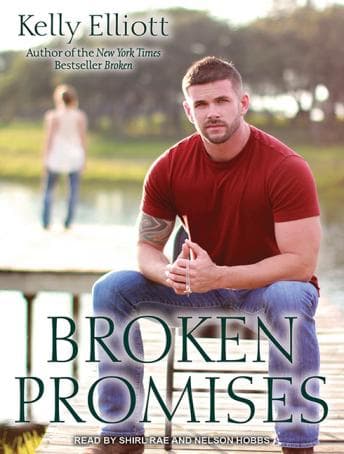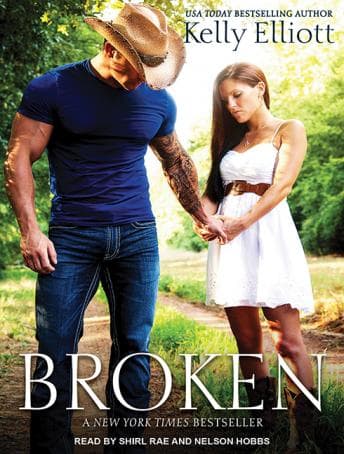

So here's the thing about broken people finding each other in romance novels—it can go one of two ways. Either it's healing and cathartic and makes you believe in second chances, or it feels like trauma Olympics where everyone's competing for Most Damaged. This one? It's the first kind. And I ugly-cried through approximately 40% of it while designing a logo for a craft brewery. My cats were concerned.
Layton Morris had the kind of childhood that makes you want to reach through your headphones and hug him. No running water, no electricity, parents who were basically ghosts—just him and his brother Mike surviving together. And then Mike dies. And then the woman he loved walks away. I mean, honestly, Kelly Elliott was not playing around with this man's backstory. She stacked the trauma like she was building a Jenga tower of sadness.
But here's where it gets good. Whitley Reynolds is fleeing an abusive marriage, starting over in tiny Llano, Texas with her best friend Courtney. She's got her own broken pieces to deal with. And when these two meet? The chemistry is chef's kiss. It's not instalove—it's two people who are terrified of connection slowly, painfully, beautifully learning to trust again.
Nelson Hobbs Made Me Feel Things I Wasn't Ready For
Okay, I need to talk about Nelson Hobbs for a second. His voice is like warm whiskey and Texas sunsets and that feeling when someone finally sees you. When he narrates Layton's internal struggle—the way he wants Whitley but is terrified of losing someone again—my heart. MY HEART. There's this moment where Layton is fighting his feelings and Hobbs delivers it with this quiet ache that had me pausing my work because I couldn't see through the tears.
Shirl Rae handles Whitley with equal care. She captures that specific kind of strength that abuse survivors develop—the hypervigilance, the flinching, but also the determination to reclaim herself. Her voice has this vulnerability that never tips into victimhood. Whitley isn't defined by what happened to her; she's defined by her choice to leave. Rae gets that.
The dual narration works beautifully here. You get both perspectives with their own distinct voices, and the transitions feel natural. When they're together, you can actually feel the tension and tenderness shifting between them.
The Slow Burn That Actually Burned
This is not a fast-paced book. At over 10 hours, it takes its time. And honestly? I was grateful. These characters needed space to heal before they could fall in love. Elliott doesn't rush the emotional work, and that made the payoff so much sweeter.
The Texas ranch setting is basically a character itself—all wide open spaces and hard work and the kind of quiet that forces you to confront yourself. I listened to most of this during a marathon design session, and the vibes were immaculate. This is a rainy Sunday book, or in my case, a Tuesday-through-Friday-while-working book.
There are some heavy moments. The domestic abuse Whitley survived isn't glossed over, and there are scenes that might be difficult for some listeners. But Elliott handles it with respect. Whitley's healing isn't linear, and that felt real.
Who Needs This Book (And Who Should Sit This One Out)
If you need a good cry and you want to believe that broken people can find their way back to wholeness, this is your book. If you love cowboys and small-town Texas and the enemies-to-lovers-adjacent thing where they're not really enemies, just scared—you're going to eat this up.
Skip if you're sensitive to domestic abuse themes (it's not gratuitous, but it's present) or if you need plot-driven action. This one's character-driven all the way, and it moves at the pace of healing, not Hollywood.
Abuela would have loved this one. She always said the best love stories were about people who'd been through hell and chose each other anyway. She'd have been clutching her rosary during the sad parts and yelling at Layton to just tell Whitley how he feels already. Golden Girl had me doing the same thing—screaming at characters to just communicate already.
The production is clean, the accents are spot-on (no fake Texas drawl nonsense here), and at 1.0x speed, I savored every emotional beat. Some books you speedrun. This one you let wash over you.
Abuela Would Approve
Four crying sessions. New spreadsheet entry. Worth every tear.