
Okay, can we talk about the crying? Seriously.
I just finished a twelve-hour shift at the trauma center. I spent half the night listening to monitors beep, gurneys squeak, and a guy in Bay 4 screaming because he didn't like the sandwich selection. My drive home is sacred. It's my forty-five minutes of decompression before I have to switch from "Trauma Nurse Maria" to "Mom who makes pancakes." So when I'm cruising down the I-10 at 4 AM, the last thing I need is a narrator sounding like she's auditioning for a soap opera in a wind tunnel.
My Commute Didn't Need This Sound Effect
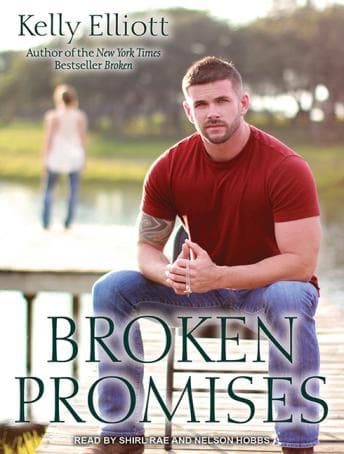
Here's the deal with Broken Promises. You have two narrators. Nelson Hobbs? Absolute gold. The man has a voice that could lower a patient's blood pressure without meds. He's steady, warm—the kind of voice you want telling you everything's going to be okay after a code goes south. I could listen to him read the hospital cafeteria menu and be happy.
But then Shirl Rae comes in. Look, I know this is a romance. I know there's drama. But the vocal choices for the crying and the... intimate moments? Yikes. It was uncomfortable. Not "oh, this is raw emotion" uncomfortable, but "I hope the guy in the car next to me can't hear this through my windows" uncomfortable. I literally turned the volume down at a red light because I was embarrassed, and I'm a forty-year-old woman who has seen everything.
When The Heartbreak Hits (And When It Misses)
Despite the audio cringes, the story itself has bones. It's heavy. We're talking domestic abuse, trauma, the kind of "broken" that takes years to fix. As someone who sees the physical aftermath of domestic situations way too often in the ER, I have a low tolerance for authors who use it just for shock value. Kelly Elliott actually handles the weight of it pretty well. It's melodramatic, sure—it's a romance novel, not a chart note—but the pain felt earned.
I had the same cautiously approving nod with Saved, where Elliott goes heavy without making me want to throw my badge at the speakers.
Walker and Taylor's journey is messy. It's about second chances when you really don't think you deserve one. Me Before You: A Novel gave me that same chest-tight feeling, just with fewer dashboard lectures from me. I liked that. In my line of work, you see people at their absolute worst, and you have to believe they can get better. Watching these two try to navigate their wreckage was satisfying, even if I did yell "COMMUNICATE WITH EACH OTHER!" at my dashboard a few times. (Carlos asked why I looked stressed when I walked in the door. I blamed the traffic. It was the lack of communication skills, honestly.)
Who's This For (And Who Should Skip It)
If you love second-chance romance with real emotional weight and can tolerate some over-the-top female narration, give it a shot. Skip it if exaggerated crying and vocal performances during intimate scenes make you cringe—or if you're listening anywhere someone might overhear.
The Post-Shift Prescription
If you can get past the over-the-top female narration, there's a good story here. It's emotional and gritty, and Nelson Hobbs does a lot of heavy lifting to keep it grounded. Not a perfect listen—I had to skip forward a few times when the vocalizations got too weird—but for a post-shift wind-down where I just want to feel someone else's problems for a change? It worked.
Just maybe keep your finger on the volume button if you're listening with the windows down.