
I was walking down the Lakefront Trail yesterday—wind whipping off Lake Michigan, trying to look like a stoic Chicago educator—when I realized I was openly weeping behind my sunglasses. A jogger actually stopped to ask if I was okay. I had to wave him off.
"I'm fine," I choked out. "It's just this bumblebee-tights-wearing woman and her quadriplegic employer."
(He ran away very fast.)
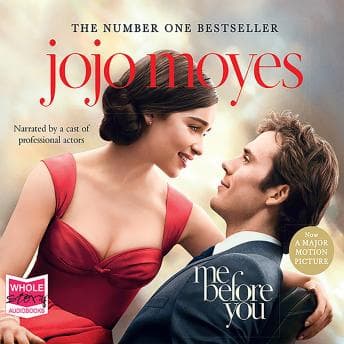
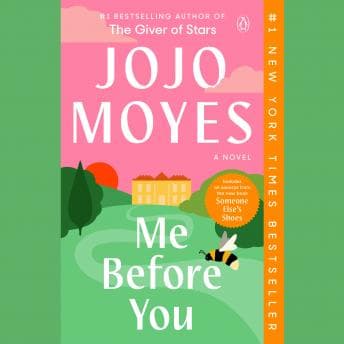
Look, I usually stick to the dead guys. Give me Faulkner or give me death, right? But Denise—my wife, the only person whose book recommendations I take seriously—told me I needed to listen to Me Before You. She said it would wreck me. She was right. But here's the thing: while the story is an absolute gut-punch, the audio production? It's... complicated.
Susan Lyons Carries This Thing
Let's start with the good stuff. Susan Lyons, who voices the main character Louisa Clark, is phenomenal. Seriously.
Louisa is a character that could easily become annoying in the wrong hands—she's quirky, chatty, and a bit frantic. But Lyons grounds her. She captures that specific British working-class anxiety, the hesitation, the warmth. When Lou is trying to get Will Traynor (the cynical, wheelchair-bound ex-Master of the Universe) to crack a smile, you can hear the desperation and the hope in Lyons's voice. She doesn't just read the dialogue; she inhabits the awkward silences.
(And yes, the chemistry works. Even in audio. Don't ask me how, it just does.)
As an English teacher, I'm always telling my students to look for the "voice" of the text. Lyons found it. She nailed the pacing. If the whole book had just been her, this would be a five-star, no-notes situation.
Six Narrators, One Bumpy Ride
But then... the other narrators show up.
Here's the deal with the production: It uses a different narrator for different POV chapters. In theory? Great idea. It reminds me of reading As I Lay Dying (sorry, had to get one classic ref in there), where distinct voices build a complete picture. Jojo Moyes actually tries this technique again in After You: A Novel, though with less ambitious narrator switching.
In practice? It's jarring.
We have Anna Bentinck, Steven Crossley, Alex Tregear, Andrew Wincott, and Owen Lindsay rounding out the cast. Most of them are fine. Good, even. But the transitions are rough. You get so settled into Susan Lyons's rhythm—her specific cadence for Lou—and then BAM, you're thrown into a completely different audio environment.
And I do mean environment.
I'm a bit of an audio snob (I know, shocking), but I swear I could hear the edits. There are moments where the room tone seems to shift, or the volume levels don't quite match up between chapters. It pulls you out of the story. It's like watching a movie where the film reel jumps. For a book that relies so heavily on immersion and emotional buildup, these technical hiccups hit like a splash of cold water.
Why It Still Works (Mostly)
Despite the production clunkiness, the story wins. Jojo Moyes manages to take a premise that sounds like a Lifetime movie and turn it into a genuine exploration of class, disability, and autonomy.
(Though, fair warning: the ending is controversial. We had a debate about it in the faculty lounge that got surprisingly heated. Mrs. Higgins from Math is still not speaking to me.)
The emotional weight is heavy. It tackles assisted dying, which isn't exactly light commute listening. But the humor—mostly from Lou's family and her terrible fashion sense—balances it out. The narrator for Will (I believe it's Andrew Wincott doing the heavy lifting there) manages to make him sympathetic without losing that sharp, bitter edge that defines him.
So, is it perfect? No. The editing is a bit messy. The narrator roulette can be distracting. But did I finish it? Yes. Did I cry on a public bench near Navy Pier? Also yes. Promise had me in a similar state—different story, same emotional devastation.
Who should listen: Anyone who wants a love story that doesn't shy away from hard questions about autonomy and what makes life worth living. Who should skip: If you're sensitive to production inconsistencies or need your audiobooks polished to a shine, the narrator switching might drive you up a wall.
Sometimes a story is strong enough to survive its own format. This is one of those times. Just maybe keep a tissue handy. And don't listen while grading papers—you'll smudge the ink.