
What happens to identity when someone literally steals yours?
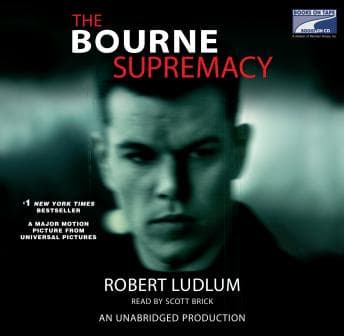
I was stirring a lamb rogan josh at 10 PM — the kind of elaborate weeknight cooking that signals either ambition or avoidance of a half-written research paper — when Jason Bourne's world split in two. Someone out there in Ludlum's Cold War Hong Kong is walking around wearing Bourne's name like a mask, committing assassinations under his legend, and the real Bourne has to hunt his own doppelgänger down. As a psychologist, I found myself asking: why does Ludlum keep returning to the fractured self? Because this isn't just a spy thriller. It's a 27-hour case study in dissociation, identity theft as existential crisis, and the terrifying question of whether you can reclaim a self that was never fully yours to begin with.
Two Bournes Walk Into a Kowloon Back Alley
The premise is genuinely brilliant from a psychological standpoint. The protagonist exhibits classic identity disturbance — he's still plagued by splintered memories from the first book, still uncertain which version of himself is real, and now there's a literal impostor forcing the question. Ludlum understood something that a lot of thriller writers miss: external threat is only interesting when it mirrors an internal one. Bourne isn't just tracking a killer who stole his name. He's confronting the possibility that the killer's version of "Jason Bourne" — ruthless, efficient, amoral — might be closer to the truth than the man he's trying to be.
The Hong Kong and Kowloon sequences where Bourne flushes out the impostor are where Ludlum's dramatic irony really lands. You know things the characters don't, and that gap between your knowledge and theirs creates this slow-building dread that's pretty addictive. The Baltimore funfair chase — a cat-and-mouse sequence that ends in death — is visceral and chaotic in a way that reminded me why Ludlum sold millions of books before Hollywood ever touched this material.
But here's my honest assessment: the book sags. Ludlum's plotting in the middle third gets tangled in its own CIA conspiracies and turncoat agent reveals to the point where I lost track of which double-cross we were on. The first Bourne novel had a tighter psychological thread. This one sometimes prioritizes geopolitical chess over character interiority, and when that happens, 27 hours starts to feel like 27 hours. Psychologically, some of the secondary character motivations don't track — people shift allegiances for plot convenience rather than recognizable human reasons, and that's where I get annoyed.
Scott Brick: The Man Carrying 27 Hours on His Back
Scott Brick does something smart here. He gives Bourne this quality of steely determination laced with genuine astonishment — like a man who keeps being surprised by his own competence. It works because that IS Bourne's psychology: a trained killer who can't fully remember being trained. Brick differentiates the cast well enough that multi-character conversations stay followable, which in a book this dense with players is no small feat.
Where it gets shaky: Brick occasionally tips into theatrical territory. Some of the Chinese characters' accents land a bit heavy-handed, and there are stretches where his intensity doesn't match the story's pacing — he's at a 9 when the scene is at a 5. It's the narration equivalent of someone gripping your arm too tight during a movie that's only moderately tense. Not a dealbreaker, but I noticed it, and once I noticed it, I kept noticing it.
The real challenge is that Ludlum's prose is already baroque — long sentences, nested clauses, characters delivering speeches disguised as dialogue. Brick has to navigate that architecture without losing the listener, and he mostly succeeds. Mostly. There were moments during my morning jog through Cambridge where I had to rewind because a plot revelation got buried inside a paragraph-long monologue and I genuinely couldn't tell who was betraying whom.
Who Should Commit to This 27-Hour Operation
If you loved the first Bourne book and want to see Ludlum push the identity crisis further — someone literally becoming you — this delivers on that promise. If you're a completist. If you want Cold War espionage that actually feels like espionage: messy, paranoid, bureaucratic. This is your book.
Skip it if you're coming from the movies expecting Matt Damon-paced action. The book is a different animal entirely — slower, more cerebral, more interested in the machinery of intelligence agencies than in car chases. And if complex plots make you zone out during passive listening, this is absolutely not a background or bedtime book. This one demands your attention or it will punish you for drifting.
My Therapist Would Have Thoughts About This Character
The research actually shows that identity disturbance — not knowing who you fundamentally are — is one of the most destabilizing psychological experiences a person can have. Ludlum gets that. He may overwrite, he may let the plot meander, but he understands that the scariest thing about Jason Bourne isn't the assassin skills. It's that there might be no stable self underneath them. That's what kept me listening through all 27 hours, lamb rogan josh long since eaten, research paper still unwritten.
The book is imperfect. But the central question is perfect. And sometimes that's enough. Though I'll admit — if you're craving something that trades Cold War paranoia for romantic chaos but still keeps that same psychological edge of people performing versions of themselves they're not sure they believe in, Royally Screwed scratched a surprisingly similar itch for me, which says something either about the book or about my brain at 11 PM.