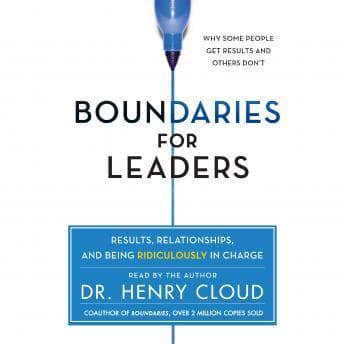

Can we talk about the subtitle for a second? "Being Ridiculously In Charge." I physically winced when I heard that. I was meal-prepping at 10 PM on a Tuesday - chicken thighs, rice, banchan containers lined up like little soldiers - and Henry Cloud hits me with "ridiculously in charge" like it's supposed to be aspirational. My mom was ridiculously in charge. She ran a dry cleaning business with a broken steamer for three months because the repair guy kept ghosting her. She didn't need a clinical psychologist to tell her about boundaries. She just had them.
But here's the thing. I kept listening. And by chapter 3, I was annoyed at myself for liking it.
The 45 Minutes That Actually Matter
Bottom line: Cloud's central framework is genuinely useful. He breaks leadership boundaries into seven categories - what you create and what you allow, attending to what matters, building emotional capacity in your team, connecting with outcomes, thinking and beliefs, getting buy-in, and personal self-management. The strongest section is his work on "emotional climate" - the idea that a leader's mood and tolerance level literally sets the neurological conditions for their team's performance. He pulls from neuroscience research on how the prefrontal cortex shuts down under threat, which means your team can't do complex problem-solving if you're running the room like a courtroom.
This is what my parents did instinctively. Now it has a TED talk. My dad never yelled at employees. Not once. He'd get quiet when something went wrong, ask questions, figure it out. Cloud spends about 40 minutes explaining why that works neurologically. Cool. But also - my dad figured that out running a Koreatown dry cleaner with a 7th grade Korean education.
The key takeaway is worth the listen. The other 7 hours? Not so much.
Where the Boundaries Get Blurry
Here's my frustration - and I've seen this echoed in listener complaints that I completely agree with. Cloud gives you the "what" but gets vague on the "how." He'll tell you that leaders need to create boundaries around negativity in their teams. For the part he skips—the actual script for walking someone out the door—Necessary Endings is the book I reach for instead. Great. Then the prescription is basically... have a conversation about it? Set expectations? I've seen this fail at three different companies. The hard part isn't knowing you need boundaries. The hard part is the Tuesday morning when your top performer is also your most toxic personality and you've got a board meeting in four hours.
The organization is also shaky. Ideas repeat across chapters in slightly different packaging. By hour 5, I started feeling like I was in a consulting engagement where the deliverable was padded to justify the fee. (I say this as someone who has absolutely done that. Glass houses, etc.)
Some listeners have noted the book feels a bit self-congratulatory - Cloud references his own consulting work frequently, and there's a "let me tell you about this CEO I coached" energy that gets old. It's not egregious, but by the fourth anecdote where Cloud swoops in and saves a leadership team, you start wondering if any of his clients ever pushed back.
Long before this one, I got a cleaner version of the same relationships-drive-performance argument in Power of the Other.Cloud Narrating Cloud
Here's where author-narrated books have an unfair advantage: authenticity. Cloud reads his own material with genuine warmth. His pacing is natural, his emphasis lands where it should, and he sounds like a guy who actually believes what he's saying - because he does. No vocal fireworks, no dramatic pauses for effect. Just a clinical psychologist explaining things clearly, like he's across a table from you.
At 2.0x he's perfectly listenable. Clean audio, no production issues. The man enunciates like he's been doing this his whole career, which - fair enough, he has.
Jenny would say I'm being harsh. Jenny is right. This isn't a bad book. It's a good book trapped inside a mediocre structure. If Cloud had an editor who cut 30% and added concrete frameworks - decision trees, scripts for hard conversations, diagnostic checklists - this would be elite tier leadership material.
Who Gets ROI Here (And Who Doesn't)
New managers, first-time leaders, anyone who just got promoted and is suddenly responsible for other humans' output - this is solid foundational material. The neuroscience framing gives you language to explain WHY certain leadership behaviors work, which is useful when you're trying to convince a skeptical team or justify your approach to a board.
Seasoned executives? You'll nod along but probably won't highlight anything new. If you've read Cloud's original "Boundaries" book or consumed any serious leadership development content in the last decade, this covers familiar ground with a fresh coat of paint.
I got the same sense of re-reading old notes with Integrity, another Cloud narration built on one good central idea.Skip to chapter 3. Thank me later. That's where the emotional climate material lives, and it's the strongest argument in the book.
The Dry Cleaner Test
I measure every business book against whether my parents would've found it useful. This one gets a partial pass. The core insight - that leaders are responsible for creating the conditions where good work can happen - is real and important. The execution is uneven. Named one of CEO Reads' top five leadership books its year, which tracks. It's better than most. But "better than most" in the business book world is a low bar when most business books are 45 minutes of insight stretched across 8 hours.
This one's maybe 90 minutes of insight stretched across 7.5 hours. Progress.