
What does it actually cost — psychologically, organizationally, humanly — to prioritize speed above everything else?
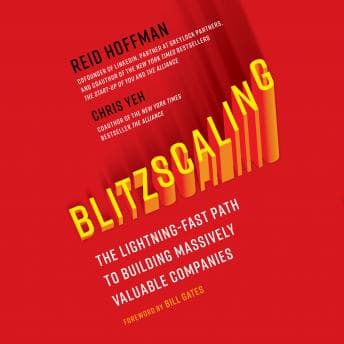
I was halfway through prepping a dal makhani on a Sunday evening, hands covered in garlic paste, when Reid Hoffman casually explained that blitzscaling companies intentionally embrace chaos. Not managed chaos, not strategic disorder — actual, genuine, we-don't-know-what-we're-doing-but-we're-doing-it-fast chaos. And I found myself standing over a pot of lentils thinking: the protagonist exhibits classic grandiosity patterns. Except the protagonist here isn't a fictional character. It's Silicon Valley itself.
The Psychology of "Move Fast and Break Things" — Except It's a Business Model
Here's what Hoffman and Yeh are really selling, underneath the frameworks and the stage-by-stage growth taxonomy: permission. Permission to be inefficient. Permission to hire before you know what you need. Permission to spend money you don't have on problems you haven't fully defined. And look — they back it up. The book walks through how companies like LinkedIn (Hoffman's own baby, so grain of salt there), Airbnb, and various Chinese tech giants like Tencent and Didi scaled from scrappy startups to behemoths by deliberately choosing speed over efficiency.
The research actually shows that their framework — Village, City, Nation, stages of organizational growth — is genuinely useful as a mental model. Each stage requires different leadership behaviors, different hiring philosophies, different tolerances for dysfunction. That part is solid. Hoffman's insider knowledge of what it felt like to scale LinkedIn from a few dozen employees to thousands gives the book a specificity that pure business theorists can't match. When he talks about the moment a founder has to stop being the person who approves every hire, you can hear in his voice that this was personal.
But I kept asking: why does Hoffman really frame this as the only path? The book's central thesis — that speed is the sole competitive advantage that matters — is stated with such confidence that it almost discourages the reader from questioning it. Psychologically, this doesn't track for me. Survivorship bias is doing heavy lifting throughout. We hear about the companies that blitzscaled and won. We hear almost nothing about the ones that blitzscaled and imploded. And in a nine-hour audiobook, you'd think there'd be room.
Two Authors Narrating Their Own Gospel
So here's the thing about author-narrated business books: they're either revelatory or they're a PowerPoint presentation someone is reading aloud at you. Hoffman and Yeh land somewhere in the middle. Hoffman has a distinctive, slightly nasal cadence — not unpleasant, but very much "guy explaining something at a Stanford lecture." Yeh is cleaner, more polished, more audiobook-narrator-adjacent. The contrast works okay. You always know who's talking.
What you don't get is dynamism. There's no dramatic tension in the delivery, no shift in energy when they're discussing, say, the genuinely harrowing scaling challenges Airbnb faced versus the more abstract framework chapters. It's all delivered at the same authoritative, measured pace. For a book literally called Blitzscaling — about lightning speed and breakneck growth — the listening experience is surprisingly... steady. Not boring, but steady. I found myself speeding it up to 1.25x during the more theoretical sections and it improved noticeably.
The production is clean and straightforward. No music, no sound effects, no dramatic flourishes. Just two guys and a microphone. Which is fine for this genre. You're not here for an experience; you're here for information.
This Is a Fascinating Case Study in Founder Mythology
What makes this book psychologically interesting to me — and I'm applying my character-analysis brain here, because I can't help it — is the way it constructs a particular identity for the entrepreneur. The blitzscaler is presented as someone who embraces discomfort, tolerates ambiguity, makes imperfect decisions with conviction. Hoffman frames this as almost heroic. My therapist would have thoughts about this character.
Because the flip side of "embrace chaos" is burnout culture. The flip side of "hire fast" is a workplace where nobody knows their role. The book acknowledges these tradeoffs exist but treats them as acceptable costs rather than examining the human wreckage. I wanted more honesty there. I wanted someone to say: this approach might build billion-dollar companies, but it also breaks people.
Compared to something like Ben Horowitz's The Hard Thing About Hard Things, which gets visceral about the emotional toll of scaling, Blitzscaling stays more clinical. Pivot sits closer to that emotional register too — it's still a business book, but Jenny Blake actually interrogates the cost of constant forward motion rather than just celebrating it. More framework, less feeling. That's a choice, and it's not necessarily wrong — but it means the book functions better as a reference manual than as a narrative.
Who Gets Value Here (And Who's Wasting Nine Hours)
If you're actively building a startup or working in a high-growth company, this is useful. Genuinely. The frameworks for thinking about when to prioritize speed, how to shift management styles at different scales, and what role the founder should play at each stage — that's actionable stuff. If you're a business nerd who wants to understand why certain companies dominated their markets, you'll find the case studies satisfying enough.
But if you're looking for deep psychological insight into leadership, or a critical examination of whether this model is actually good for the humans inside these companies — keep looking. And if you're not in tech or startups at all, this will feel like eavesdropping on someone else's very expensive conversation.
My Prescription
A solid business audiobook that knows exactly what it is. Smart frameworks, credible authors, useful if you're in the right context. But it believes its own thesis a little too completely, and I kept wanting it to interrogate its own assumptions the way a good researcher would. Speed is an advantage. But so is asking uncomfortable questions about what you're sacrificing to get it.