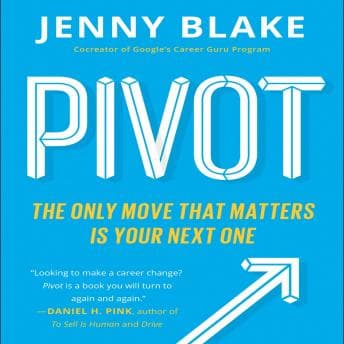

I was reviewing a client's org chart at 11 PM—one of those "quick" projects that turned into three hours of untangling who reports to whom after their latest restructuring—when I finished this book. And honestly? Jenny Blake gets it. She understands that the old career ladder is dead, and most of us are just pretending it isn't.
**Quick Verdict:** This is a solid framework book that respects your time. At 6.5 hours, Blake doesn't pad her ideas into oblivion like 90% of business authors. The four-stage pivot method (Plant, Scan, Pilot, Launch) is genuinely useful, and she backs it with enough real examples that you're not just getting theory dressed up as wisdom.
What My Parents Knew Without the Framework
Here's the thing about Blake's core insight—double down on what's already working. My parents pivoted their dry cleaning business three times in twenty years. Added tailoring when the Korean community needed it. Shifted to corporate accounts when the neighborhood gentrified. They never called it "scanning for opportunities" or "running pilots." They called it survival.
But Blake's framework is genuinely helpful for people who didn't grow up watching entrepreneurial hustle happen in real time. The "one-year vision" exercise she walks through is practical. The questions she poses about identifying your strengths versus your interests—and understanding they're not always the same thing—that's the kind of stuff I wish more consultants would internalize before they burn out chasing the wrong promotion.
Blake Behind the Mic
Blake narrates her own book, which is always a gamble. Some authors sound like they're reading a grocery list. Others get so performative you forget there's content. Blake lands in the sweet spot—clear, practical, like a smart colleague explaining something over coffee. Her Google background shows in how she structures information. You can tell she's actually taught this material to real humans.
The pacing is solid. No dramatic pauses. No weird emphasis on random words. Just competent delivery that lets the ideas breathe. I listened at 1.5x (slower than my usual 2.0x) because I was actually taking mental notes. That's a compliment.
Where the Pivot Gets Shaky
My issue—and Jenny would probably say I'm being harsh, and Jenny is right—is that Blake's examples skew heavily toward a certain demographic. Knowledge workers with savings. People who can afford to "run small experiments" because their base salary covers the mortgage. The tech-adjacent, Google-alumni crowd.
She acknowledges this isn't for people in crisis mode, which I appreciate. But I've seen the pivot framework fail when someone's trying to apply it while also managing a sick parent, or when their "existing strengths" are in an industry that's actively dying. The book doesn't fully grapple with structural constraints. It assumes a level of optionality that not everyone has.
That said—for its intended audience? This works. If you're a mid-career professional feeling stuck in a "perfect on paper" role, Blake's method gives you permission to move incrementally rather than blowing everything up. The emphasis on pilots over grand gestures is genuinely wise advice I've given to dozens of clients, just without the catchy branding. For a completely different take on structured thinking under pressure, 100 Deadly Skills applies the same incremental methodology to survival scenarios—oddly relevant when your career feels like a crisis.
Who Gets the ROI (And Who Doesn't)
This book is for you if: You're employed, reasonably stable, and feeling that itch that something needs to change but you don't know what. You're the person who's been "thinking about" making a move for two years but analysis paralysis keeps winning. You need a structured approach because "just figure it out" isn't your style.
Skip it if: You need immediate income solutions. You're looking for inspiration rather than methodology. You've already read ten career pivot books—this one won't revolutionize what you know, it'll just organize it better.
My Billable Hours Assessment
The key takeaway is worth the listen. The other 5.5 hours? Actually also pretty useful, which is rare. Blake won the Axiom award for best business book in careers, and I get why. It's not revolutionary—the ideas exist elsewhere—but the framework is clean, the examples are relevant, and she doesn't waste your time.
Would I recommend this to a client? Yes, with caveats about privilege and timing. Would I have recommended it to my parents? No. They were too busy actually pivoting to read about it. But for the rest of us who need the framework spelled out? This delivers.