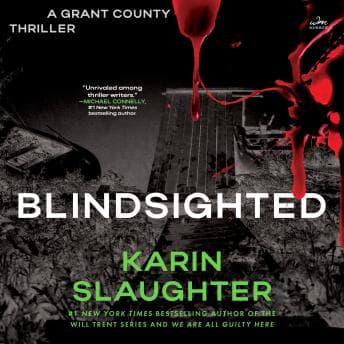

Look, I need to talk about this book because it genuinely unsettled me in ways I wasn't expecting from a crime thriller. Karin Slaughter doesn't just write about violence—she makes you sit with it. And that's a distinction most thriller writers never figure out.
I listened to Blindsighted during a late shift at the library, which in retrospect was a choice. There I was, alone in the stacks after hours, and Judith Ivey is describing a crime scene that made me physically pause my shelving. Shirley (my cat, not Jackson, though obviously named after her) would've been unimpressed by my cowardice. I was genuinely rattled.
The Southern Gothic Dread Is Real
Slaughter understands something fundamental about horror that most thriller writers miss: the slow reveal is everything. This isn't about gore for shock value—though make no mistake, this book is brutal. It's about the creeping realization of what humans are capable of doing to each other. The small Georgia town setting isn't just backdrop; it's complicit. Everyone knows everyone, which means everyone's hiding something.
Sara Linton as our pediatrician-slash-coroner protagonist? Brilliant casting on Slaughter's part. There's something deeply unsettling about a character who spends her days with children and her nights cutting open bodies. The duality works. And her complicated relationship with ex-husband Jeffrey Tolliver adds this messy human element that keeps the book from becoming just a parade of horrors.
But it's Lena Adams who haunts me. A detective whose sister becomes the first victim? That's not just plot—that's a pressure cooker of grief and rage that Slaughter handles with unflinching honesty. Lena's desire for vengeance feels earned, not manufactured.
Judith Ivey's Voice Gets Under Your Skin
Here's where I have to be honest: Ivey's narration is a bit of a mixed bag, but when it works, it really works. Her Southern drawl brings authenticity to Grant County that a neutral accent simply couldn't. There's an urgency to her delivery during the tense scenes—she commits to the desperation, and that's rare in audiobook narration.
That said, I noticed some pacing inconsistencies. Certain scenes felt rushed when they needed room to breathe, while others dragged slightly. And I'll admit her character differentiation isn't always crystal clear—I occasionally lost track of who was speaking in group conversations. But honestly? The emotional weight she brings to Sara and Lena's perspectives more than compensates. When the horror hits, Ivey doesn't flinch.
The production quality is clean—no weird audio artifacts or background noise that pulled me out. At around six hours for this version, it moves. I'd actually recommend keeping it at 1x speed; Ivey's pacing is deliberate, and speeding it up might undercut the tension Slaughter's building.
The Secret That Changes Everything
Without spoiling anything, there's a reveal about Sara's past that recontextualizes the entire story. It's the kind of plot turn that could feel cheap in lesser hands, but Slaughter earns it. The book is asking real questions about trauma, survival, and who gets to decide what justice looks like. My podcast listeners are going to have opinions about this one.
I will say: if you scare easily or have triggers around sexual violence, proceed with caution. Slaughter doesn't exploit trauma, but she doesn't look away from it either. Horror that respects the genre—it's not using violence as entertainment but as examination. There's a difference, and Blindsighted knows which side it's on.
Who Should Listen (And Who Should Skip)
If you're coming to this from Slaughter's Will Trent series, know that this is where it all started—the Grant County books laid the groundwork. The tone is darker, rawer, less polished than her later work. That's not a criticism. Sometimes the rough edges are where the truth lives. Skip this one if you need your thrillers sanitized or if sexual violence is a hard no for you—Slaughter doesn't exploit it, but she doesn't soften it either.
Fans of Gillian Flynn's Sharp Objects will find familiar territory here—Southern settings, female protagonists carrying heavy secrets, violence that implicates everyone. Same energy I got from End Game—another thriller that doesn't sand down its edges for comfort. If you want something older and moodier, Case of Jennie Brice plays in similar procedural waters, but Mary Roberts Rinehart's 1913 mystery is way more restrained. Less blood, more fog. Slaughter's approach hits harder—more grounded in the mechanics of investigation, more willing to make you uncomfortable.
Closing the Stacks
I listened in the dark. Mistake? Probably. Worth it? Absolutely.
This book understands that horror isn't about gore—it's about dread. The gore is just evidence.