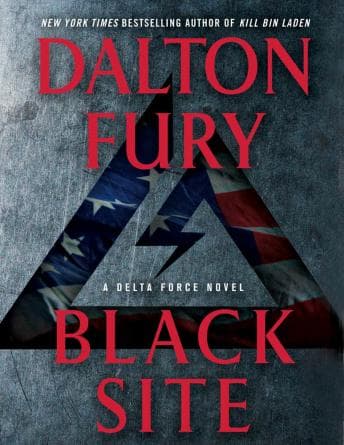
People keep telling me Dalton Fury wrote the definitive account of what happened at Tora Bora. They're right - Kill Bin Laden is outstanding. So when I saw he'd turned to fiction, I figured either we'd get something authentic as hell or another operator-turned-novelist disaster. The internet seems split right down the middle on this one. Some folks calling it breathlessly realistic, others dismissing it as formulaic. I finished it last Tuesday night, sitting on the back porch with Ranger while Linda was already asleep, and I think both camps have a point - which is the most frustrating kind of review to write.
The Guy Who Actually Kicked Doors Wrote This, And You Can Tell
Let me cut to the chase: Fury knew his stuff. Obviously. The man commanded Delta operators at Tora Bora. So when Kolt Raynor is moving through Pakistan's tribal areas, the tactical details land with a weight that guys like Brad Thor or Vince Flynn - God rest him - just can't replicate. The way Raynor processes a room, the comms chatter, the shorthand between operators. Fury doesn't explain things the way a civilian author would, dumbing it down with exposition. He writes like a guy who lived it, which means sometimes you're catching up to the jargon rather than being spoonfed. I appreciated that. Nobody in a stack is stopping to explain what "SSE" means to the new guy.
The Black Site concept itself - a secret CIA detention facility that becomes the target of an al Qaeda assault - is a solid premise. Fury clearly drew from real-world debates about enhanced interrogation sites and the messy reality of where we stashed high-value detainees post-9/11. I've seen this scenario play out in real life, at least in terms of the vulnerability of these kinds of facilities. The operational planning around the assault felt genuine in a way that made me uncomfortable, which probably means it was accurate.
Where Kolt Raynor Falls Short of His Creator
Here's where it lost me: Kolt Raynor is basically every disgraced-operator-seeking-redemption you've read in the last fifteen years, and Fury doesn't do enough to distinguish him. Got teammates killed on a bad op. Drinking too much. Gets pulled back in for one more mission. Look, I get it - write what you know, and there's probably some autobiographical DNA in Raynor's guilt and drive. But the character runs on archetype fuel when he should be running on premium. Raynor's split-second decision in Pakistan that got people killed? That should've been the emotional core of the entire book, but Fury handles it more like a plot mechanism than a wound. Compare that to how Tim O'Brien wrote about carrying guilt - and yeah, I know that's an unfair comparison, but still. Though I'll say this - the gap between a writer who lived the weight and one who merely researched it shows up in unexpected places, the same way it does in nonfiction like Betrayal of Anne Frank: A Cold Case Investigation, where you feel the difference between someone grinding through the evidence personally versus someone reconstructing it from a safe distance.
The pacing is uneven. First few hours set up Raynor's fall from grace and his recruitment back into the fold, and it drags. Not fatally, but enough that I can see why some listeners bailed. Once boots hit ground in Pakistan, though, Fury does what Fury does best - the action sequences have genuine kinetic energy. You can feel the man's muscle memory in how he writes firefights.
Fliakos Carries The Rucksack
Ari Fliakos was the right call for this narration, full stop. His voice has that low, controlled delivery that sounds like every competent NCO I ever served with - the guy who doesn't raise his voice because he doesn't need to. He nails the clipped military dialogue without making it sound like a parody. During the tenser sequences in the tribal areas, Fliakos dials up the urgency just enough without going full action-movie. Smart performance. He doesn't try to do elaborate accents for the Afghan and Pakistani characters, which is honestly fine - bad accent work would've been worse than the understated approach he takes.
At 1.25x, the 11.5-hour runtime moved well once the story found its footing. The slower early sections actually benefited from the speed bump.
Who Should Gear Up For This
If you're a military thriller junkie who values authentic tactical detail over character depth, this is worth your time. If you loved Kill Bin Laden and want to see Fury stretch into fiction, you'll find enough here to justify the listen. But if you're coming from the literary end of the thriller spectrum - the kind of reader who wants their operators to have rich inner lives and moral complexity beyond "I screwed up and I need to fix it" - you might find Raynor a little thin.
Worth your time? Here's the debrief: Fury brought the operational credibility nobody else in this genre can touch, paired it with a narrator who sounds like he could actually pass a security clearance, but wrapped it around a character and plot structure that plays it too safe. It's a solid B - the kind of book that makes a long drive to a client site in Dallas disappear, but won't keep you up at night thinking about it after.
Ranger slept through the slow parts. Can't say he was wrong.