
I was up past midnight grading a stack of persuasive essays — most of them about why school should start later, God bless their unoriginal hearts — when I put this on. Four and a half hours later, I hadn't graded a single additional paper. The essays could wait. Sandra couldn't.
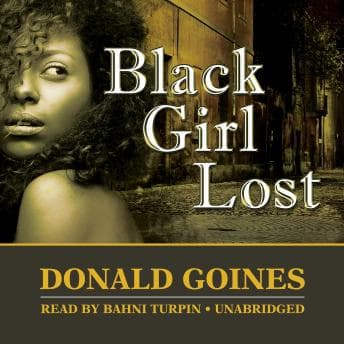
Donald Goines wrote Black Girl Lost in the early 1970s, and he wrote it the way a man writes when he knows exactly what he's talking about and doesn't have time to dress it up. Goines was a career criminal, a heroin addict, a man who started writing novels in prison and was murdered at 37. He produced sixteen books in four years. That kind of urgency bleeds through every sentence. This isn't literary fiction in the way my grad school professors would've defined it. But let me tell you something I've learned in twenty years of teaching: the canon is just a list of books that survived long enough for academics to justify their dissertations. I had the same realization reviewing English Synonyms and Antonyms — sometimes the books that actually teach language are the ones nobody assigns. Goines has survived fifty years because the streets remember what English departments forget.
Sandra at Eight Years Old Will Wreck You
The book opens with Sandra as a child — eight years old, shoplifting to eat. Not for thrills. For survival. And what Goines does that's so devastating is he doesn't linger on it with pity. He presents it with the flatness of fact. Sandra steals because Sandra is hungry. Sandra learns to push drugs because Sandra needs money. There's no moralizing, no hand-wringing narrator telling you how to feel. Goines trusts you to bring your own horror to the page.
And then Chink enters the picture, and you get this brief, aching window of tenderness — real affection between two people who've been taught by the world that they're disposable. But because this is Goines, because this is the world he knew in his bones, that tenderness exists alongside rape and murder. Not as shock value. As environment. This is what Hemingway meant about writing one true sentence and then another. Goines writes true sentences. They just happen to be sentences most people would rather not read.
My students would hate this. I love it. Not because of the violence — because of the honesty.
Bahni Turpin Understood the Assignment Before There Was an Assignment
Here's what I want to say about Bahni Turpin's narration: she doesn't perform tragedy. She inhabits it. There's a difference. A lesser narrator would've leaned into the graphic scenes with theatrical weight, turning Sandra's suffering into spectacle. Turpin does something harder — she keeps Sandra's voice steady even when the content is unbearable, and that steadiness is what breaks your heart. When Sandra speaks as a child, Turpin doesn't do a cutesy kid voice. She gives you a child who's already tired. Already calculating. The narrator understands that pause is punctuation, and Turpin uses silence the way Goines uses blunt prose — to let the truth sit there and dare you to look away.
During the scenes with Chink, her voice warms just enough that you catch yourself hoping. That's performance art. She's controlling your emotional register with micro-adjustments in tone, and you don't even realize she's doing it until you're already invested.
At 4 hours and 34 minutes, this is a short listen, but Turpin earns every second. I listened at 1.0x because the prose deserves to be savored — even when what you're savoring tastes like ash.
Who Needs to Hear This (And Who Should Prepare Themselves)
If you love urban fiction, you probably already know Goines. But if you come from the literary fiction side — if you've read Native Son or The Bluest Eye and want to understand the street-level counterpart to those canonical works — this is essential listening. If you loved Toni Morrison's unflinching gaze at Black suffering, Black Girl Lost is its rougher, rawer spiritual successor, written without the safety net of lyrical prose.
But I need to be straight with you: this book contains graphic violence, sexual assault, and abuse depicted with zero softening. Goines doesn't protect you from anything. If that's not something you can sit with right now, no judgment. Come back when you're ready. Or don't. That's okay too.
The Lesson Plan I'll Never Submit
I teach literature because I believe stories are how we practice empathy for lives we'll never live. I'll never assign this book in my classroom — the content alone would get me a meeting with Principal Martinez that no amount of Middlemarch could save me from. But if one of my students asked me what it really felt like to grow up with nothing, in a world that was already done with you before you started? I'd hand them this audiobook and say: listen. Just listen.
Worth pausing the faculty meeting for. Worth pausing everything for.