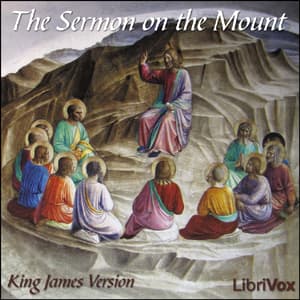

"Blessed are the poor in spirit: for theirs is the kingdom of heaven."
Thirteen minutes. That's all it takes. I was sitting at the kitchen table at quarter to midnight, papers half-graded, red pen going dry, and I put this on almost as a palate cleanser between a stack of sophomore essays about The Great Gatsby and whatever was left of my sanity. Thirteen minutes later I just sat there with my hands flat on the table like I'd been told something I already knew but had somehow forgotten.
Let's talk about what the author is really saying. Or rather — let's talk about what happens when you actually hear it.
Four Hundred Years of English and It Still Hits Different
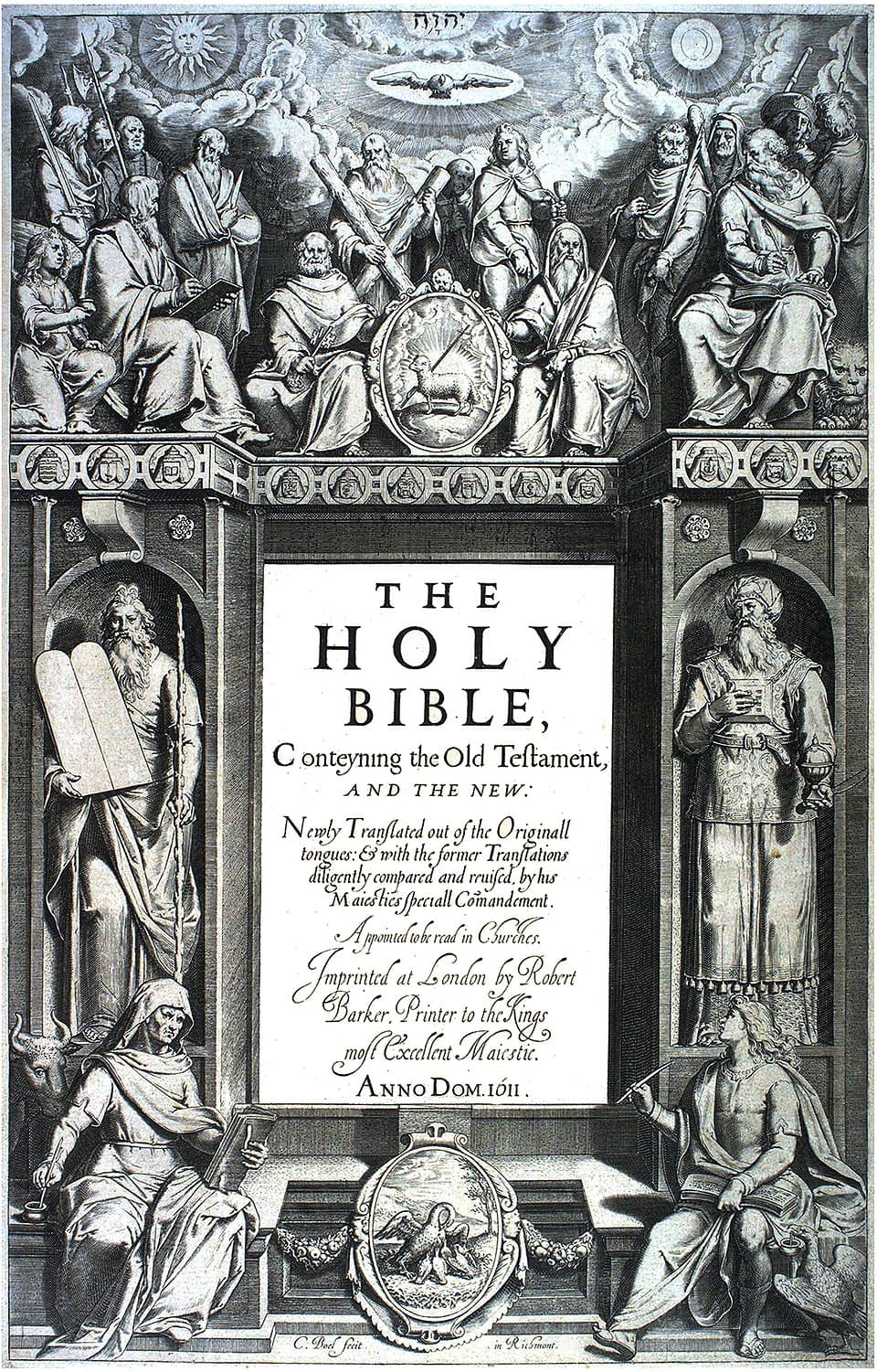
I teach language for a living. I've spent two decades explaining to teenagers why word choice matters, why syntax isn't just grammar homework, why the rhythm of a sentence carries meaning the dictionary can't touch. And the King James Version — finished in 1611, assembled by committee, politically motivated, theologically contested — remains some of the most stunning prose in the English language. I know that sounds like something I'd say on the podcast to my 47 listeners (hi, Mom), but I mean it specifically here: the Sermon on the Mount is where the KJV earns its reputation.
Consider the lilies of the field. Judge not, that ye be not judged. Wide is the gate, and broad is the way. These phrases didn't just enter the language — they became the language. Half the expressions my students use without knowing it trace back to these three chapters of Matthew. And hearing them spoken aloud, in sequence, without the visual interruption of verse numbers and footnotes and cross-references — it does something different to your brain. The prose deserves to be savored, and at thirteen minutes, you can actually do that without your attention wandering toward your phone.
Ben Douglas Knows When to Get Out of the Way
Here's the thing about narrating scripture: you can go two directions, and both are traps. You can go full theatrical — the booming Voice of God approach, all gravitas and echo — and you end up sounding like a movie trailer for a film nobody asked for. Or you can go flat and neutral, "just reading," and you drain the poetry right out of it.
Ben Douglas does neither. His reading is clear and measured, with a kind of quiet authority that reminded me of — and this is going to sound strange — the best way a good teacher reads aloud to a class. Not performing. Not hiding. Just present with the words. The Beatitudes especially benefit from this approach. Each "blessed are" lands with equal weight, no escalation, no dramatic build. Douglas trusts the parallelism to do its own work. The narrator understands that pause is punctuation. Between the Lord's Prayer and the passage about laying up treasures in heaven, there's this breath that feels deliberate — not dramatic, just... respectful of the transition.
Is it the most dynamic vocal performance I've ever heard? No. But that's exactly the point. You don't need seven accents and a sound design budget when the source material is this strong. Douglas delivers a reading suited for what many listeners will use it for — reflection, memorization, returning to it again and again. The clarity of his diction means you catch every "thee" and "thou" and "whosoever" without strain.
The Thirteen-Minute Question
Now, the elephant in the room: this is thirteen minutes long. That's not an audiobook in any traditional sense. It's shorter than my commute. It's shorter than the time I spend pretending to listen to Principal Martinez talk about budget allocations. (Sorry, Martinez. Still not sorry.) So what are you actually getting?
You're getting the Sermon on the Mount — Matthew 5 through 7 — read cleanly, without music, without production gimmicks, without commentary. That's it. And honestly? For what this is, that's enough. Tolstoy built an entire moral philosophy around these chapters. Gandhi — not a Christian — called them some of the most important words ever spoken. That tension between ancient text and modern practice — how do you actually live this stuff out on a Tuesday — is something I kept chewing on while reading Every Good Endeavor, which wrestles with the same question in a way that surprised me. This reminds me of what Hemingway said about prose being architecture, not interior decoration. Douglas and whoever produced this understood the assignment: don't decorate. Just build the frame and let the words stand.
But I can't pretend thirteen minutes justifies a full credit purchase. It just doesn't. This is the kind of thing you stream, or you grab if it's free with a subscription, or you use as a daily listening practice — which, actually, might be the ideal use case. Thirteen minutes with coffee before the chaos of first period. I could see that becoming a habit. On the subject of daily practice as a discipline rather than a chore, Spiritual Exercises takes that idea and builds an entire architecture around it — though fair warning, Ignatius is not thirteen minutes.
Who This Is For (And Who Should Keep Scrolling)
If you want scholarly context, historical analysis, or a modern translation — this isn't that. If you want the KJV Sermon on the Mount read with care and clarity, suitable for memorization or just sitting with the language, this is a clean, honest recording. My students would hate this. I love it. Not because it's flashy, but because it's the opposite of flashy in a world that won't stop shouting.
The Red Pen Stays Down
Some texts don't need my annotations. Some texts just need someone to read them aloud, plainly, and someone else to listen. Thirteen minutes. That's all it takes to remember why these words have outlived every empire that tried to claim them.