
I was walking the lakefront with Denise last Sunday morning - early, before the joggers and the stroller brigades take over - and somewhere around Psalm 23 I stopped talking. Just stopped. Denise looked at me, and I pulled out one earbud and said, "Sorry, I need to hear this part." She nodded like she understood, even though I've probably recited the Lord-is-my-shepherd bit at her a hundred times over twenty years. Twenty years of marriage means she's learned to read when something has genuinely stopped me cold — I wrote about that particular kind of knowing in my review of His Needs, Her Needs, though I'll admit ancient Hebrew poetry gets there more efficiently than any marriage manual I've encountered. But hearing it in that particular volunteer's voice, with the lake right there doing its quiet silver thing, hit different. That's the strange power of this collection. You think you know it. You don't.
Let me be honest about what this is and what it isn't.
400-Year-Old English Still Hits Harder Than You Expect
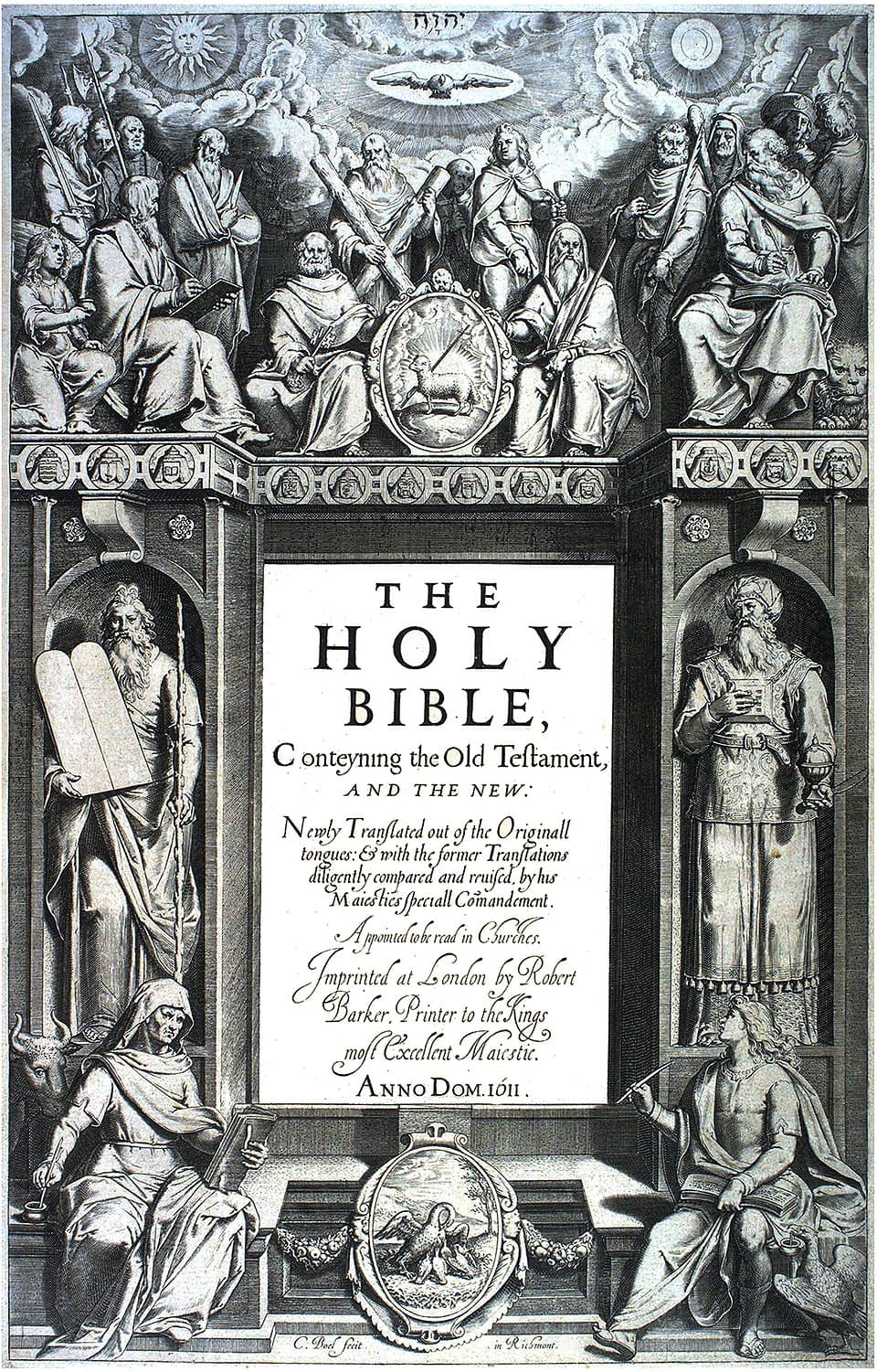
The King James translation of Psalms is, purely as a literary achievement, staggering. I teach English. I've spent two decades trying to convince sixteen-year-olds that old language can still punch you in the chest, and Psalms is the text I return to when I need to prove it to myself. "My God, my God, why hast thou forsaken me?" from Psalm 22 - that's not just theology, that's a human being in total freefall, and the KJV translators chose words that land like a fist four centuries later. The shift from Psalm 22's anguish to Psalm 23's serenity is one of the most devastating emotional pivots in all of Western literature. I don't care if you're religious or not. That juxtaposition is artistry.
And the range across 150 psalms is wild. You get the vindictive fury of Psalm 137 ("Happy shall he be, that taketh and dasheth thy little ones against the stones") right alongside the cosmic wonder of Psalm 19 ("The heavens declare the glory of God"). My students would hate this. I love it. This is what I mean when I talk about literature holding contradictions without flinching.
The LibriVox Bargain - Free Comes With a Catch
Here's where I have to level with you. This is a LibriVox production, which means volunteer readers, no professional production team, no sound design, no music. And at five hours and eighteen minutes, you're getting the full 150 psalms read by multiple volunteers of varying skill levels.
Some of these readers are genuinely good - clear, measured, respectful of the text's rhythm. The KJV has a cadence that practically reads itself if you let it, and the better volunteers do exactly that. They let the parallelism of Hebrew poetry (which survives beautifully in the KJV's structure - "The Lord is my rock, and my fortress, and my deliverer") breathe the way it's supposed to.
But then you'll get a transition to a different reader and the recording quality shifts, the pacing changes, and suddenly you're pulled out of whatever meditative state you'd settled into. It's the nature of crowdsourced audio. You're not getting one interpretive vision - you're getting a potluck. Sometimes the casserole is incredible. Sometimes it's... someone's first casserole.
I listened at 1.0x, because the author chose those words - well, the translators chose those words in 1611, and they chose them with extraordinary care. The prose deserves to be savored. Speeding up KJV Psalms feels like fast-forwarding through a cathedral.
Who This Is Actually For (And Who Should Look Elsewhere)
If you want Psalms as devotional listening - morning walks, evening prayer, background during quiet time - this works. It's free, it's the full text, and it's faithful to the KJV. If you're a student of English literature and you want to hear these poems spoken aloud rather than just scanning them on a page, there's real value here. Hearing the repetition structures and the emotional arcs performed rather than read silently changes your relationship with the text.
But if you want a polished, cohesive audiobook experience with consistent production quality and a single skilled narrator who can carry you through the emotional peaks and valleys? This isn't that. And honestly, the Psalms deserve that treatment. Someone like Simon Vance or Juliet Stevenson reading the full Psalter with proper studio production would be extraordinary. What we have here is earnest and adequate. Not the same thing.
I also want to flag - because I know some listeners come to Psalms expecting pure comfort - there's real darkness in here. Imprecatory psalms calling for enemies' destruction, raw grief, existential dread. The content warnings are real. This is ancient poetry from people living under occupation, in exile, in genuine danger. It's not all green pastures and still waters.
The Assignment I'd Give My Juniors
I keep coming back to this: the Psalms are the oldest continuously performed poetry in human history. Three thousand years, give or take. And even in a volunteer recording with inconsistent audio quality, even piped through earbuds on a Chicago lakefront in 2024, they still work. That tells you something about the writing. This is why we still read the classics - because sometimes the oldest words are the ones that refuse to go quiet.
Worth your time? Yes. Worth a credit? No - it's free through LibriVox, and the production quality matches the price point. Download it, walk somewhere beautiful, and let the 23rd Psalm find you when you're not expecting it. That's the assignment.