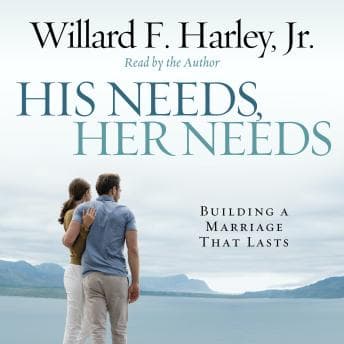

This book made me deeply uncomfortable. And I mean that as a compliment—mostly.
I was chopping onions for a dal that would take three hours to cook (my mother's recipe, which I've finally accepted I'll never replicate perfectly), and Dr. Harley was explaining his "Love Bank" concept. The metaphor is simple, almost too simple: every interaction with your spouse either deposits or withdraws emotional currency. Positive experiences build the balance. Negative ones drain it. When the account hits zero, you're vulnerable to affairs.
I found myself asking: why does this framework feel simultaneously obvious and revelatory? The research actually shows that relationship satisfaction does function somewhat like this—John Gottman's work on the "magic ratio" of positive to negative interactions maps onto Harley's model surprisingly well. But Harley published this in 1986, working from clinical observation rather than laboratory data. The man was onto something.
The Ten Needs Framework (Where It Gets Interesting)
Harley identifies ten emotional needs and argues—controversially—that men and women typically prioritize them differently. Men supposedly rank sexual fulfillment, recreational companionship, and physical attractiveness near the top. Women prioritize affection, conversation, and financial support.
The protagonist of this book—and yes, I'm treating it like a case study because that's what it is—exhibits classic binary thinking. The gender essentialism made me wince. My therapist would have thoughts about this character. But here's what complicates my reaction: Harley explicitly acknowledges these are generalizations from his clinical practice, not universal truths. He tells readers to identify their own top five needs regardless of gender norms.
So is this outdated? Partially. Is it still useful? Frustratingly, yes.
The core insight transcends the dated packaging: most couples fail because they assume their partner shares their emotional priorities. They give what they would want to receive. Classic projection. Harley's framework forces couples to actually communicate about what fills their specific Love Bank—which is basic relationship psychology, but apparently nobody does it.
Hearing the Author's Voice (Literally)
Dr. Harley narrates his own work, and this matters more than I expected. His delivery is measured, clinical, occasionally dry—exactly what you'd expect from a psychologist who's been in practice for decades. No dramatic flourishes. No vocal gymnastics.
What makes this narrator compelling is that you can hear him thinking through his own material. There are moments where his pacing shifts slightly, where you sense he's not just reading but teaching. The authority isn't performed; it's earned through decades of sitting across from couples in crisis.
Is it riveting? No. Is it trustworthy? Yes. The seven-and-a-half-hour runtime felt appropriate—long enough to absorb the concepts, short enough that I finished before my dal did.
The Affair-Proofing Argument
Harley's central claim is bold: meet your spouse's top emotional needs, and affairs become almost impossible. The Love Bank stays full. No one goes looking elsewhere.
Psychologically, this doesn't quite track. Affairs are complex, driven by factors beyond unmet needs: opportunity, impulse control, attachment styles, sometimes just garden-variety narcissism. Harley oversimplifies.
But his prescription—radical attentiveness to your partner's emotional priorities—is sound relationship maintenance regardless of whether it "affair-proofs" anything. The outcome he promises may be exaggerated. The process he recommends is genuinely useful.
Who Should Listen (And Who Should Skip)
Couples in the comfortable-but-disconnected phase. The ones who've stopped fighting because they've stopped caring enough to fight. Harley's framework gives them vocabulary and structure for conversations they've been avoiding. That same principle—creating frameworks for difficult conversations—drives Good Leaders Ask Great Questions, though Maxwell applies it to leadership rather than marriage.
Skip it if: you need trauma-informed relationship guidance, you're dealing with abuse dynamics, or gender essentialism genuinely enrages you. Harley's model assumes two reasonably healthy adults who've simply lost the plot. The same limitation appears in Dumbing Us Down—Gatto assumes institutional problems can be solved through awareness, not accounting for deeper systemic dysfunction. It's not equipped for anything darker.
Also skip if you want entertainment. This is a textbook with a pulse, not a page-turner.
The Case File Closes
I finished the audiobook while eating my imperfect dal alone at 10 PM, thinking about my parents' marriage—forty-two years of meeting needs neither of them could articulate until they'd already figured it out through trial and error. Harley's book is the shortcut they never had.
Dated? Yes. Heteronormative? Absolutely. Still useful for understanding what makes relationships work? Grudgingly, I have to admit: yes. The research shows that couples who explicitly discuss emotional needs report higher satisfaction. Harley knew this before the data confirmed it.
Sometimes the obvious insights are the ones we most need to hear spoken aloud.