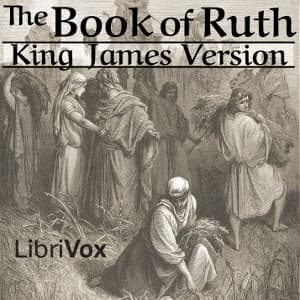

Sixteen minutes. That's it. That's the whole book.
I almost skipped past this one in my LibriVox queue because - come on - sixteen minutes? I spend longer than that arguing with my wife Denise about whether we should take Lakeshore Drive or side streets to get to her sister's place. But I was waiting in the dentist's office last Tuesday, that particular kind of bored where you've already read every poster about gingivitis twice, and I thought: fine. Ruth. Let's go.
And here's the thing that surprised me, even after twenty years of teaching literature and supposedly knowing better: I'd forgotten how structurally perfect this story is.
Four Chapters That Put Your Favorite Novel to Shame
The Book of Ruth is, at its bones, a story about a woman who chooses loyalty when every practical instinct tells her to walk away. Naomi loses her husband and both sons in Moab. She tells her daughters-in-law to go home, start over, find new husbands. Orpah does the sensible thing - she leaves. Ruth refuses. And that refusal - "Whither thou goest, I will go; and where thou lodgest, I will lodge" - is one of the most quoted passages in the English language, and hearing it in the King James cadence reminded me why.
This reminds me of what Hemingway said about prose being architecture. Ruth is four chapters. No fat. No subplots about a side character's feelings. Naomi and Ruth go to Bethlehem, Ruth gleans in Boaz's field, Naomi hatches a plan, Boaz does the right thing at the city gate. Beginning, middle, end. My students would hate this - no cliffhangers, no love triangles, no betrayals. I love it.
But what struck me on this listen is how much gets communicated through what's NOT said. Ruth never explains why she stays with Naomi. The text doesn't psychologize her. She just acts. And Boaz's kindness in the field - telling his workers to leave extra grain for Ruth to gather - is described so matter-of-factly that you almost miss how radical it is. Generosity without performance. The prose deserves to be savored, and at sixteen minutes, you actually can.
TriciaG and the Challenge of Reading Sacred Text Aloud
Here's where I have to be honest about what this recording is and isn't. TriciaG is a LibriVox volunteer, not a professional narrator with a studio budget and a voice director. Her delivery is clear and steady - she reads the KJV text with obvious care, and she doesn't rush through it, which matters more than you'd think. The King James translators chose those words with an ear for how they'd sound read aloud in churches, and TriciaG respects that rhythm.
What you won't get is dramatic character differentiation. When Naomi speaks to Ruth, when Boaz speaks to his servants, when the elders speak at the gate - it's all delivered in roughly the same register. For a text this short and this familiar, that's honestly fine. The KJV does a lot of heavy lifting on its own. But if you're coming in hoping for a performed reading where Naomi sounds like a grieving widow and Boaz sounds like a landed Israelite farmer? That's not this recording.
The audio quality is clean, no background noise or weird artifacts, which is not always a given with volunteer recordings. I'll take "clear and reverent" over "dramatic but distracting" for scripture every time.
Why English Teachers Should Assign This (But Won't)
Let's talk about what the author is really saying - or rather, what the editors who placed this book in the canon were saying. Ruth is a Moabite. A foreigner. And she becomes the great-grandmother of King David. The whole genealogy at the end isn't just a boring list of names - it's the point. The outsider who chose loyalty over self-preservation ends up in the royal lineage. That's subversive. That's good storytelling.
I keep thinking about how I'd teach this alongside, say, Toni Morrison's "Beloved" - another story about women bound together by grief and stubbornness and a refusal to let loss define them. If you loved the quiet strength of Marilynne Robinson's "Gilead," this is its spiritual ancestor. Literally.
The Annotated Recommendation
Worth pausing the faculty meeting for? Absolutely - and it'll be over before Principal Martinez even notices your earbuds. This is ideal for anyone who wants to experience the KJV as literature, not just theology. If you've never read Ruth, you'll be stunned by how modern the emotional architecture feels. If you have read it, hearing it aloud - even in a straightforward reading like this - pulls different things to the surface than your eyes do on the page.
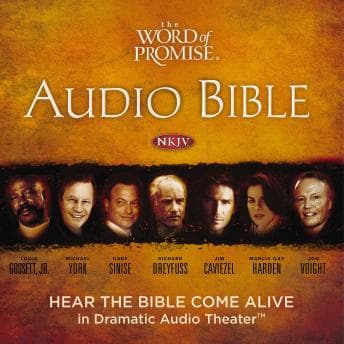
Who should skip it: if you want a produced, multi-voice dramatization of scripture, look elsewhere. That produced, 400-voice approach is exactly what The Bible Experience delivers — and it's genuinely something else, though I'd argue TriciaG's quiet reverence serves a text this intimate better than a cast of celebrities would. This is a single volunteer reading a text with care. That's all. But sometimes that's enough.
Sixteen minutes in a dentist's waiting room. I walked out thinking about loyalty, foreignness, and grain fields in Bethlehem. My teeth are fine, by the way. Thanks for asking.