
This is basically a time capsule from 1917 that accidentally ended up in my podcast queue.
I wasn't commuting when I listened to this one. I was home sick with a cold, scrolling through the shortest audiobooks I could find because my brain was operating at maybe 40% capacity. At 1 hour and 10 minutes, Food Values seemed perfect. What I got was a fascinating glimpse into nutritional science before we knew... well, most things.
When Calories Were Cutting-Edge
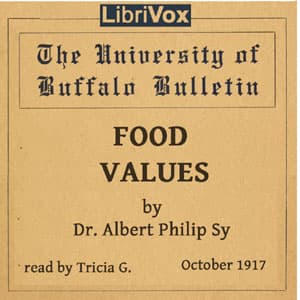
Dr. Albert Philip Sy was a chemistry professor during WWI, and this pamphlet reads exactly like that. He's genuinely excited about calories. Like, *excited* excited. The concept of measuring food energy was relatively new, and you can hear it in how meticulously he catalogs everything. Beef: here are the calories, the protein, the carbs, the fat, the water, and—my favorite category—"ash." Yes, ash. What's left when you burn the food. They tracked that. Because science.
The narrator TriciaG delivers this with a clear, straightforward voice that matches the educational content perfectly. No dramatic flourishes, no attempts to make a list of calorie counts sound thrilling. Just clean, informative reading. Which is exactly what you want when someone is telling you the protein content of a dozen different cuts of meat.
The Delightful Gaps in Knowledge
Here's what makes this genuinely interesting rather than just quaint: the summary explicitly notes this was written before we understood fat-soluble vitamins or the difference between saturated and unsaturated fats. So you're listening to a scientist confidently explain nutrition while missing enormous pieces of the puzzle. It's like reading a programming book from 1995 that's certain client-server architecture is the future. Technically correct! Also hilariously incomplete.
Dr. Sy talks about fats as basically interchangeable. Butter, lard, olive oil—all just "fat" with calories attached. No mention of cholesterol, no discussion of heart health, nothing about omega-3s. Because those concepts didn't exist yet. The ROI on this audiobook isn't practical nutrition advice (please don't use this as a diet guide), it's historical perspective on how we build scientific knowledge.
Perfect For: Exactly One Situation
Let me be honest about the use case here. This is a LibriVox recording of a WWI-era pamphlet about food calories. It's free. It's an hour long. It's interesting if you're into food history or the history of science.
It's not going to change your life. It's not going to optimize your meal prep. It's not even going to teach you anything practically useful about nutrition—we've learned too much in the last century.
But if you're a nerd who finds it genuinely fascinating that people used to measure "ash content" in food, or you want to understand what nutritional science looked like before vitamins were fully understood, or you're just looking for something short and unusual to fill a gap in your listening schedule? This works.
I listened at 1.25x because Dr. Sy's prose is methodical and list-heavy. TriciaG's pacing is fine at normal speed, but the content doesn't demand close attention—you're not going to miss plot points in a calorie table.
The Sick-Day Verdict
I finished this in one sick-day nap session. It scratched a very specific itch: I wanted something educational but low-stakes, historical but not heavy, short enough that I wouldn't lose the thread when I inevitably dozed off.
Food Values delivered exactly that. Nothing more, nothing less. It's a primary source document from nutritional science's awkward teenage years, read clearly by a volunteer narrator who understood the assignment. If you're into primary sources that capture a specific cultural moment, Self-Reliance does something similar for American individualism in the 1840s.
Who should listen: History of science nerds, food history enthusiasts, anyone who wants to understand how far nutritional knowledge has come in 100 years.
Who should skip: Anyone looking for actual diet advice, anyone who needs narrative to stay engaged, anyone who doesn't find "ash content" inherently amusing.
It's free on LibriVox. At that price point, the bar for "worth your time" is pretty low. This clears it.