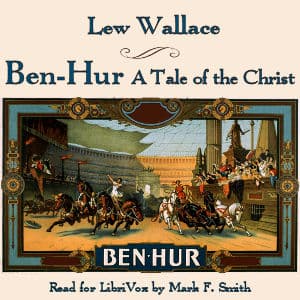

I've been assigning excerpts from Ben-Hur to my juniors for fifteen years. The chariot race chapter. Maybe the galley scene. Bite-sized pieces that fit into a unit on revenge narratives. But I'd never actually read the whole thing. Not really. So when I finally committed to all twenty-three hours of Mark F. Smith's narration, I expected to feel vindicated in my selective teaching approach.
I was wrong. And I was also—surprisingly—right.
The Book Your English Teacher Skipped
Let me be honest about something first: Lew Wallace was a Civil War general who wrote like he was still commanding troops. His prose marches. It does not stroll. The first eight hours before that famous chariot race? They're a slow cavalry advance through Roman politics, Jewish theology, and the kind of detailed world-building that makes Tolkien look restrained. My students would hate this. I love it.
But here's what I discovered listening at 11 PM while grading yet another batch of essays on The Great Gatsby—Wallace isn't just being wordy. He's building something. The scene where Ben-Hur saves the Roman fleet captain from drowning, then gets adopted into Roman nobility? That's not filler. That's the author spending four hours establishing exactly why Ben-Hur can afford the horses and training that will eventually destroy Messala. The revenge isn't just satisfying because it's violent. It's satisfying because you've watched every piece fall into place.
The meeting with Balthasar—one of the Magi, now an old man—hit me harder than expected. There's this extended conversation about recognizing the King of the Jews that Wallace writes with genuine theological weight. Not the Sunday school version. The complicated, questioning version. This reminds me of what Hemingway said about writing—you can cut the iceberg, but the reader feels what's underneath. Wallace doesn't cut anything. You get the whole iceberg.
Mark F. Smith's Complicated Performance
Here's where I have to be fair to both sides. Smith's narration is genuinely skilled in places—his Balthasar carries this weary wisdom, while his Messala drips with aristocratic Roman contempt. When the two voices share a scene, you can hear the class divide. The prose deserves to be savored, and Smith usually understands that.
But. (And this is a significant but.)
Around hour twelve, something shifts. The energy dips. Whether it's the recording schedule or the material itself, Smith occasionally sounds like he's reading rather than performing. The crucifixion scene—which should devastate—lands with less impact than the chariot race. That's a problem when the book's subtitle is literally "A Tale of the Christ." The narrator understands that pause is punctuation, but sometimes those pauses feel less like interpretation and more like fatigue.
I should also mention: some listeners have reported audio quality issues that sound like cassette distortion. I didn't encounter this, but it's worth checking your version.
The Preachiness Question
Let's talk about what Wallace is really doing here. Because yes, Ben-Hur gets preachy. Wallace was writing Christian apologetics wrapped in an action epic, and he doesn't hide it. The final third leans hard into faith and redemption themes that will either move you or make you roll your eyes.
Here's my take as someone who teaches literature, not theology: the preachiness works better in audio than on the page. When you're reading, you can skim. When you're listening, you have to sit with Wallace's conviction. And there's something almost refreshing about an author who believes so completely in what he's saying. My agnostic students might disagree. But this is why we still read the classics—they don't apologize for having a point of view.
Who Should Commit to This Marathon (And Who Shouldn't)
If you loved Quo Vadis, this is its spiritual successor—though Wallace is more earnest and less ironic than Sienkiewicz. That same earnest conviction shows up in Grimm's Fairy Tales, where the storytellers never apologize for their moral certainty. If you've only seen the Charlton Heston film, the audiobook will feel like discovering a novel behind a movie poster. The film gives you the chariot race. The book gives you the man who needed to win it.
But if you want background listening while doing dishes? Skip this entirely. Ben-Hur demands attention. It's not a podcast. It's a commitment. Same goes if Victorian-era religious conviction makes you impatient—Wallace won't meet you halfway on that.
Speed recommendation: Stay at 1.0x for the first half, maybe bump to 1.15x during the slower middle sections if you're losing focus. But don't rush the chariot race. Worth pausing the faculty meeting for.
Next Year's Syllabus Just Got Longer
I'm going to assign more than just the chariot race next year. Maybe the galley sequence. Definitely the Balthasar conversations. My students will complain. They always do. But sometimes the old books are long because they have more to say—and Wallace had a lot to say about revenge, faith, and what happens when you finally get what you thought you wanted.
Smith's narration isn't flawless. The pacing tests your patience. But when it works—and it often works—you understand why this was the best-selling American novel of the 19th century. Not because it's easy. Because it earns its ending.