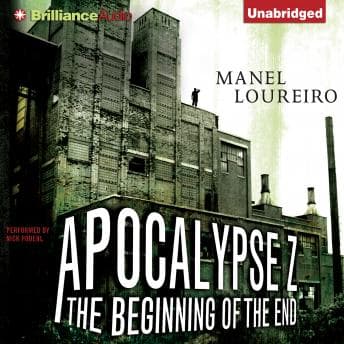

Look, I've read enough apocalypse fiction to know the genre has a problem. Most zombie narratives treat their protagonists like action heroes waiting to happen—ordinary people who conveniently become Navy SEALs the moment society collapses. So when I heard Beginning of the End was written as a blog diary by a grieving Spanish lawyer? I was genuinely curious. Would Manel Loureiro actually capture how a real human mind processes the end of everything?
The answer is complicated. And honestly, that's what makes this worth talking about.
Grief Doesn't Pause for the Apocalypse
Here's what Loureiro gets right: our protagonist starts writing as therapy after losing his wife, and when the zombie outbreak begins, that emotional fragility doesn't magically disappear. It colors everything. The way he processes danger, makes decisions, forms attachments—it's all filtered through someone who was already broken before the world broke.
This is a fascinating case study in how trauma compounds. The research actually shows that people who've experienced significant loss often respond to subsequent crises with a strange mixture of numbness and hypervigilance. And that's exactly what we see here. He's simultaneously detached from the horror around him (been there, felt worse) and obsessively documenting every detail as if writing it down will somehow make it controllable.
The blog format works brilliantly for this. It's not polished prose—and some listeners apparently complained about that—but psychologically? It tracks perfectly. A lawyer writing for himself wouldn't craft beautiful sentences. He'd write like he thinks. Direct. Functional. Occasionally repetitive when he's spiraling.
Nick Podehl Gets Inside the Character's Head
I listened to most of this during my morning jogs through Cambridge, which turned out to be weirdly appropriate. Something about the rhythm of running while hearing someone describe the systematic collapse of civilization. My therapist would have thoughts about this character, but she'd probably have thoughts about my listening choices too.
Podehl's narration is genuinely impressive here. He captures the emotional fragility without making the protagonist seem weak—there's a difference between vulnerability and victimhood, and he walks that line carefully. When the character shifts from contemplative journaling to describing sudden violence, the vocal transition feels organic rather than performative.
What makes this character compelling is that Podehl doesn't play him as heroic. There's a weariness underneath everything, a sense of someone who keeps going because stopping isn't really an option anymore. The protagonist exhibits classic survivor's guilt patterns mixed with something almost like relief—he was already grieving, already isolated, and now everyone else is too. Podehl captures that uncomfortable truth without judgment.
The one criticism I've seen is that some directorial choices flattened the international flavor of the original Spanish text. I couldn't find much about the specific decisions made, but based on what I heard, the translation does feel very... American? For a story set in Spain with a Spanish protagonist, that's a noticeable loss. Not a dealbreaker, but it does make me curious about what the original version conveyed.
Slow Burn, Real Collapse
The pacing won't work for everyone. If you want constant action, this isn't that. The deliberate tension-building reminded me of Man Who Knew Too Much, where the dread comes from watching things spiral rather than from sudden shocks. But the gradual escalation—mysterious Russian incident, growing unease, government scrambling, societal breakdown—mirrors how real disasters unfold. We don't get sudden apocalypse. We get incremental collapse while people keep insisting things will return to normal.
Some listeners found it slow. But I'd argue it's the most realistic element. Humans are remarkably good at denial. We normalize the abnormal until we literally can't anymore. The protagonist's blog entries capture that cognitive dissonance—writing about zombie attacks with the same tone he might've used for traffic complaints a month earlier.
The Safe Haven concept is particularly interesting from a behavioral psychology perspective. How quickly do social structures reform under pressure? Paris Apartment: A Novel explores similar questions about how people behave when their normal social contracts dissolve, though in a very different context. What happens to moral frameworks when survival becomes the only metric? Loureiro doesn't answer these questions definitively, but he raises them through the protagonist's observations.
At eleven and a half hours, this is a commitment. I'd recommend 1.25x speed if you're used to faster narration—Podehl's pacing is deliberate, which works for the contemplative sections but can drag during the action sequences.
Your Prescription
This is for people who want their zombie fiction to feel like a case study rather than an action movie. If you're interested in how grief intersects with crisis, how ordinary people actually behave when systems fail, how someone documents their own potential extinction—this delivers. Skip it if you want constant tension or if diary-style narration annoys you. Also maybe skip if zombie violence isn't your thing, because it definitely gets there.
I found myself asking: why does this particular protagonist survive when others don't? And the answer isn't that he's stronger or smarter. It's that he was already living in survival mode. Sometimes the broken ones are better prepared for a broken world.
That's either comforting or deeply disturbing, depending on your perspective. Probably both.