
Look, I Need to Talk About This Book
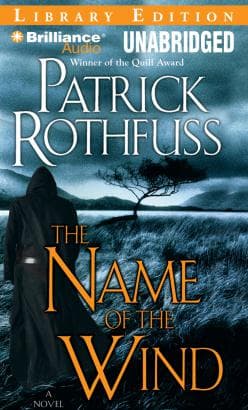
Okay, so I finally did it. After years of my D&D group telling me I was "basically committing fantasy crimes" by not reading The Name of the Wind, I downloaded the audiobook. Twenty-eight hours. I listened to the whole thing while supposedly working on my thesis. (Dr. Patel, if you're reading this, I was definitely also writing about procedural generation. Definitely.)
And here's the thing - I get it now. I understand why people won't shut up about Kvothe. Patrick Rothfuss wrote the kind of prose that makes you want to throw your own writing in the garbage. It's poetic without being pretentious, detailed without drowning you in exposition, and the magic system? Chef's kiss. Sympathy is basically the most elegant hard magic system I've encountered since Sanderson's Allomancy. Though honestly, the magic system in Heart Seeker does some interesting things with costs too. You've got rules. You've got costs. You've got creative applications that make you go "oh that's so smart" out loud on the bus like a weirdo. (This happened. Multiple times.)
Nick Podehl Walked So Other Fantasy Narrators Could Run
Let me be real with you - Nick Podehl's narration took me about two chapters to fully click with. His voice has this warmth to it, almost like he's telling you a story by a campfire, which is perfect because... that's literally the framing device. Kvothe is telling his own story to a chronicler. Once that clicked, I was completely sold.
Podehl does something really smart with the dual timeline thing. Present-day Kvothe sounds older, more tired, kind of defeated. Young Kvothe - the one actually living through the story - has this energy, this desperate cleverness that comes through in the voice. The emotional range is honestly impressive. When Kvothe's troupe meets their fate (no spoilers, but you know), Podehl's delivery hit me way harder than I expected. I was doing dishes and had to just... stop for a minute.
The character voices are distinct without being cartoonish. Denna sounds different from Devi sounds different from Ambrose (who I hate, by the way - good job making him hateable). The dialects for different regions actually feel consistent, which is more than I can say for some narrators I've listened to. My one tiny gripe? Sometimes Kvothe sounds a bit too adult when he's supposed to be like twelve. But honestly, the kid is a prodigy who's been through trauma - maybe he just sounds older than his years. I'll allow it.
The University Feels Like Grad School (And I Mean That as a Compliment)
This is where Rothfuss really gets me. The University feels REAL. Like, I've been in grad school for [redacted] years, and the academic politics, the desperate scrambling for tuition money, the rivalry with that one guy who's just born wealthy and coasting? Too real. Painfully real. Ambrose is every trust fund kid who's ever made my life harder.
But beyond the relatability, the world just has this depth to it. The Chandrian mythology, the different cultures, the way music and naming and sympathy all interweave - it's the kind of world-building where you can tell there's an iceberg beneath what you're seeing. Rothfuss knows way more about this world than he's telling you, and that restraint makes everything feel earned.
The progression is satisfying too. Kvothe doesn't just magically (ha) become powerful overnight. It's that same earned progression I appreciated in Return of the King, where victory feels like it costs something real. He struggles. He fails. He gets his ass kicked repeatedly. When he finally pulls off something impressive, you feel like you earned it alongside him. My D&D group would absolutely love this - it's basically watching someone min-max their way through a brutal campaign while the DM keeps throwing curveballs.
Fair Warning: This Book Has Opinions About Itself
I'm not going to pretend this is perfect. Rothfuss writes Kvothe as this legendary figure, and sometimes the book feels a little... in love with its own protagonist? Kvothe is good at everything. He's smart, he's musical, he's charming, he survives impossible situations. If you're allergic to competent protagonists, this might bug you.
Also - and I say this with love - this is a slow book. Like, beautifully slow. Deliberately paced. If you need constant action, if you can't handle scenes of a guy learning to play the lute really well, this isn't for you. The payoffs are worth it, but you gotta trust the process.
And yes, we need to address the elephant in the room: Book 3 doesn't exist yet. You're signing up for an unfinished series. I knew this going in. I made my peace with it. The journey is worth it even without the destination. (That's what I tell myself about my thesis too.)
The Verdict
Twenty-eight hours. Yes, it's worth it. I listened at 1.0x speed because Rothfuss's prose deserves to breathe, and Podehl's pacing is already perfect. This is the kind of audiobook that makes long commutes feel short and makes doing laundry almost enjoyable.
Who should listen: If you love fantasy that respects your intelligence, magic systems with actual rules, and narration that elevates already-beautiful prose - this is your book. If you need your fantasy narrator to do distinct voices and actually act the scenes rather than just read them, Nick Podehl delivers. Who should skip: If you need nonstop action or can't handle an unfinished series, look elsewhere.
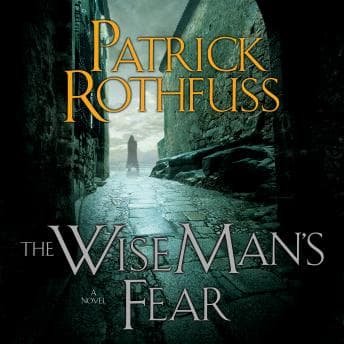
Now if you'll excuse me, I have a thesis to definitely work on and absolutely not start The Wise Man's Fear immediately. (I'm starting The Wise Man's Fear immediately.)