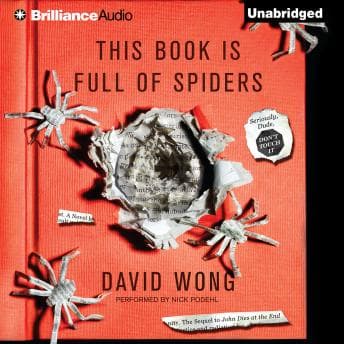
Look, I need to tell you about the spider that's been living in my skull for the past fifteen hours. Not a metaphor. Well, okay, it's a metaphor for this audiobook that has completely taken over my brain since I started listening.
David Wong (Jason Pargin, for those keeping track) wrote John Dies at the End, which I covered on the podcast years ago and still get emails about. So when I tell you This Book is Full of Spiders is the rare sequel that actually understands what made the first one work? That's not faint praise. That's me saying Shirley Jackson walked so this dude could sprint directly into a zombie apocalypse while making me laugh so hard I scared my cat.
The Douglas Adams of Body Horror
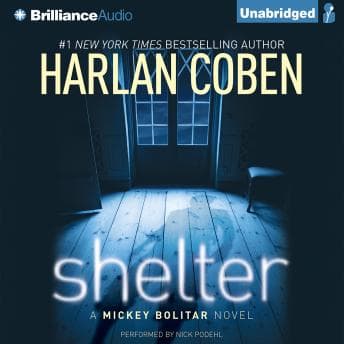
Here's what Wong gets that so many horror-comedy writers don't: the comedy has to come FROM the horror, not despite it. Housekeeper understands this same principle—the psychological horror works because the domestic setting makes it funnier and more disturbing at once. The premise is genuinely unsettling—parasitic spiders that burrow into your brain and control your perception of reality. You can't see them. You can't feel them. And the skepticism you're feeling right now about whether this sounds dumb? That's exactly what the spider wants you to feel.
The Washington Post comparison to Walking Dead meets Hitchhiker's Guide is... actually pretty accurate? Which is annoying because I wanted to come up with something cleverer. But it nails the vibe. This is a zombie apocalypse story told by unreliable narrators who are also kind of idiots, and the social commentary about media panic and small-town paranoia hits way harder than it has any right to.
I'll be honest—the middle section drags. There's a stretch where the narrative feels like it's spinning its wheels, setting up pieces for a payoff that takes its sweet time arriving. If you need constant momentum, you might zone out around hour seven or eight. I was folding laundry during that section and definitely had to rewind a few times. But the last third? The last third is why I do this. Everything clicks into place with the kind of structural satisfaction that makes you want to immediately relisten to catch what you missed.
Nick Podehl Gets It
Here's the thing about narrating horror-comedy: you have to commit to both. Lean too hard into the jokes and the scary parts feel like parody. Play it too straight and the humor lands flat. Nick Podehl walks this line like he's been doing it his whole career.
His character voices are distinct without being cartoonish—I found myself actually looking forward to certain characters showing up just to hear how he'd deliver their lines. The narrative voice captures Wong's particular brand of self-aware, slightly unhinged storytelling. When the protagonist is describing something genuinely horrifying while also being an idiot about it, Podehl sells both layers.
I know some listeners preferred the narrator from the first book, and I get that—switching narrators mid-series is always a gamble. But Podehl makes this his own. There are occasional moments where the pacing hesitates slightly, like he's finding his footing in a particularly weird passage, but honestly? Those moments feel authentic to the material. This is a book that's constantly wrong-footing you. A narrator who sounds slightly uncertain at times almost adds to the effect.
(My podcast listeners are going to ask me about this one, I already know it.)
Romero Would Approve
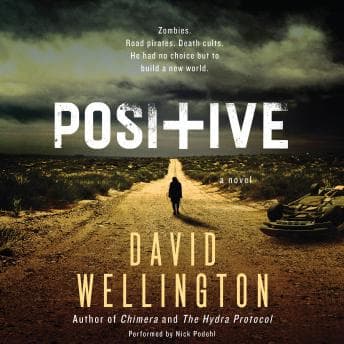
What I love about Wong's approach is that he understands horror isn't about the monsters—it's about what the monsters reveal about us. Poet does something similar with its central threat, using horror as a mirror for human darkness rather than just jump scares. The spider outbreak becomes a lens for examining how communities fall apart, how media creates panic, how easily we turn on each other when we're scared. It's Romero-level social commentary wrapped in dick jokes and body horror.
And the body horror is... yeah. There are sequences I listened to in the dark that I probably shouldn't have. Mistake? Maybe. Worth it? Absolutely. Wong doesn't shy away from the genuinely disturbing implications of his premise, and Podehl commits to those moments with the same energy he brings to the absurdist comedy.
The tonal whiplash could be exhausting in lesser hands. Here, it's the whole point. Life is terrifying and absurd simultaneously. Why shouldn't horror be?
Who Should Touch This (Despite the Title's Warning)
If you loved John Dies at the End, this is essential. If you haven't read that one—honestly, you could probably start here and be fine, though you'd miss some character context. If you're the type who thinks horror has to be humorless to be effective, this might not convert you. But if you understand that comedy and terror can coexist—that laughing at something doesn't make it less scary—this is your book.
Skip if you're sensitive to graphic violence, body horror, or crude humor. Wong doesn't hold back on any of those fronts. Also skip if slow middle sections are dealbreakers for you. The payoff is worth it, but you have to trust the journey.
Signing Off From the Late Shift
I listened to this over a week of commutes and late-night library shifts, and I'm still thinking about it. Shirley (my cat) was unimpressed by the whole thing, but she's a harsh critic. I was genuinely unsettled, frequently laughing, and occasionally both at once.
Horror that respects the genre while also making fun of it. That's harder than it sounds.