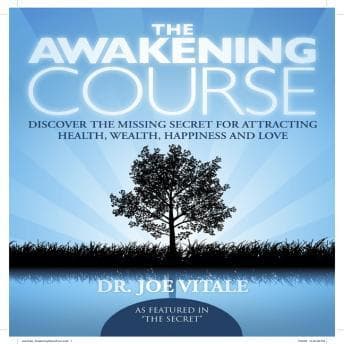

Can you solve a problem using the same thinking that created it? Einstein said no. Joe Vitale built an entire audiobook around that idea. And I spent three and a half hours on a Sunday evening — dal simmering on the stove, apartment smelling like cumin and ambition — trying to figure out if Vitale actually delivers on that promise or just repackages it in shinier wrapping.
Here's my honest answer: it's complicated.
The Four Stages Framework — Psychology or Philosophy?
Vitale structures this program around four stages of awakening: victimhood, empowerment, surrender, and what he calls the "awakened" stage. And I'll give him this — as a framework, it's not bad. The progression from victim mentality ("life happens TO me") through empowerment ("I create my reality") to surrender ("the universe co-creates with me") maps loosely onto some legitimate psychological models. There's a whiff of Kegan's stages of adult development in here, and the victim-to-agent shift echoes what we see in cognitive behavioral therapy all the time.
But — and this is where my researcher brain starts twitching — Vitale doesn't anchor any of this in evidence. He references Ho'oponopono, the Hawaiian healing method he also explored in Zero Limits, and presents it as a "cleaning" technique for removing subconscious blocks. The practice itself (repeating "I love you, I'm sorry, please forgive me, thank you") is genuinely rooted in Hawaiian tradition. Whether it works the way Vitale claims it works — as a kind of cosmic clearing mechanism that attracts wealth and love — is a very different question. The research actually shows that repetitive positive self-statements can help some people and actively backfire for others, particularly those with low self-esteem (Wood et al., 2009). Vitale doesn't mention this. Of course he doesn't.
What makes The Awakening Course different from Vitale's earlier work like The Attractor Factor is its scope. Where The Attractor Factor focused primarily on manifesting specific goals, this one attempts to be holistic — love, money, health, spiritual enlightenment, all of it. It's more ambitious. Whether that ambition is earned or just sprawling depends on your tolerance for Law of Attraction material.
Vitale Narrating Vitale — The Intimacy Problem
Author-narrated self-help is always a gamble. Sometimes you get the guru energy that makes you feel like you're in the room with someone who genuinely wants to help you. Sometimes you get someone reading their own book like it's the most profound thing ever written.
I got a similar vibe from How to Be a Bawse, where the author’s narration is the whole show—for better and worse.Vitale lands somewhere in between. His delivery is clear and personal — he tells stories from his own life, including his homeless period, with what sounds like genuine vulnerability. There's a conversational quality that works for this kind of material. He's not performing; he's teaching. Or preaching. The line between those two gets blurry around hour two.
The abridged format (3 hours 31 minutes) actually helps here. Vitale's longer works can meander, but this feels trimmed to its essentials. No filler stories about meeting someone at a conference who changed his life. Well — fewer of them, anyway.
What I found myself asking: why does Vitale keep circling back to the idea that problems dissolve rather than get solved? Psychologically, this doesn't fully track. Some problems absolutely require direct engagement. Telling someone in genuine financial distress to "transcend" their money worries feels — at best — incomplete. At worst, it's the kind of spiritual bypassing that my therapist would have thoughts about.
Who This Actually Helps (And Who It Frustrates)
If you're already bought into the Law of Attraction and Vitale's previous work, this is basically the graduate course. It builds on The Key and The Attractor Factor and synthesizes them into something broader. The five-step attraction process and the complaint-to-intention reframing exercise are practical enough to actually try. I'll give him that.
If you're a skeptic — if you need peer-reviewed evidence before you'll change a belief — this will make you itch. There’s a fine line between empowered self-focus and narcissistic delusion — Rethinking Narcissism is the book I wanted Vitale to have read before recording. Vitale presents metaphysical claims with the same confidence as established psychological principles, and he doesn't distinguish between the two. The Einstein quote at the top is doing a LOT of heavy lifting in terms of lending intellectual credibility to ideas that Einstein would probably not have endorsed.
If you're somewhere in the middle — curious, open, but not uncritical — you'll find maybe 40% of this genuinely useful and the rest either redundant or unfalsifiable. The gratitude practices and the reframing techniques are solid. The "co-creating with the Divine" material requires a leap of faith that not everyone can or should make.
My Professional Assessment, Take It or Leave It
This is a fascinating case study in how self-help packages psychological insight inside spiritual language. Strip away the metaphysics and you've got some decent cognitive reframing tools. Leave the metaphysics in and you've got a worldview that's comforting but largely untestable. At 3.5 hours and author-narrated, it's a low-commitment listen — which is honestly appropriate for its depth. I didn't regret the time. I also didn't experience any miracles. My dal turned out great, though. That might count.