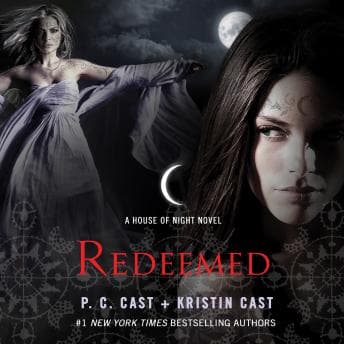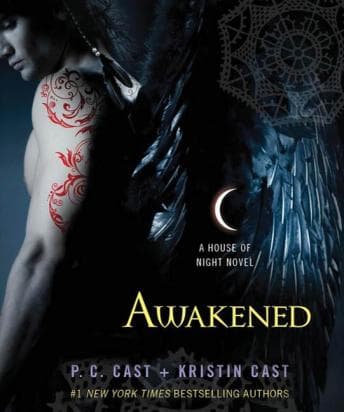

This is book eight. Eight. I want to be clear about that upfront, because how you feel about that number is basically the entire review.
I listened to Awakened during a Saturday morning walk along the lakefront — Denise had a yoga thing, the wind was coming off the water, and I figured I'd give this one a fair shot. I teach teenagers. I know this world. I've had House of Night paperbacks confiscated from the back row of my AP class more times than I can count. So when I say I came in with genuine curiosity rather than condescension, I mean it.
Here's what I discovered, somewhat against my will: Caitlin Davies is genuinely good at this job.
What Davies Is Actually Doing Here
Let me be specific, because the research on this one is thin and I'm not going to pretend otherwise. What I can tell you is that Davies has been with this series long enough to have these characters in her bones. Neferet's opening exchange with Kalona — that cold, flat delivery of "Zoey lives" — landed with real menace. Davies doesn't telegraph the evil. She underplays it, which is the smarter choice, and the silence before Neferet's "I will ensure Zoey is drawn back to Oklahoma" had actual weight. That's a narrator who understands that pause is punctuation.
The teenage girl voices are where things get interesting. Davies differentiates Zoey's narration from Stevie Rae's Oklahoma warmth with enough consistency that you never lose the thread across POV shifts. My students would probably take this for granted. I noticed it. After twenty years of listening to kids read aloud in class — that flat, panicked monotone — I have a deep appreciation for someone who can actually inhabit a sixteen-year-old's voice without it feeling like parody.
She's not doing anything revolutionary. But she's doing the work, and doing it clean.
The Actual Problem, Which Is Not Caitlin Davies' Fault
Book eight of twelve has a structural problem that no narrator, however skilled, can fully solve: it exists primarily to keep the series alive rather than to tell a complete story. I ran into a version of this same problem with Dune, actually — a book so committed to its own mythology that individual emotional threads sometimes get swallowed by the machinery of the world, though Herbert at least had the decency to do it in one volume. The Stevie Rae and Rephaim subplot — the Raven Mocker torn between his father and his heart — is genuinely the most interesting thing happening here, and it gets about a third of the attention it deserves. Zoey's grief over Heath, her retreat to the Isle of Skye, her relationship with Stark — these are the kinds of emotional complications that could anchor a standalone novel. Instead they're managed, kept warm, not resolved.
This reminds me of what Hemingway said about the first draft of anything: "All first drafts are shit." He was talking about revision, but the principle applies to series writing too. By book eight, you can feel the authors making decisions based on what the series needs rather than what this particular story needs. Nine hours and twenty-six minutes is a real commitment for a book that ends without the closure it's been promising.
The prose deserves to be savored — and there are moments, particularly in the Neferet sections, where the Casts are writing with genuine menace and atmosphere. But those moments are surrounded by a lot of maintenance. A lot of "here's where everyone is, here's what everyone's feeling, here's why we're not resolving that yet."
My students would love this. They'd also not notice any of the above. That's not a criticism — that's actually what the book is for.
Who This Is Actually For
If you've read or listened to books one through seven and you're still here, you don't need my permission to continue. You know what this series is. Davies is a reliable guide and Neferet's cold ambition is fun to spend time with. Worth a streaming credit absolutely — worth buying outright, probably not, given the open ending and the sense that the real payoff is still a few books away.
If you're thinking of starting the House of Night series here: don't. Book eight is not a door. It's a hallway.
And if you're a fellow English teacher who just wants to understand why your students are reading this instead of Fitzgerald — I get it now. I really do. Sometimes you just want a vampire high school with a clear moral compass and a narrator who knows all the voices. There's no shame in that. There's a reason exactly 47 people listen to my Faulkner podcast and this series has twelve books.