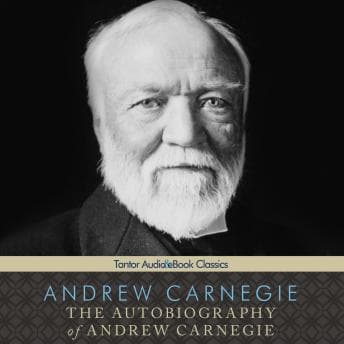

Look, I need to vent about something first. I spent 8 years at McKinsey listening to partners quote Carnegie's "Gospel of Wealth" like scripture. "He who dies rich dies disgraced." Cool. Meanwhile, they're billing clients $800 an hour. So when I finally sat down with Carnegie's actual autobiography, I had... feelings.
Here's the thing though - the man walks the walk. This isn't some LinkedIn thought leader recycling platitudes. Carnegie literally gave away 90% of his fortune. $350 million in 1919 dollars. My parents worked 14-hour days at their dry cleaning business and never saw a fraction of that. But reading about Carnegie's childhood in Scotland, watching his family lose everything to industrialization, his father's weaving business destroyed by machines - that hit different. He knew what it meant to be poor. Actually poor.
The Immigrant Hustle Is Real
Carnegie arrived in Pittsburgh at 13 with nothing. Started as a bobbin boy in a cotton mill making $1.20 a week. And here's what kills me - the guy's trajectory reads like a business school case study, except he lived it in the 1850s without a safety net. No McKinsey. No venture capital. Just relentless self-improvement and strategic relationship-building that would make any modern networker jealous.
The book is written in simple, clear language. No pretension. Carnegie explains his principles the way my dad explained running a business - straightforward, practical, learned through doing. When he talks about choosing the right partners, about treating workers with dignity (revolutionary for his era), about the moral obligations of wealth - this isn't theory. This is what he actually did.
I was genuinely surprised by how much of modern philanthropy traces back to this guy. Libraries. Universities. Research institutions. Carnegie Hall, obviously. The man basically invented strategic giving.
The Accent Situation (Let's Talk About It)
Okay, so Antony Ferguson. He's an AudioFile Earphones Award winner, which should mean something. And honestly, the Scottish accent is thematically appropriate - Carnegie was Scottish, after all. Ferguson brings warmth and authenticity to the narration.
But here's where I have to be honest: at my usual 2.0x speed? Rough. Really rough. One listener nailed it when they said at 1.5x "it was very hard to get everything." I had to drop down to 1.25x, which for me is basically slow motion. Some passages I rewound three times. For an 11-hour book, that adds up.
The narration can also get monotonous in stretches. Carnegie's prose is already measured and deliberate - pair that with a steady, sometimes flat delivery, and you've got sections where I found my mind wandering. I was listening during a client strategy session (don't tell anyone) and completely missed a key chapter about his steel partnerships because Ferguson's pacing lulled me into autopilot.
Some listeners mentioned the accent sounds inconsistent - "like a non-Scottish guy trying to speak with a Scottish accent." I can't verify Ferguson's actual heritage, but I noticed the French R's they mentioned. It's not a dealbreaker, but it's distracting if you're sensitive to that stuff.
The ROI on 19th-Century Business Wisdom
Here's what my parents did instinctively that Carnegie articulates with Victorian eloquence: work harder than everyone else, invest in relationships, and remember where you came from. The difference is Carnegie had the resources to systematize his philosophy into institutions that outlived him.
The chapters on his philanthropy philosophy genuinely moved me - and I'm not easily moved by 19th-century industrialists. His argument that wealth is a trust to be administered for public benefit? That's still radical. Most billionaires today could learn something.
But let's be real - this is also a product of its time. Carnegie's blind spots about labor (the Homestead Strike gets suspiciously little attention) and his paternalistic attitudes require a modern critical lens. He was a titan of industry who genuinely believed he knew what was best for the masses. Sometimes he was right. Sometimes... yikes.
Who Gets Value Here (And Who Doesn't)
For entrepreneurs and business history buffs? Absolutely. The insights on partnership, on timing, on knowing when to exit - these are timeless. For anyone interested in the origins of American philanthropy, this is essential primary source material. Skip it if you need fast-paced narration or can't tolerate Victorian-era blind spots on labor issues.
But sample the narration first. Seriously. If Ferguson's delivery works for you, you'll get a lot out of this. If it doesn't, the print version might be the move. Jenny would say I'm being harsh about the narration. Jenny is right. But I also lost two hours to rewinding, and time is money.
The Closing Bell
Carnegie's life is a reminder that the immigrant hustle isn't new. Becoming captures that same journey from humble beginnings to historic impact, though Michelle Obama's path ran through the South Side instead of Pittsburgh steel mills. The man went from cotton mill to steel empire to giving it all away. That story deserves to be heard - just maybe at 1.25x.







![Steve Jobs [unabridged audiobook] audiobook cover](/_next/image?url=https%3A%2F%2Fcovers.audiobooks.com%2Fimages%2Fcovers%2Ffull%2F9788499923406.jpg&w=1920&q=75)