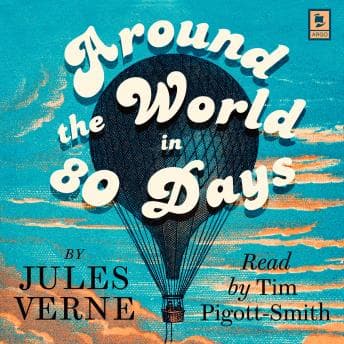

Let me cut to the chase - everyone talks about this book like it's some dusty relic from high school English class. I went in expecting to half-listen while cleaning my Sig P226 on a Sunday afternoon, maybe catch some quaint Victorian adventure vibes. What I got instead was a surprisingly tight 2 hours and 47 minutes that reminded me why mission planning used to get my blood up.
Here's the thing though - this is an abridged version. And that matters.
Phileas Fogg Runs His Life Like a Staff Officer
What nobody told me about this book is that Fogg is basically the most disciplined officer I never served with. The man runs his entire existence on precision timing. He calculates train departures, steamship schedules, and connection windows the way I used to plan convoy movements through Anbar Province. Different stakes, sure, but the same obsessive attention to logistics. Verne wrote this in 1873 and somehow captured the anxiety of watching your timeline collapse because one link in the chain breaks - Fogg missing a steamer connection hit me the same way a delayed resupply bird used to.
Passepartout, his French manservant, is the comic relief but also the operational liability. Every unit's got one - the guy who's genuinely good-hearted, probably brave when it counts, but will absolutely wander off at the wrong moment and create a secondary crisis. Tim Pigott-Smith plays Passepartout with enough warmth that you can't stay mad at him, which is exactly how those guys work in real life.
Pigott-Smith and the Abridgment Problem
Pigott-Smith's narration is solid. Measured, British, dignified - fits the material like a well-tailored uniform. His Fogg is clipped and precise, all stiff upper lip, while his Passepartout gets looser, more animated. You can hear the class difference without him hammering it. He's got that old BBC quality where you trust the voice implicitly.
But here's where I have to be honest: at under three hours, this abridged version is doing a lot of trimming. The ARGO Classics line was originally released on vinyl records, which explains the runtime. You're getting the skeleton of the adventure - the major beats, the race against time, the wager at the Reform Club - but you're losing the texture. Verne packed his original with geographic detail, cultural observations (some dated, some surprisingly sharp), and the slow-building tension of watching Fogg's margin of error shrink day by day. This version keeps the pace high but sacrifices depth.
For a quick listen? It works. For someone who wants to actually live inside the journey? You'll want the unabridged.
When a 150-Year-Old Book Hits Like a Briefing
I've seen this scenario play out in real life - not circumnavigating the globe on a bet, obviously, but the core dynamic. A man commits to an insane timeline, everyone says he's crazy, and then it becomes a matter of will versus logistics. I ran operations where the margin between success and failure was literally a helicopter arriving six minutes late. Fogg's calm under that pressure - never panicking, just recalculating - that's the temperament you want in a crisis. Verne understood something about composed men under absurd deadlines that still holds up. That same quality of quiet resilience under impossible pressure is something I found in Four Winds, though the stakes there are survival itself rather than a gentleman's wager.
The detective Fix trailing Fogg, convinced he's a bank robber, adds a layer of paranoia to the whole thing. It's a nice touch - you've got this guy running a perfectly planned operation and there's someone actively trying to sabotage it. (Sound familiar to anyone who's dealt with interagency coordination? Just me?)
Ranger slept through most of this one, which I think says more about the runtime than the quality. He barely had time to settle in before it was done.
Who Should Grab This
If you've got a short commute or want something for a single afternoon's worth of yard work, this fits perfectly. It's a clean, professional production of a genuine classic. Parents looking for something to play for older kids on a road trip - this would work well too. Nothing objectionable, plenty of adventure.
If you're a Verne completist or you want the full experience, this abridgment will leave you wanting. And if you need explosions and gunfire every chapter, wrong Verne novel - go grab 20,000 Leagues.
Mission Debrief
Worth your time? Here's the debrief: Tim Pigott-Smith delivers a polished performance of a story that still works after 150 years, but the abridged format keeps it at arm's length. It's like reading the executive summary instead of the full intelligence report - you get the picture, you just don't get the whole picture. At this price point and this runtime, it's a solid pickup for a lazy afternoon. Just don't expect the deep dive.