
I was grading a stack of sophomore essays on The Odyssey - yes, at 11 PM, yes, with coffee that had gone cold two hours ago - when I realized I'd been listening to Josephus describe the return from Babylonian exile for the past forty minutes. And honestly? It was more engaging than half the "Homer was, like, really old" papers in front of me.
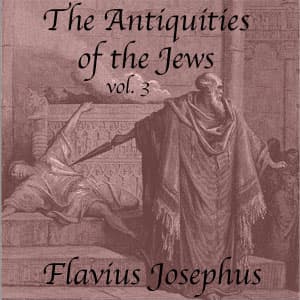
Look, here's the thing about Antiquities of the Jews, Volume 3. This isn't beach reading. This is Josephus doing what Josephus does best: taking the Hebrew Bible, adding Greco-Roman context, throwing in some political intrigue, and serving it to a gentile audience who needed to understand why Jewish history mattered. We're talking about the period from Cyrus letting the exiles return to Herod rebuilding the temple - roughly 500 years of history compressed into nearly 14 hours of audio.
And it's free. On LibriVox. Read by volunteers.
The Volunteer Question
I'll be honest with you. The narration is... uneven. That's the diplomatic teacher answer. The real answer is that you're getting a rotating cast of volunteer readers, and some of them are genuinely good - clear, paced well, understanding that ancient history needs room to breathe - and some of them sound like they're reading a grocery list while thinking about something else entirely.
This isn't a criticism of the volunteers. (Don't tell my students I said that - I'm always lecturing them about effort deserving respect.) These are people giving their time to make important texts accessible. But if you're coming from professionally produced audiobooks, the shift can be jarring. One chapter you've got someone who understands that Josephus is telling a story, the next you've got monotone delivery that makes Ezra's reforms sound like tax code.
The mispronunciations happen too. Ancient names are hard. I've heard classics professors butcher them at conferences. But when you're trying to follow who's allied with whom in the Persian court, and the names keep shifting pronunciation between readers... it's a lot.
Why I Kept Listening Anyway
Because the content is extraordinary. That's the honest answer.
Josephus was writing for Romans who thought Jewish history was provincial and irrelevant. So he made it relevant. He connected it to Greek philosophy, to Persian politics, to the broader Mediterranean world. Volume 3 covers some genuinely fascinating material - the rebuilding of Jerusalem, the conflicts with the Samaritans, the Maccabean revolt, and finally Herod. Herod! The man was a political genius and a paranoid monster, and Josephus doesn't shy away from either aspect.
Thucydides wrote about creating history "not to win the applause of the moment, but as a possession for all time." Josephus was doing something similar - making a case for Jewish civilization to an empire that would eventually destroy Jerusalem. There's a tragedy built into this text that the narration, uneven as it is, can't entirely obscure. That same tension between grand ambition and human limitation runs through Alchemist, though Coelho's approach is far less... bureaucratic.
I found myself pausing the audio to look things up. When was the last time an audiobook made me do that? The section on the Hasmonean dynasty sent me down a Wikipedia rabbit hole for an hour. (Principal Martinez, if you're reading this, I was definitely preparing lesson plans. I wasn't.)
The Practical Reality
Here's who should listen to this: history enthusiasts who can tolerate variable production quality. Students of Jewish history who want primary sources. Podcast listeners who already consume a lot of free content and understand the trade-offs. People like me who need something substantive for long grading sessions and don't mind hitting the 30-second skip button occasionally.
Here's who should skip it: anyone expecting the polish of a professional production. Listeners who get frustrated by pacing inconsistencies. People who need a single narrator voice to stay engaged. If you're the type who notices every audio artifact, this will drive you crazy.
I listened at 1.0x because - and my students think I'm ancient for this - the prose deserves to be savored. But honestly, some sections could handle 1.25x without losing anything. The drier administrative passages, the genealogies, the lists of temple furnishings. Speed those up. Slow down for Herod's paranoid machinations.
Final Grade
The content is a 4.5. The narration is maybe a 2.5. Split the difference and you get something that's genuinely valuable but requires patience.
My students would hate this. The length, the ancient names, the assumption that you care about Persian imperial politics. I love it. Not because it's easy - it's not - but because it's the kind of primary source that makes everything else make more sense. You can't really understand the New Testament world without understanding what came before. You can't understand what came before without Josephus.
Free, accessible, important, imperfect. That's the verdict. Worth pausing the faculty meeting for. (I was definitely listening to Middlemarch during that budget presentation. But I'd pause Middlemarch for Josephus. That's saying something.)