
What happens when a dungeon master builds an entire civilization where the AI running a starship full of thousands of bodies is also the protagonist, the narrator, and the unreliable lens through which you experience everything? You get Ancillary Justice, and you get me staying up until 3 AM on a Tuesday when I absolutely should have been working on my thesis.
A Sentient Warship Walks Into a Bar (With Thousands of Bodies)
Okay so here's the pitch: imagine you're an AI that used to inhabit a massive starship AND simultaneously controlled thousands of human bodies called ancillaries. You could see through all their eyes at once, hold twenty conversations in twenty different rooms, and process it all as one unified consciousness. Now imagine all of that gets ripped away and you're stuck in one single body with one set of eyes and one mouth. That's Breq. And the way Leckie structures the narrative - jumping between Breq's current solo existence and her past life as a ship-mind running parallel operations - is genuinely disorienting in the best possible way.
The scenes where the AI is processing multiple simultaneous conversations? That's not just a gimmick. It's world-building that actually matters for the plot. You're sitting there trying to track three threads at once and realizing oh, this is what it FEELS like to be this character. My D&D group would lose their minds trying to roleplay this. It's like if your character had the Hive Mind feat but also existential dread.
And then there's the pronoun thing. The Radchaai don't distinguish gender linguistically, so Leckie defaults to she/her for basically everyone. Your brain fights it for maybe the first hour, and then something clicks and you stop trying to assign gender to characters and you just... experience them as people. It's one of those choices that sounds like a gimmick on paper but actually rewires how you process the story. This is Sanderson-level world-building, except instead of a hard magic system, the system is language and identity and imperial power.
Adjoa Andoh Is Running a One-Woman RPG Campaign
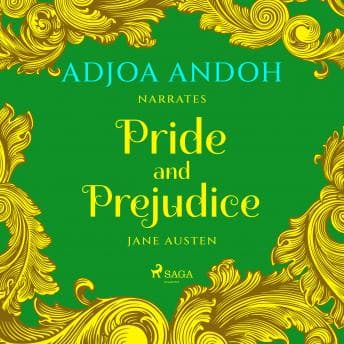
Adjoa Andoh's narration here is something else. She's working in these soft British tones as the baseline, but the way she shifts between characters - there are subtle accent variations that map onto the cultural hierarchies of the Radch empire. It's not flashy voice-acting where every character sounds like a different cartoon. It's more like she's using tone and cadence to signal class, origin, and allegiance. The AI scenes especially hit different in audio because Andoh plays Breq with this controlled, slightly detached quality that makes the moments of genuine emotion land way harder.
I was coding (well, "coding" - mostly staring at my procedural generation framework while questioning my life choices) and I had to stop and rewind multiple times because the philosophical weight of certain passages demanded actual attention. This is not a background listen. I repeat: do NOT put this on while grinding in a video game. You will miss critical world-building and then be confused for three hours. I learned this the hard way somewhere around hour five.
Steven Pacey walked so other narrators could run, but Andoh is out here doing her own thing entirely. She's not trying to be dramatic or theatrical - she's being precise, and that precision is exactly what a story about an AI trapped in a human body needs.
The Slow Burn Is the Point (Yes, Really)
Look, I need to be honest: the pacing here is deliberate. Some people would say slow. The plot doesn't sprint - it accumulates. If you're coming in expecting space opera action every chapter, you'll bounce off this hard. There are stretches where you're sitting with Breq in the cold, dealing with political maneuvering and the ethics of empire, and the "action" is mostly internal. But the progression is satisfying in the way that a 40-session D&D campaign is satisfying - you're building toward something, and when it pays off, the payoff means something because you earned it. I got that same slow-burn satisfaction from Magician: Master, where the payoff only hits that hard because Feist made you sit with the world long enough to actually care about what's at stake.
The central revenge plot is almost secondary to the questions Leckie is really asking: What is personhood? What does an empire owe to the people it conquers? Can an AI grieve? If you don't like info-dumps, this isn't for you (but you're wrong). The world-building here is dense and rewarding and it trusts you to keep up.
Who Gets a Seat at This Table
If you love Le Guin's anthropological approach to sci-fi, if you've ever had a three-hour argument about whether a warforged can feel emotions in D&D, if you want your space opera to come with philosophical weight - this is your book. If you need fast pacing and clear-cut action beats, this will frustrate you. And honestly? That's fine. Not every campaign is a dungeon crawl.
Roll for Initiative on Your Next Credit
I read this instead of writing my thesis, and I regret nothing. Twelve hours and forty-two minutes of smart, strange, identity-bending sci-fi with a narrator who understands exactly what the material needs. The magic system is chef's kiss - except the magic system is consciousness itself. Yes, it's worth the credit. Yes, Dr. Patel will have to wait.