
How many times can you return to the same novel before it stops surprising you?
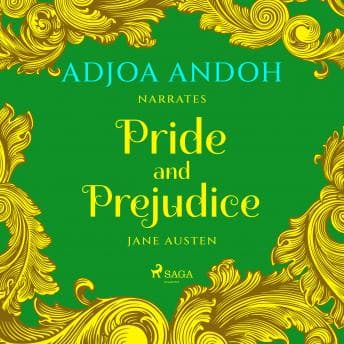
I've taught Pride and Prejudice to roughly four hundred teenagers over twenty years. I've read it in paperback, in hardcover, in a Norton Critical Edition so annotated it weighs more than my cat. I've watched the Firth miniseries with Denise more times than either of us will admit. And I genuinely believed I had wrung every drop of meaning from this book. Adjoa Andoh proved me wrong during a faculty meeting about standardized testing benchmarks. (Principal Martinez, I promise I caught the gist. Something about metrics.)
What Andoh Does That Two Hundred Years of Readers Missed
Here's the thing about Austen's dialogue - it operates on at least two levels simultaneously. What characters say, and what they mean. Most narrators get the first part fine. Andoh gets the second part in a way that genuinely startled me. She places emphasis on words I'd been mentally glossing over for decades. When Elizabeth tells Darcy she could more easily give compliments if she were to "say something that would please the whole room," Andoh leans into the conditional in a way that turns the line from witty deflection into barely concealed contempt. It's a small thing. It changed how I understand the scene.
The best of what Austen is doing sits below the waterline of the actual sentences, and Andoh narrates that submerged part. She doesn't just read Austen's sentences. She performs the social calculations happening behind them.
Her character work is ambitious - and here's where it gets divisive. Mr. Bennet gets this dry, slightly exhausted drawl that perfectly captures a man who retreated into irony because he married the wrong woman. Mr. Collins is pitched with such obsequious, self-satisfied precision that you can practically see him bowing. Lady Catherine de Bourgh sounds like she's never been contradicted in her life, which - fair.
But Mrs. Bennet. Oh, Mrs. Bennet.
The Mrs. Bennet Problem (And Why It Might Actually Be the Point)
Let me be straight with you: Andoh's Mrs. Bennet is shrill. High-pitched, fluttering, genuinely hard on the ears at volume. I was grading papers at 11 PM when Mrs. Bennet's nerves made their first extended appearance and I actually flinched. Some listeners have called it painful, and I get that.
But I kept thinking about it, and I'm not sure Andoh is wrong. Mrs. Bennet is supposed to be unbearable. She's the character everyone in the novel dreads hearing from. If you're listening and thinking "please stop talking" - well, that's exactly what Elizabeth feels every time her mother opens her mouth at a dinner party. The performance veers into what some might call Dickensian excess, but Austen's comedy has always had more teeth than we give it credit for. We've been softening Mrs. Bennet for years because we feel sorry for her situation. Andoh refuses to do that.
Do I wish it were dialed back about fifteen percent? Honestly, yes. But I respect the interpretive choice even when my eardrums don't.
The Case for Listening at 1.0x
At twelve and a half hours, this is a proper commitment - and I listened at 1.0x because the author chose those words and Andoh chose her pauses with equal care. There are moments, particularly in the Hunsford proposal scene and the letter that follows, where Andoh lets silence do the heavy lifting between Darcy's sentences. You feel the cost of what he's saying. You feel Elizabeth's world rearranging itself.
The chapter transitions are a minor production gripe - they're abrupt, no musical bridge or breath between them, which occasionally yanked me out of Pemberley and back into my kitchen. Small thing, but noticeable when you're deep in the rhythm.
If you loved the Rosamund Pike version for its clarity, this is its theatrical counterpart. Pike reads Austen like an essayist. Andoh performs her like a playwright. Neither is wrong. They're just different answers to the same question: whose story is this, really?
Who This Is For (And Who Should Hit Pause)
If you want performed narration - genuine acting, not just competent reading - this is your edition. If you're coming to Pride and Prejudice fresh, Andoh's vocal characterizations will map the social hierarchies for you faster than any introduction could. If you're returning to it for the fifth or fifteenth time, she'll show you lines you've been reading wrong.
But if shrill vocal performances physically bother you, or if you prefer your Austen understated and cool, this might not be your version. That's not a flaw in the audiobook. It's a question of taste.
Twelve hours, no explosions, a love story where nobody even kisses until the last chapter - and I love it for exactly that. Same thing happened to me with Little Women — another novel I'd assigned so many times I stopped actually reading it, until the right narrator cracked it back open.
Hearing Austen Anew
Twenty years of teaching this novel, and Adjoa Andoh made me hear sentences I'd been reading past since grad school. That's not a small thing. A few rough edges - Mrs. Bennet's pitch, those abrupt chapter cuts - keep it from being the definitive recording. But it might be the most intellectually alive one I've encountered. Every generation gets a new voice to argue with Austen through, and Andoh argues back with the best of them.