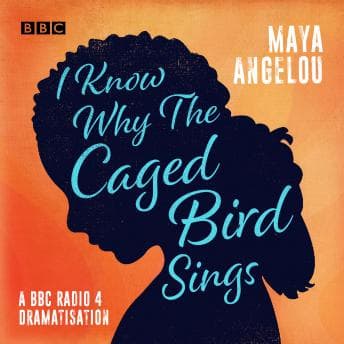

This is what happens when the BBC gets its hands on a masterwork and treats it with the reverence it deserves.
I finished grading a stack of junior essays on "finding your voice" - the irony of which hit me about ten minutes into this dramatisation. Here's Maya Angelou, a child who literally stopped speaking for five years after trauma, and my students are writing about how hard it is to express themselves on social media. I'm not bitter. (I'm a little bitter.)
But this production. This production understands something fundamental about Angelou's memoir that gets lost when people treat it as just another autobiography. Patricia Cumper's adaptation distills 289 pages into 68 minutes without gutting the soul of the thing. That takes craft. That takes someone who understands that pause is punctuation.
When Three Mayas Become One
The casting decision here is brilliant and deserves attention. Adjoa Andoh narrates as older Maya - the poet looking back, her voice carrying decades of hard-won wisdom. But then you have Indie Gjesdal as young Maya and Pippa Bennett-Warner as the adolescent version. Three actresses. One consciousness. The transitions between them feel less like a relay race and more like watching a single life unfold in real time.
Andoh's narration has this quality I can only describe as... earned gravitas. She's not performing pain. She's remembering it from a safe distance, which is exactly how Angelou wrote the original. When she describes Stamps, Arkansas, you hear the dust and the heat and the particular silence of a segregated Southern town. When she gets to St. Louis, her voice shifts - urban, faster, less certain.
Cecilia Noble as Momma Henderson deserves special mention. There's a scene where Momma faces down a group of white children mocking her, and Noble plays it with this terrifying stillness. No shouting. Just quiet, immovable dignity. I actually stopped walking and stood there on the lakefront like an idiot, just listening.
The Difficult Parts Remain Difficult
Let me be direct: this adaptation does not soften the abuse Maya experienced at eight years old. It shouldn't. But if you're considering this for a classroom setting - and I know some of you are, because I've thought about it - you need to prepare your listeners. The dramatisation handles it with restraint, but restraint isn't the same as avoidance.
What the full-cast format does is make the violation feel more immediate than reading it on a page. When Freeman's voice enters the scene, when you hear the child's confusion... it's visceral in a way print isn't. That's not a criticism. That's the power of the medium wielded responsibly.
Mrs. Flowers Saves Everything (As She Should)
Nikki Amuka-Bird plays Mrs. Bertha Flowers, the woman who hands young Maya a book of poetry and tells her that words mean more than what's set down on paper. This is the hinge of the entire memoir - the moment when literature becomes rescue. Amuka-Bird plays her with such warmth that you understand immediately why this woman's voice could reach a child who had stopped speaking.
This reminds me of what Hemingway said about the iceberg theory - what's left unsaid carries more weight than what's spoken. Fitzgerald understood this too - Selected Short Stories by F. Scott Fitzgerald operates on the same principle, trusting readers to feel what's beneath the surface. The production trusts its audience to understand the magnitude of Maya finding her voice again without hitting us over the head with it.
Who This Is For (And Who Should Brace Themselves)
If you've never read Angelou and want an entry point, this is superb - though I'd argue you should eventually read the full text too. At just over an hour, it's not a replacement for the complete memoir, but it's a remarkable distillation.
If you're sensitive to depictions of child abuse, this will be hard. The production doesn't exploit the trauma, but it doesn't look away either.
If you're an English teacher looking for a way to introduce Angelou to students who won't read 300 pages, this could work - with significant content preparation and probably parental notification. My students would hate this. I love it.
Skip this if you need your history softened or your literature comfortable. But if you love radio drama as an art form, this is BBC at its best. No sound effects that I noticed, just voices and silence used with precision.
Worth Pausing the Faculty Meeting For
Sixty-eight minutes. That's all it takes to experience one of the most important American memoirs of the twentieth century, performed by people who clearly understand what they're holding. The prose deserves to be savored, and this cast savors it.
I've assigned the print version of this book to probably two hundred students over the years. Some of them got it. Most of them didn't, and that's on me as much as them. But this production - this might be the thing that makes them understand why we still read the classics. Why a woman who stopped speaking as a child became one of the most important voices in American literature.
The caged bird sings because it has no other choice. This production understands that the singing is the point.