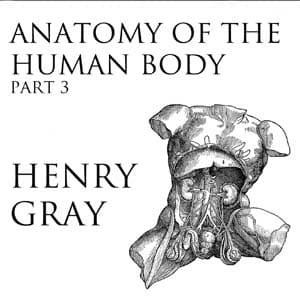

Look, I need to rant for a second. I am a software engineer. I debug distributed systems for a living. I did not sign up to debug the human circulatory system at 6:17 AM on a southbound Caltrain. And yet here I am, three weeks later, able to tell you more about the subclavian artery than I ever wanted to know. This is entirely my fault.
Here's how this happened: I was between series (post-Bobiverse relisten, pre-whatever Kevin recommends next), and I thought hey, I've always been curious about anatomy. Kevin's recommendations have led me down some unexpectedly educational rabbit holes before — American Buffalo sent me down a three-week bison conservation spiral that I did not budget for. Gray's Anatomy is a classic. How bad could it be?
TL;DR: Worth your commute? Absolutely not. But it might be worth your focused study time if you're in med school or just deeply, irreversibly nerdy about how blood moves through your body.
Why I Subjected Myself to 12 Hours of Arterial Branching Patterns
So Part 3 of Gray's Anatomy covers angiology, arteries, veins, and the lymphatic system. That's it. Almost 12 hours of blood vessel topology. Think of it as... a networking textbook, but the network is made of meat. The 1918 edition, specifically - so some of the terminology is dated, and the text constantly references illustrations you're supposed to be looking at on bartleby.com. Which is, uh, not great when you're standing on a moving train holding a coffee and a backpack.
The thing is, Gray's writing is surprisingly systematic. As someone who reads technical docs all day, I can appreciate the structure. He traces each artery from origin to termination, lists every branch, describes the spatial relationships. It's basically an API reference guide for the cardiovascular system. Left common carotid? Here are its branches, here's where it runs, here's what's adjacent. The external iliac? Same format. There's a satisfying consistency to it once you stop expecting a plot.
But - and this is a big but - this is a reference text from 1918 being read aloud. It was never meant to be consumed linearly as audio. Sentences like "it passes behind the sterno-clavicular articulation" hit different when you're reading them on a page with a labeled diagram versus when a volunteer narrator is reading them into your half-conscious brain at 6 AM.
The LibriVox Volunteer Situation
Okay, here's the deal with LibriVox recordings and I say this with genuine respect for the volunteer project: you get what you pay for, and you pay nothing. This is Part 3 of a five-part recording, which means multiple volunteer readers across the full work. The quality is... variable. Some readers are clear and steady, with good pacing for dense material. Others sound like they're recording in a room with slightly too much reverb, or they stumble on the Latin anatomical terms in ways that made me wince (I don't even know Latin, but I know when someone's sounding out a word for the first time).
There's no consistency in tone or pace between chapters. One section might be read at a measured, almost meditative speed. The next feels rushed. It's the audio equivalent of a codebase with twelve different contributors and no style guide. You adapt, but it pulls you out of focus every time the narrator switches.
No music, no sound effects, no production polish. Just raw voice-to-mic. For a free public domain recording, that's fine. For nearly 12 hours of dense anatomical text? It's a slog.
Who Is This Actually For?
If you're a med student or nursing student who wants to passively reinforce material you've already studied visually - maybe. With the bartleby.com illustrations open on a second screen during study sessions, I can see this being a decent supplemental resource. The text itself is historically important and structurally solid.
If you're a normal audiobook listener looking for your next commute companion? Hard skip. This is not commute-worthy. It's not gym-worthy. It's not even background-worthy because you'll zone out in 90 seconds and miss three arterial branches. I tried at 1.5x and it was genuinely incomprehensible - a wall of Latin terms at speed. Dropped to 1.0x and it became comprehensible but glacial.
I will say this: there's something weirdly meditative about having someone describe the exact path of the vertebral artery through the transverse foramina of the upper six cervical vertebrae. It's like ASMR for people who think in system diagrams. I fell asleep to it twice, which... might actually be a use case? Kevin found me passed out with my earbuds in and the lymphatic system chapter playing and he has not let me hear the end of it.
The ROI Calculation
The ROI on this audiobook is basically zero for entertainment purposes. As a free historical reference recording? It's exactly what it claims to be: the 1918 Gray's Anatomy, read aloud, no frills. The science is dated in places (this predates a lot of modern imaging and understanding), but the core anatomical descriptions are largely still accurate. Arteries haven't moved much in the last century.
I finished this in about 8 commutes, and I retain maybe 15% of it. But I now know that the circle of Willis is the arterial anastomosis at the base of the brain, and honestly that's a pretty solid party fact. If I ever need to debug a human cardiovascular system, I know where to start.





![Steve Jobs [unabridged audiobook] audiobook cover](/_next/image?url=https%3A%2F%2Fcovers.audiobooks.com%2Fimages%2Fcovers%2Ffull%2F9788499923406.jpg&w=1920&q=75)