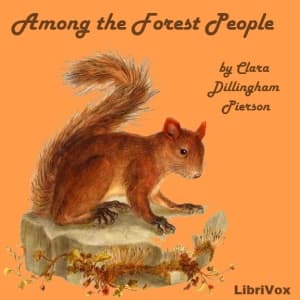

"The Goldfinches and their neighbors" — that's roughly how one of these little chapters opens, and honestly, it caught me at a weird moment. I was lying on my apartment floor at 1 AM, staring at the ceiling, avoiding the open LaTeX document on my laptop that contained exactly fourteen words of my thesis introduction. I'd just finished a 45-hour Stormlight reread and needed something — anything — to reset my brain. So I queued up a 2-hour-47-minute children's book from 1898 about forest animals. As you do.
And you know what? It kind of worked.
D&D Bestiary Meets Sunday School Fable
Here's the deal with Clara Dillingham Pierson: she was writing these animal stories at the turn of the 20th century, and each chapter is basically a standalone vignette about a specific forest creature — goldfinches, crows, screech owls, raccoons, blue jays — living their little lives and learning their little lessons. The structure is dead simple. Pick an animal. Give it a personality. Have it interact with forest neighbors. Sneak in a moral about vanity or kindness or not being a jerk to the new kid.
It reads — or rather, listens — like someone took a field guide and crossed it with Aesop's Fables and then ran it through the sensibilities of a very earnest kindergarten teacher circa 1898. The quasi-naturalistic approach is interesting, actually. Pierson clearly knew her animals. The details about goldfinch plumage changes, or how crows post sentinels while feeding, or the way a raccoon washes its food — that stuff is real natural history dressed up in anthropomorphic clothing. My D&D group would love the bestiary energy here, minus the stat blocks. (Okay, I would've loved some stat blocks. Raccoon: DEX 14, WIS 8, chaotic neutral. But that's just me.)
The morals are not subtle. We're talking a Blue Jay who's vain about his crest learning humility, or a Great Horned Owl couple whose parenting style carries an obvious "be patient with your children" message. If you're over the age of eight and looking for moral ambiguity, this isn't it. The last time I encountered nonfiction that wrestled seriously with what gets left unsaid in these kinds of tidy moral frameworks, it was What We Don't Talk About When We Talk About Fat — about as far from a forest fable as you can get, but it stuck with me for the same reason: the argument is built on specifics, not generalities. But I found myself charmed by how specific the lessons are to each animal's actual behavior. Pierson doesn't just slap a generic "be kind" on a random creature — the crow's lesson ties to actual crow social behavior, the goldfinch's story connects to real molting patterns. It's educational fiction done right for the era.
Two Narrators, One LibriVox Vibe
So here's where I have to be honest about what I'm working with. This is a LibriVox production read by Claire Schreuder and Jude Somers, and it's... a LibriVox production. If you've listened to LibriVox before, you know the deal: volunteer readers, varying recording setups, no professional studio magic. The audio quality is functional. It's clear enough. Nobody's reading in a wind tunnel.
But there's no Steven Pacey wizardry happening here. No distinct character voices that make you forget you're listening to a human reading aloud. The animals all kind of sound like — well, like someone reading a children's book to you, which is exactly what's happening. The split between two narrators means there's a slight tonal shift depending on which chapters you're in, and honestly I couldn't always tell where one narrator ended and the other began without checking. That's either a compliment to their consistency or a sign that neither brought a hugely distinctive stamp.
For a free public domain audiobook under three hours? It does the job. But I wouldn't point to the narration as the reason to choose the audio version over just reading the Project Gutenberg text.
Who Actually Wants This in Their Ears
Parents. Specifically, parents who want something gentle and screen-free for bedtime that won't give their kid nightmares or require them to explain what a Horcrux is. Each chapter is short enough — maybe 8-10 minutes — to be a single bedtime story. The pacing is slow and calm. The content is aggressively wholesome.
Also? Homeschool families doing nature study units. The real animal facts woven into these stories make them a sneaky educational tool. You could pair each chapter with an actual nature walk and it'd be a solid afternoon.
If you're a grown adult fantasy nerd looking for your next epic listen, this is not that. Obviously. But as a palate cleanser between massive series — something light and warm and utterly low-stakes — it surprised me. I fell asleep to the raccoon chapter in the best possible way, and I woke up feeling like maybe I could face my thesis. (I did not face my thesis. But the feeling was there.)
Tom's Thesis-Avoidance Verdict
It's free, it's short, it's sweet, and it's from 1898 — which gives it this weird charm that modern kids' audiobooks don't have. The narration won't blow your mind but it won't offend your ears either. Think of it as a cozy rest stop between epic fantasy road trips. Worth the under-three-hour investment if you've got little ones or just need to remember that not everything has to be a 40-hour commitment with a hard magic system.