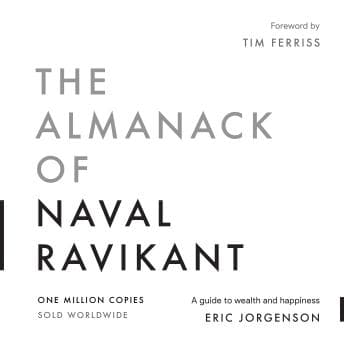

Look, I get it. Naval Ravikant is basically the patron saint of tech Twitter, and at this point, recommending his wisdom feels like telling a software engineer to learn Git. But here's my complaint: why isn't Naval narrating his own audiobook?
I've listened to countless podcast episodes where Naval drops these perfectly distilled nuggets of wisdom in his own measured, slightly detached voice. It works. It's like getting debugging advice from a senior engineer who's seen everything and is now just... at peace with the chaos. So when I queued this up for my Caltrain commute expecting that vibe, Vikas Adam's narration threw me off for the first 20 minutes.
The Narrator Situation
Okay, so Vikas Adam isn't bad. His enunciation is clean, pacing is consistent, and the production quality is solid. But there's this slightly dreamy, almost meditative quality to his delivery that some people are going to love and others are going to find... weird. I landed somewhere in the middle. It's like someone took Naval's pragmatic tech-bro philosophy and wrapped it in a guided meditation app. Not awful, just unexpected.
Once I adjusted (took about one commute), it started working for me. The content is so dense with quotable insights that the calm delivery actually helps you process it. This isn't a thriller where you need dramatic tension. It's basically a compiled wisdom repo, and Adam reads it like he's giving you time to git commit each idea to your brain.
A Curated README for Life
Eric Jorgenson did something clever here. He took years of Naval's interviews, tweetstorms, and podcast appearances and organized them into something coherent. It's not a how-to book. There's no "10 steps to become rich" nonsense. Instead, it's Naval's mental models about leverage, specific knowledge, judgment, and why compound interest applies to more than just your 401k.
The wealth section hit different for me. As someone who spends her days optimizing distributed systems, Naval's framework about leveraging code and media as "permissionless leverage"—where you can create something once and it works for you while you sleep—actually made me think about my career differently. He's basically articulating why software engineering is a good bet, but in a way that goes deeper than "tech pays well."
The happiness section is where some people check out, but I found it weirdly practical. Naval treats happiness like a skill you can debug. He talks about meditation, cutting out alcohol, choosing to be happy as a deliberate practice. Mindful Athlete takes a similar approach to performance optimization, treating mental state like a system you can tune. It sounds woo-woo until you realize he's approaching it like an engineer would—identifying inputs, measuring outputs, iterating.
Best For: Commutes and Gym Sessions
At under 5 hours, the ROI on this audiobook is excellent. I finished it in 3 commutes and immediately started a second pass. But here's the thing—this works best as a re-listen book. The ideas are dense enough that you'll catch new things each time. Skip it for deep work sessions though; you'll want to take notes.
Who should listen: If you're new to Naval's thinking, or you want everything organized in one place, this is the way to consume it. Who should skip: If you've already listened to every podcast and read every thread, this might feel redundant. It's a greatest hits album, not new material.
I'd recommend bumping to 1.25x if Adam's pacing feels too slow for you. At that speed, it hits a nice rhythm without losing clarity.
Worth the Commute Time?
Is this life-changing? Probably not if you're already into this stuff. But it's one of those books that gives you language for things you already half-knew. Naval has this way of articulating concepts about wealth, leverage, and contentment that just... clicks. If you're looking for actionable people skills to complement Naval's wealth frameworks, Networking for People covers the relationship-building side he mostly skips. And having it in audio format means you can absorb it during dead time rather than carving out reading hours you don't have.
The narration isn't perfect. I genuinely wish Naval had recorded this himself. But Vikas Adam grows on you, and the content is strong enough to carry it. If you can get past the first 30 minutes of adjustment, you'll probably find yourself nodding along on your commute like a weirdo. (Don't worry, everyone else is too tired to notice.)