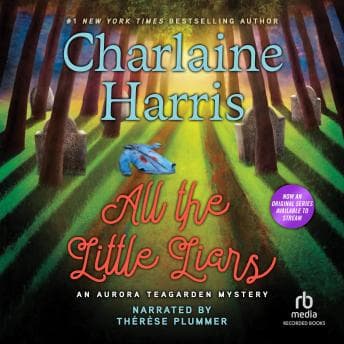

Charlaine Harris knows exactly what she's doing. That's the first thing I want to say about All the Little Liars, and honestly, it's both the book's greatest strength and its most frustrating limitation.
I finished this one grading sophomore essays on The Great Gatsby - you know, the ones where every student thinks they've discovered something new about the green light. And here's Aurora Teagarden, a librarian-turned-amateur-sleuth, doing her own version of chasing meaning through clues and dead ends. The parallel wasn't lost on me.
The Comfort of the Familiar
This is book nine in the Aurora Teagarden series, and Harris writes with the confidence of someone who knows her readers. Four kids vanish from a soccer field, including Aurora's fifteen-year-old half-brother Phillip. A body turns up. Christmas approaches. The stakes should feel enormous.
But here's the thing - and this is where my English teacher brain kicks in - Harris isn't writing Gone Girl. She's writing something closer to what Agatha Christie understood about her audience. Inferno: A Novel plays with similar expectations—you're there for the journey through art history and symbology, not just the whodunit. The mystery is the vehicle, not the destination. We're here for Aurora's world: her new marriage to true crime writer Robin Crusoe (a name I still can't decide if I love or hate), her pregnancy, the small-town Georgia rhythms that feel lived-in rather than manufactured.
At just under eight hours, the pacing moves like a comfortable Sunday drive. Not slow, exactly, but unhurried. If you're expecting the kind of propulsive thriller that makes you miss your highway exit, recalibrate. This is the audiobook equivalent of tea and a crossword puzzle.
Thérèse Plummer Earns Her Keep
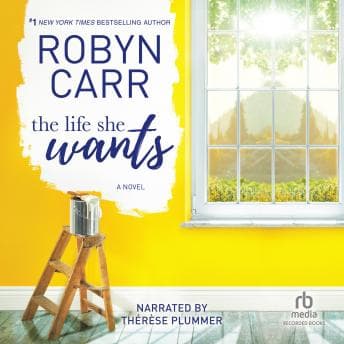
Plummer's narration carries this book through its quieter stretches. Her Southern voices feel genuine without tipping into caricature - there's a warmth to Aurora that makes you want to sit on her porch and gossip about the neighbors. She handles the ensemble cast with enough differentiation that I never lost track of who was speaking, even when I was half-focused on whether Tyler had actually read Chapter 3 or just SparkNoted it. (He SparkNoted it.)
One listener called her performance "exceptional," and I wouldn't argue. Plummer understands that cozy mysteries require a narrator who can make domesticity feel interesting. She does.
Where the Mystery Falls Short
I'm going to be honest with you. The central mystery - where are these kids, who killed the body, what's really going on - doesn't quite deliver the punch I wanted. Harris introduces several promising threads: bullies at the middle school, Aurora's father's gambling debts, questions about whether Phillip himself might be involved. But the resolution feels... tidy. Maybe too tidy.
This reminds me of what I tell my students about Hemingway's iceberg theory - what's beneath the surface should feel larger than what's visible. Here, the surface is the story. There's not much lurking underneath.
That said, I don't think Harris is failing. I think she's succeeding at something different than what I was expecting. This is comfort reading. The literary equivalent of knowing the detective will solve the case, the kids will probably be okay, and Christmas will still happen.
Who This Works For (And Who It Won't)
If you've been following Aurora Teagarden for eight books, you already know if this is for you. It is. The series continuity rewards longtime readers - references to past cases, the evolution of Aurora's relationships, the accumulated weight of a life lived in fiction. If you're new to the series, maybe start earlier? You won't be completely lost, but you'll miss the context that makes Aurora's world feel so lived-in.
Skip this if you want a mystery that keeps you genuinely uncertain until the final reveal - where the author is actively trying to surprise you rather than comfort you. No shame in that. Different readers, different needs.
Worth Pausing the Faculty Meeting For?
Look, I'm not going to pretend this is Faulkner. (My students would be relieved.) But there's something to be said for a book that knows exactly what it wants to be and executes it competently. Harris has been doing this for decades. Plummer brings professional warmth to every chapter. The whole package works.
My wife Denise would call this a "Sunday audiobook" - something pleasant for a lakefront walk when you don't want to think too hard. She's right. And sometimes that's exactly what you need.
Just don't expect it to haunt you afterward. It won't. But it'll keep you company while it lasts, and there's value in that.