
What happens when you find out your entire identity is built on a lie someone told you out of love?
I was three hours into a logo redesign for a taco truck client — third revision, patience thinning — when Sookie Poole discovered she was adopted, and I just... stopped working. Set my stylus down. Frida jumped off my lap like she knew something was about to shift. Because here's the thing about this book: it sneaks up on you. You think you're in a light Southern comedy about a woman dealing with her overbearing mother (and Lenore Krackenberry is PEAK overbearing mother, the kind of woman who rearranges your furniture while you're at the grocery store), and then suddenly you're sitting with this gutting question about who you are when everything you believed about yourself turns out to be somebody else's story.
The Two Women Living Inside This Book
So the structure — and this caught me off guard — ping-pongs between present-day Sookie in Point Clear, Alabama, processing the absolute earthquake of learning her biological family history, and 1940s Wisconsin where Fritzi and her sisters run a filling station and eventually become WASPs. Women Airforce Service Pilots. During World War II. Women who flew military planes and got zero recognition for decades.
And I'll be honest, when the WWII timeline kicked in, I thought it would pull me out of Sookie's emotional arc. But Fannie Flagg does this thing where Fritzi's fearlessness — her absolute refusal to let anyone tell her she can't fly — becomes the mirror Sookie needs to see herself differently. It's not just backstory. It's the answer to Sookie's question about who she really is underneath all the Junior League meetings and her mother's expectations.
The filling station chapters are genuinely fun. Truck drivers rerouting to get served by the Jurdabralinski sisters? That's the kind of detail that made me grin while drawing vector lines at midnight. But if you go in expecting the whole book to be about the filling station — it's not. It's about Sookie. The filling station is the doorway.
Fannie Flagg Reading Her Own Words Is a Specific Kind of Magic
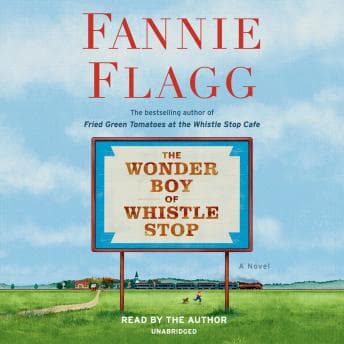
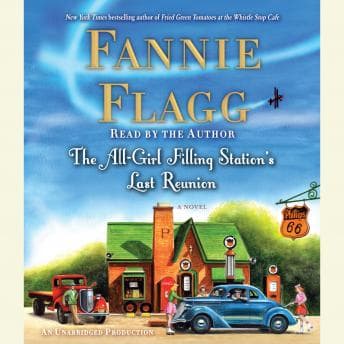
Okay, here's where this audiobook gets interesting. Fannie Flagg narrates this herself, and her voice has this quality — it's like your aunt who's three glasses of sweet tea deep at a family reunion, telling you a story she's been saving. Her Southern drawl is warm and lived-in, not performative. When she does Lenore, she goes slightly bigger, slightly more theatrical, and it's hilarious because Lenore IS slightly bigger and more theatrical than any room can contain. The comedic timing on Lenore's scenes — particularly when she's giving Sookie unsolicited life advice — had me laughing out loud at my desk while Diego stared at me with pure contempt.
But the emotional moments hit different when an author reads their own work. There's a scene where Sookie is processing the adoption revelation — sitting with the weight of it — and Flagg's delivery gets quiet. Not sad exactly. Just... tender. Like she knows exactly how much space this moment needs.
Now. The pacing. At nearly eleven hours, there are stretches in the middle where Flagg is setting up historical context and toggling between timelines that feel a little leisurely. I didn't mind at 1.0x because I was savoring the voice, but I can see how someone might get antsy. This is not a book in a hurry to get anywhere. It meanders the way a good porch conversation meanders — you trust it's going somewhere worth going.
The Part Where I Called My Mom
I ugly-cried at the scene where Sookie starts to understand what the WASPs sacrificed and how that connects to her own blood. Because it's not just about adoption or identity — it's about all the women who did extraordinary things and never got their names in the history books. And then I thought about my abuela, who crossed a border and raised six kids and never once complained about it, and I had to pause the audiobook and call my mom at 10 PM on a Tuesday.
Abuela would have loved this one. She would've been furious about Lenore and completely in love with Fritzi.
This book felt like finding an old photograph in a drawer and realizing the woman in it — the one with the daring smile — is someone you're related to. And suddenly your own life makes a little more sense. That quiet reckoning with identity — who we are when the story we were handed turns out to be incomplete — is something Notes on an Execution also does with devastating precision, though from an angle that'll leave you unsettled in entirely different ways.
Who This Is For (and Who Should Probably Skip)
If you love Fried Green Tomatoes energy — humor laced with real heart, Southern women being quietly revolutionary — this is your next listen. If you want a tight, fast-paced plot, you'll get frustrated. This is a rainy Sunday book. Make some coffee, let it breathe, let Fannie talk to you like she's got all the time in the world. Because she does, and honestly? So do you.