
"Emergency Procedures." Two words that, when you hear them in a classroom, mean someone pulled the fire alarm. When you hear them at 35,000 feet, they mean something entirely different.
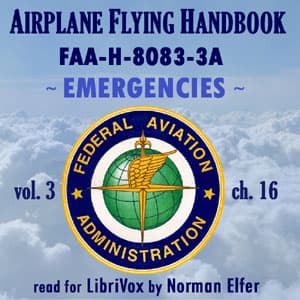
I was grading a stack of sophomore essays on The Great Gatsby — it was about 11:30 PM, Denise had already gone to bed, and I needed something in my ears that would keep me awake but wouldn't compete with my red pen. So I put on Volume 3 of the FAA's Airplane Flying Handbook. Chapter 16: Emergency Procedures. An English teacher listening to an aviation manual. Let me explain.
Why an English Teacher Picked Up a Flight Manual
I've been fascinated with aviation writing since reading West with the Night by Beryl Markham and Saint-Exupéry's Wind, Sand and Stars — two books that prove technical knowledge and beautiful prose aren't mutually exclusive. So when I stumbled across this three-volume audiobook series from the FAA, I was curious. Not about learning to fly. About the language. How do you communicate life-or-death procedures in prose? How does the FAA — a government bureaucracy — write sentences that someone's life might depend on understanding correctly?
And here's what I discovered: the FAA writes with a ruthless clarity that most of my students — and honestly, most novelists — could learn from. There's no ambiguity in emergency procedures. You don't get to be "literary" when you're explaining what to do during an engine failure after takeoff. Every sentence is load-bearing. This reminds me of what Hemingway said about prose being architecture, not interior decoration. The FAA handbook is pure architecture. Nietzsche does something similar in Twilight of the Idols — aphorisms so compressed they feel load-bearing too, where removing a single word would make the whole thing collapse.
At 1 hour and 21 minutes, this is essentially a long podcast episode. And that brevity is honest — it's one chapter, Chapter 16, covering emergency procedures from engine failures to emergency landings to systems malfunctions. No padding. No filler. The content is structured the way you'd want information structured if your propeller just stopped spinning: here's what's happening, here's what you do, here's the order you do it in.
Norman Elfer and the Art of Reading Like Lives Depend on It
Norman Elfer narrates all three volumes, and I want to be fair here. This is a LibriVox volunteer recording of a technical government manual. He's not performing Shakespeare. He's not doing character voices because there are no characters — unless you count "the pilot" and "the airplane," which, in this text, are essentially the only two actors in a very high-stakes drama.
Elfer reads with a steady, measured pace that suits the material. There's a clinical quality to it — no vocal fireworks, no dramatic pauses before the section on emergency descents. One listener described needing to "live with the narrator for a week or two," and I get that. His delivery is functional rather than engaging. You're not going to get swept up in the rhythm the way you would with, say, Jeremy Irons reading Brideshead Revisited. But here's the thing — should you? The narrator understands that pause is punctuation, and in technical material, the punctuation needs to serve comprehension, not drama.
That said, over 81 minutes, the monotone quality does accumulate. I found myself rewinding a couple of times, not because the content was unclear but because the delivery lulled me into autopilot. (Aviation pun intended. My students would groan.) For a text where every detail matters — the specific sequence of actions during a forced landing, for instance — that's a real problem. You can't afford to zone out during emergency procedures.
Who This Is Actually For (And It's Not Me)
Let me be honest: I'm not a pilot. I'm not training to be one. I picked this up as a curiosity about technical writing, and on that level, it delivered. But the real audience here is student pilots or aviation enthusiasts who want to supplement their reading of the physical handbook. One reviewer noted it's "clear and useful for following along with the printed handbook," and that's exactly the right use case. This is a companion piece, not a standalone experience.
If you're studying for your private pilot license and you want to absorb Chapter 16 during your commute, this does the job. If you're an English teacher having a weird Wednesday night, it's a fascinating artifact of precision writing. If you're looking for an audiobook to enjoy — to savor, the way I'd savor Middlemarch — this isn't that. The prose deserves respect for its clarity, but it doesn't ask to be savored. It asks to be understood.
The Red Pen Gets Put Down
I finished this around midnight, essays half-graded, and I sat there thinking about how strange it is that the same medium — a human voice reading words aloud — can deliver both Anna Karenina and emergency descent checklists. Norman Elfer won't win any narrator awards, but he did something harder than most people appreciate: he read a government manual clearly enough that someone could use it to save their own life. That's not nothing. My students would hate this. I found it quietly fascinating. But I won't pretend it's anything other than what it is — a functional, no-frills audio rendering of a very specific technical document. Worth your time if you need it. A curiosity if you don't.